The Revolution Will Be Monetized… Somehow
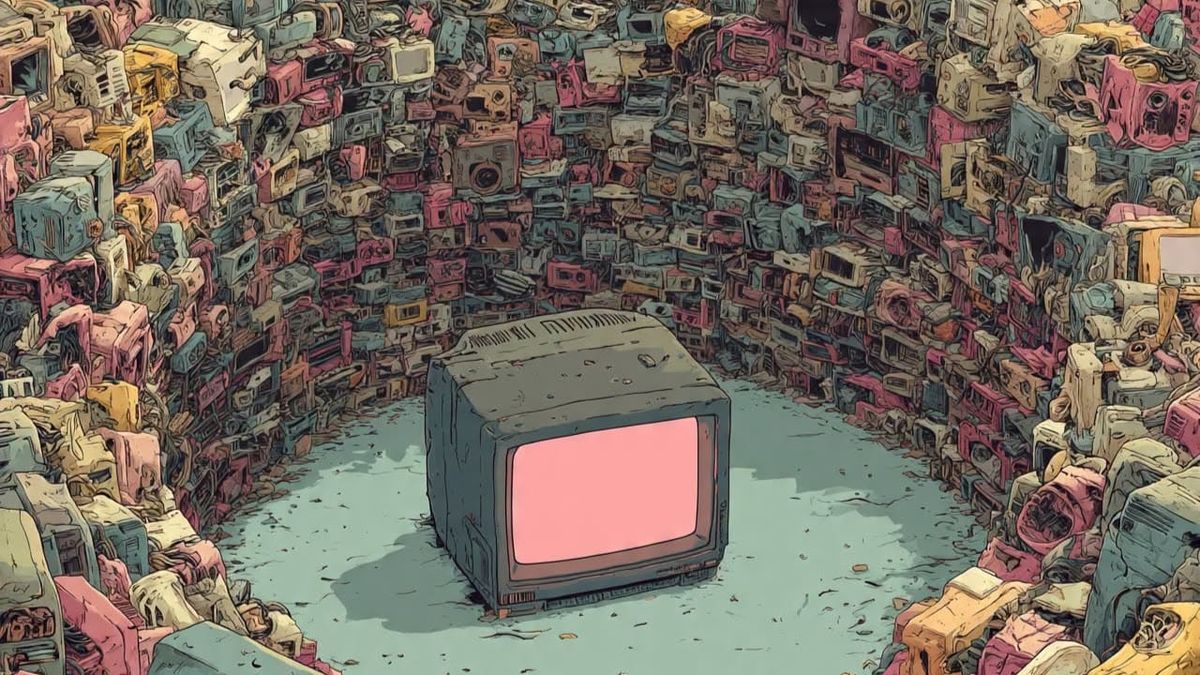
There's an argument going around that AI has finally freed the musician. Skip the label, skip the recoupment trap, skip the A&R gauntlet. Buy thirty dollars of AI-powered distribution, generate a thousand tracks, and out-release the majors into oblivion. The algorithm rewards velocity, the pitch goes, and velocity is now "free."
Yes, that characterization of the mechanism is correct. And as much as you want to roll your eyes, it's worth serious consideration. Quantity really does accelerate velocity. Velocity really does leverage the recommendation engine. Feed the machine more and the machine, in its fashion, feeds you back. Yes. And.
And — rewards you with what, exactly?
Follow the causal chain to its end and you notice the sentence never finishes. More releases, more output, more reach, faster than the label, faster than last week. Every verb is comparative. Not one of them has a destination attached. You out-release, you outpace, you scale — toward a noun the pitch mysteriously declines to name.
It's like the Coyote blasting off on those Acme rocket skates... right off a cliff. Well, let's try to name what that could be.
Money? In the velocity model, revenue isn't the payoff — it's the fuel. You don't release the thousandth track because the thousandth track pays. You release it because volume is the input the algorithm demands to keep you visible enough to release the thousand-and-first. Whatever trickles back at fractions of a cent gets poured straight into more supply. It's not a business that produces profit. It's a business that produces the ability to keep producing. Which is a treadmill pretending to be a lovely mountain hike.
Engagement? This one's honest, which is exactly why nobody says it out loud. "Engagement" isn't a good you receive. It's the platform's word for the behavior it wants from you. Chase it and you've adopted someone else's success metric as your own life's purpose. You "win" when the machine is satisfied. That's not a reward. That's being domesticated and awarded a certificate for not peeing on the rug.
Independence? The magic word — and the exact thing being sold out from under you. The pitch runs on escape the label, but look where the exit lets out: total dependence on a distribution monopoly you don't own, at a payout rate you can't negotiate, run by an algorithm you can't see, under terms that have changed overnight before and will again. The label at least signed a contract — a lousy one, but two-sided, with obligations running both ways. The platform offers no contract, no floor, no recourse, an EULA that might or might not contain Mein Kampf, and can vaporize your catalog's discoverability with a ranking tweak you'll never be told about. You haven't traded a master for freedom. You've traded a master you could sue for a landlord who can evict an entire genre by quarterly goals or software glitch and owes you nothing. Call it many things, but "independence" is definitely not one of them.
Arrival? The unspoken promise under all of it — that the ladder goes somewhere, that there's a top. But the attention economy is defined by having no top. Its whole function is to keep serving the next thing; its appetite is structurally and perpetually unsatisfiable. So the prize for winning the velocity game is permission to keep playing it, at higher stakes, forever, with the goal posts receding at precisely your speed.
This is where Gil Scott-Heron gets quietly mugged. His revolution wouldn't be televised — you can't broadcast the overthrow of the thing doing the broadcasting. This one inverts him: it's nothing but televised, streamed, ranked, monetized, all channel and no signal. The medium isn't opposed to the message. The medium is the message, and the message is be subservient to the pipe. There's no revolt in becoming a more efficient supplier to the incumbent — that's just the machine humming along, labor cost driven to zero and the risk shoved onto whoever mistook the treadmill for a barricade.
So here's the "and" that completes the thought. That velocity strategy of out-slopping the labels works. It just doesn't arrive anywhere. Its real product isn't a song or a career — it's you, optimized into the most efficient possible feedstock for a system that pays in visibility-to-produce-more and counts you interchangeable the whole time.
[record scratching sound]
Alright, let's set that against two nights that never registered on any dashboard.
A month ago my wife and I played a twenty-minute set — her on bass, me on electric guitar, two ratty SM57s running into a PA old enough to collect Social Security — in a basement record shop packed to the walls, five acts deep, everybody slowly cooking, indiepop sous vide. It produced exactly zero legible metrics. No stream count, no algorithmic reward, nothing the pipe could see. And it meant something to every person in that sauna, which is the one quantity the model has no column for. It happened once, at that temperature, and then it was gone. The unrepeatability isn't the flaw that keeps it from scaling. It's the whole substance of the thing.
The other night was hers: a band whose debut album just turned thirty, touring on one original songwriter and a lineup of new faces, playing to 750 sold-out people in Los Angeles — most of them under twenty, most not born when the record landed, all of them singing every word back. Nobody got there by out-releasing anyone. Something got made once, specific and convincing enough to survive three decades and jump a generation that has every reason to be chasing the newest possible thing. That's not velocity. That's its opposite — durability — and the flood is engineered to have none of it.
None of this is inviolable, and it'd be sentimental to pretend otherwise. Somebody still has to book the basement, keep the shop's lease alive, front the money to get a band across the country; the economy behind live music is real and precarious, squeezed from directions that have nothing to do with AI. And the top of every working musician's wish list — a decent life paid for by the music — has always been reachable by only a lucky few, propped up by day jobs, patrons, parents, spouses, the GoFundMe when the van dies. That subsidy is the load-bearing wall nobody prints in the liner notes. Cheap "content" generation doesn't touch it, because the thing being subsidized was never the making. It was the living while you make.
Which is the category error under the whole pitch: it sells a production fix for a problem that was never about production. Thirty dollars covers the distribution and hides everything the thirty dollars doesn't — the discovery, the audience, the rent, the years before any of it maybe works.
So: the revolution will be distributed. Everywhere, instantly, for thirty dollars a year. Just not necessarily heard.
A week after that Los Angeles show, someone who'd been in the crowd posted a drawing. Not a photo — a drawing, done from memory, of the bassist mid-song under the lights, the band's name lettered across the bottom like a poster for a show that had already happened. They'd drawn her boot, too: the walking cast from a foot she'd broken two weeks before the tour and played on anyway. Nobody asked for it. There was no photo to work from. It will never be a stream, a play, an impression, or a dollar. It is one of the most meaningful things anyone brought home from the whole tour.
That drawing won't ever pay our bills. And it meant the world to us — enough that a stranger sat down and made something out of having been there. That and — both clauses at once, neither one converting into the other — is the sentence the velocity pitch can't write. It only ever had the first half, and it spent the whole argument insisting the second half turns into money if you just release faster. It doesn't. You only feed the pipe that loops back and drowns you.