Return to Target: An Afterword
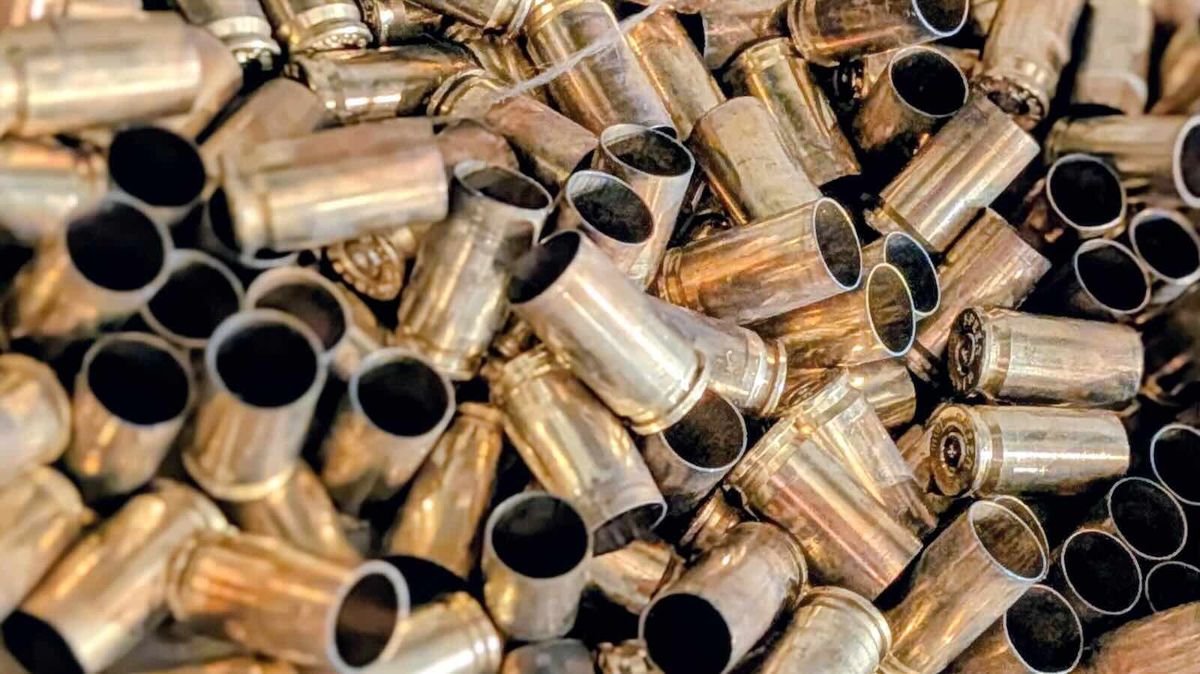
I spent a few hours the previous Saturday helping with the PST 103 class, primarily keeping an eye on students for basic safety, changing targets, and driving the brass Zamboni between drills and during breaks. Or was that the other way around?
By this point, the students are in the last course of the defensive-handgun curriculum. Their “final exam” includes placing a shot in the A box from threat ready in under half a second, and drawing from the holster and doing the same in under a second and a half.
Most of the time I was there was spent on the threat-ready drills, along with a lot of hands-on work clearing malfunctions one-handed. I remember taking 103 and thinking that it was a useful introduction to “things you want to figure out before you get in a firefight,” to borrow a phrase from Clint Smith. The class runs for two full days, and I was there for only a small portion of it. I left before they got to the scoot-and-shoot drills, but even a few hours felt like getting a refresher course for free.
The instructor also gave a very informative lecture on splits—the time between shots. Some law-enforcement agencies apparently discourage officers from firing faster than a certain cadence because, below that interval, there may be no meaningful assessment between one shot and the next. Has the situation changed? Did the previous shot have an effect? Is another shot still necessary?
There is a counterargument, for civilian practitioners and law-enforcement officers alike, that one develops the ability to operate above that threshold so that a more deliberate pace remains available under stress. It is the same general idea behind the Performance Skills Group workshop: go fast enough in a controlled environment to discover where the wheels come off, then work below that limit with some margin left over. The point is not necessarily to fire as quickly as possible in an actual crisis. It is to develop enough skill that a slower pace still leaves room to see, think, and stop.
By the time students reach 101A and the later courses, discretion—or at least awareness and protocol—has become integral to the instruction. Most of the day may still be spent on the range, eyes and ears on, punching holes in paper, but the mechanics are increasingly embedded in questions of judgment: when to act, what to assess, and when to stop.
That can be easy to miss because the visible activity remains so repetitive and concrete. Targets are hung. Magazines are loaded. Timers beep. Holes appear in paper. But the ready position rather than immediate presentation, the trigger finger returning to the frame, the reassessment between shots, and the practiced response to a malfunction all encode something beyond marksmanship.
The timer measures one part of the problem. The rest is harder to score.