Linjalla: On the Line
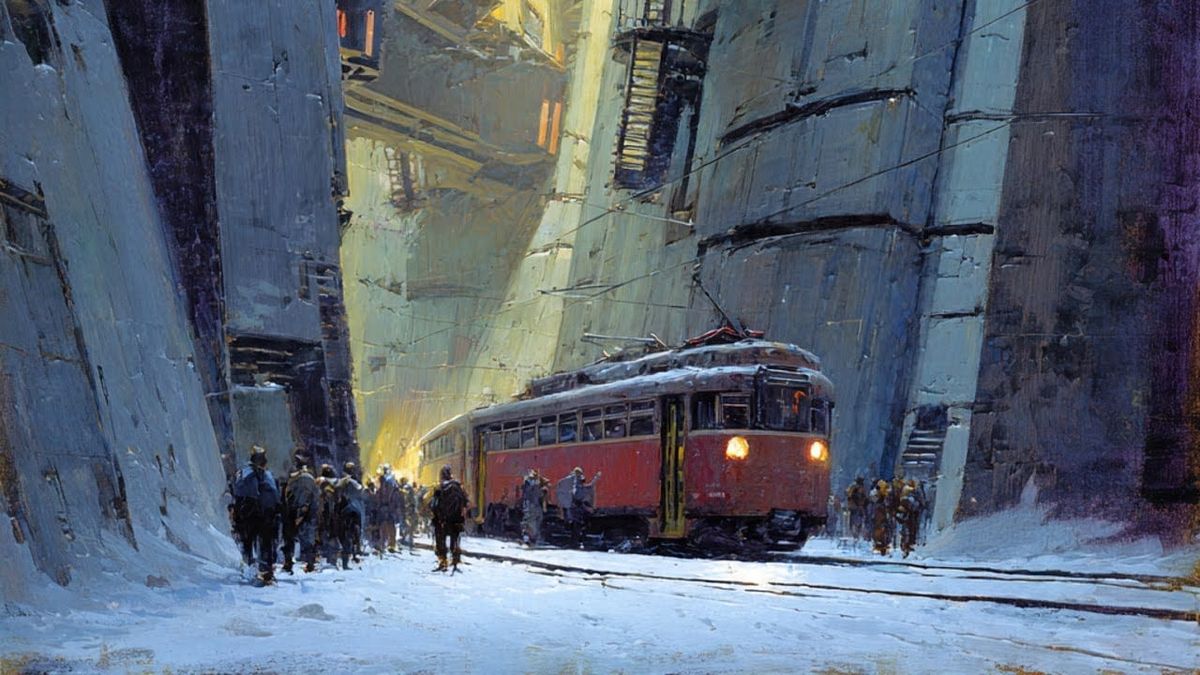
A transit RPG for 2–5 players. One session. One city. One line.
A sibling game to Les Arrondissements, set in the same quiet uncanny. Different city, different system, same questions: How much do you want to notice? And what does it cost you?
THE PREMISE
The city runs. Trams arrive. Signals change. Dogs ride without tickets. Everything is operational.
But the city remembers more than it should. A tram stop that was demolished in 2027 still appears for ninety seconds on the evening route. A passenger information display shows a service disruption from seven years ago, every Thursday at 14:07, for exactly eleven seconds. A dog exits at a stop that isn't on the map — and the doors open for it anyway.
These are not hauntings. They are not glitches. They are maintenance issues — patterns the city's systems have continued to run after their source was removed. The schedule updated, but the city didn't.
You ultimately work for the city. Transit operations, infrastructure audit, systems continuity — even as passengers. Your title varies; your job is the same: ride the line, observe, report. Keep the system running. File clean reports. Check the box.
The question is what you do when the box doesn't fit what you've seen.
THE TONE
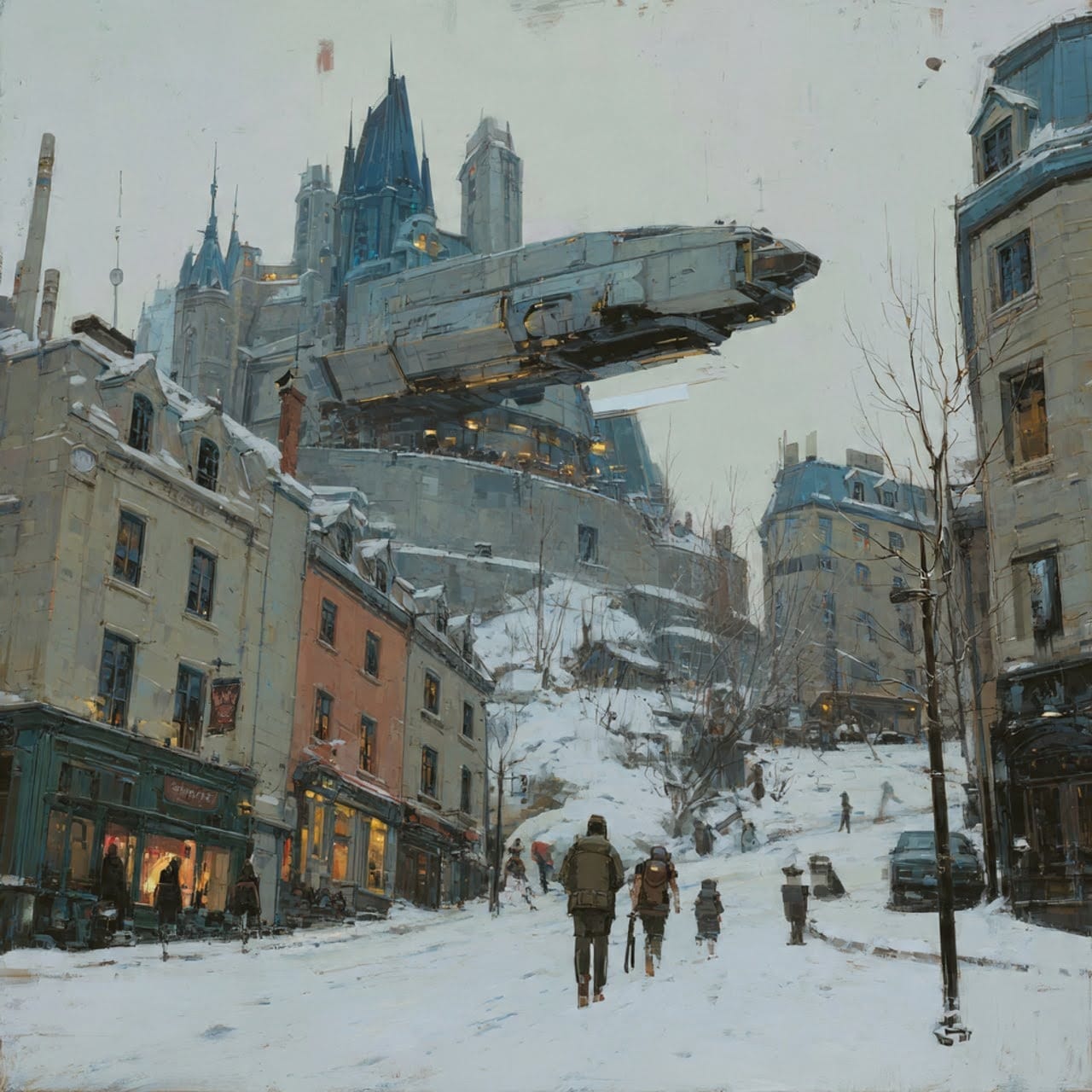
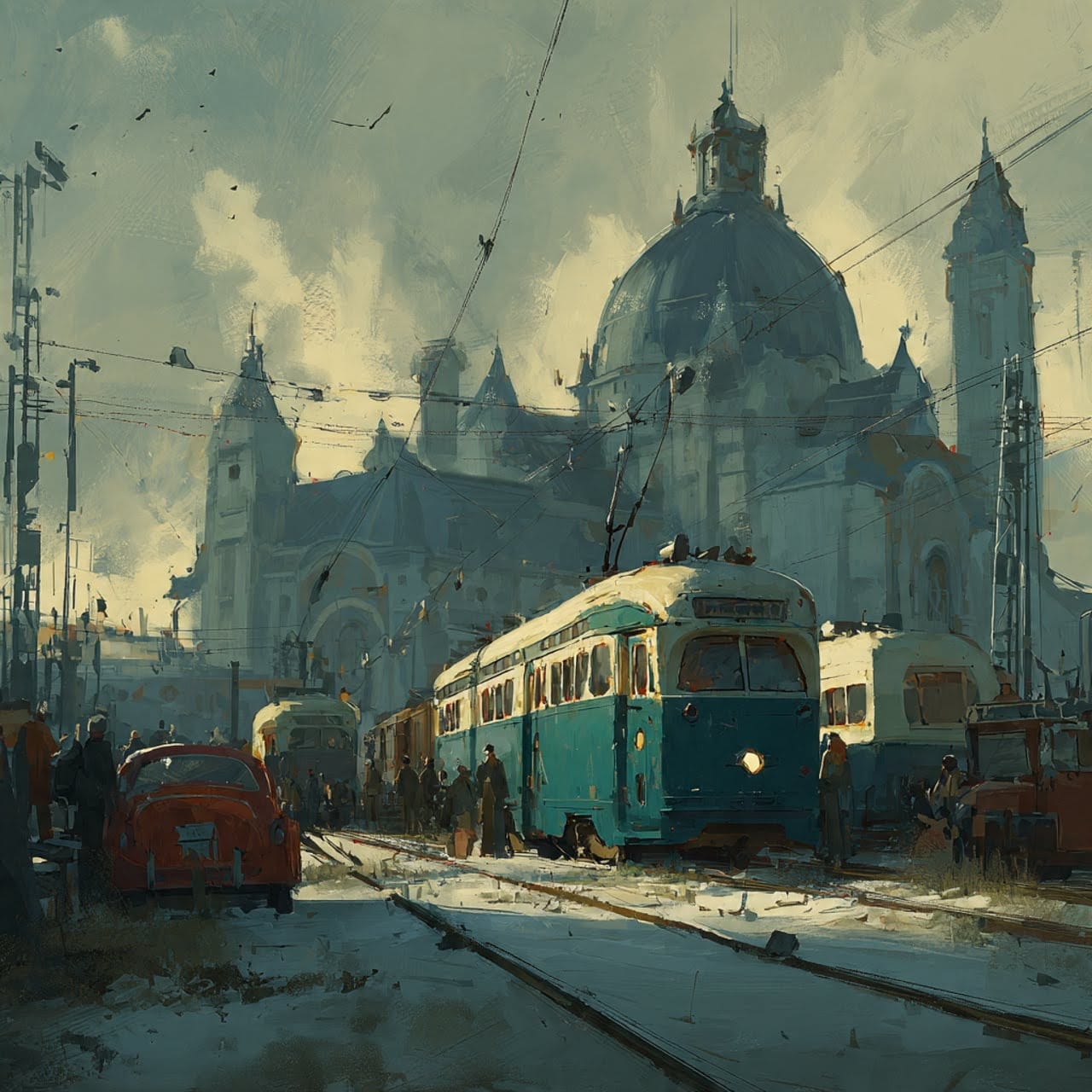
Cyber without the punk. Nordic without the noir. Imagine a Kaurismäki sci-fi film where the city itself is the protagonist — deadpan, stubborn, quietly beautiful, running on a schedule that may not be this year's. The aesthetic is not gleaming futurism or gritty dystopia. It is a photograph from 2044 developed with chemicals from 1974. Clean, functional, amber-tinted, as if the light itself remembers a different decade.
YOU NEED
- 2–5 players (1 Operator, 1–4 Riders)
- Two six-sided dice (2d6)
- A pencil and this document
- A transit map of a real or imagined city (optional, powerful)
- Approximately 2–3 hours
SYNCHRONIZATION
Your core stat. It measures how aligned you are with the city's operational reality — the current schedule, the current map, the current version of things.
Synchronization runs from 0 to 10. You start at 7.
The dial has a failure state at both ends. Too low and the city forgets you. Too high and you forget the city.
SYNC DROPS when you:
- Step off the line to investigate an anomaly (go linjalta)
- Leave the checkbox unchecked on a deviation report
- Acknowledge an anomaly aloud to another person
- Perform field maintenance on something that shouldn't exist
- React emotionally to the background signal
SYNC RECOVERS when you:
- Ride a full route without exiting
- File a clean report (checkbox checked)
- Wait for a signal to change, even on an empty street
- Follow a Linjakoira's lead
- Let a Hiljainen Protokolla execute without interfering
ROLLING
When the outcome is uncertain, roll 2d6 + modifier.
Modifier: +1 if your character's background is relevant. −1 if you're linjalta (off the line) and attempting something the system should handle.
CHARACTERS
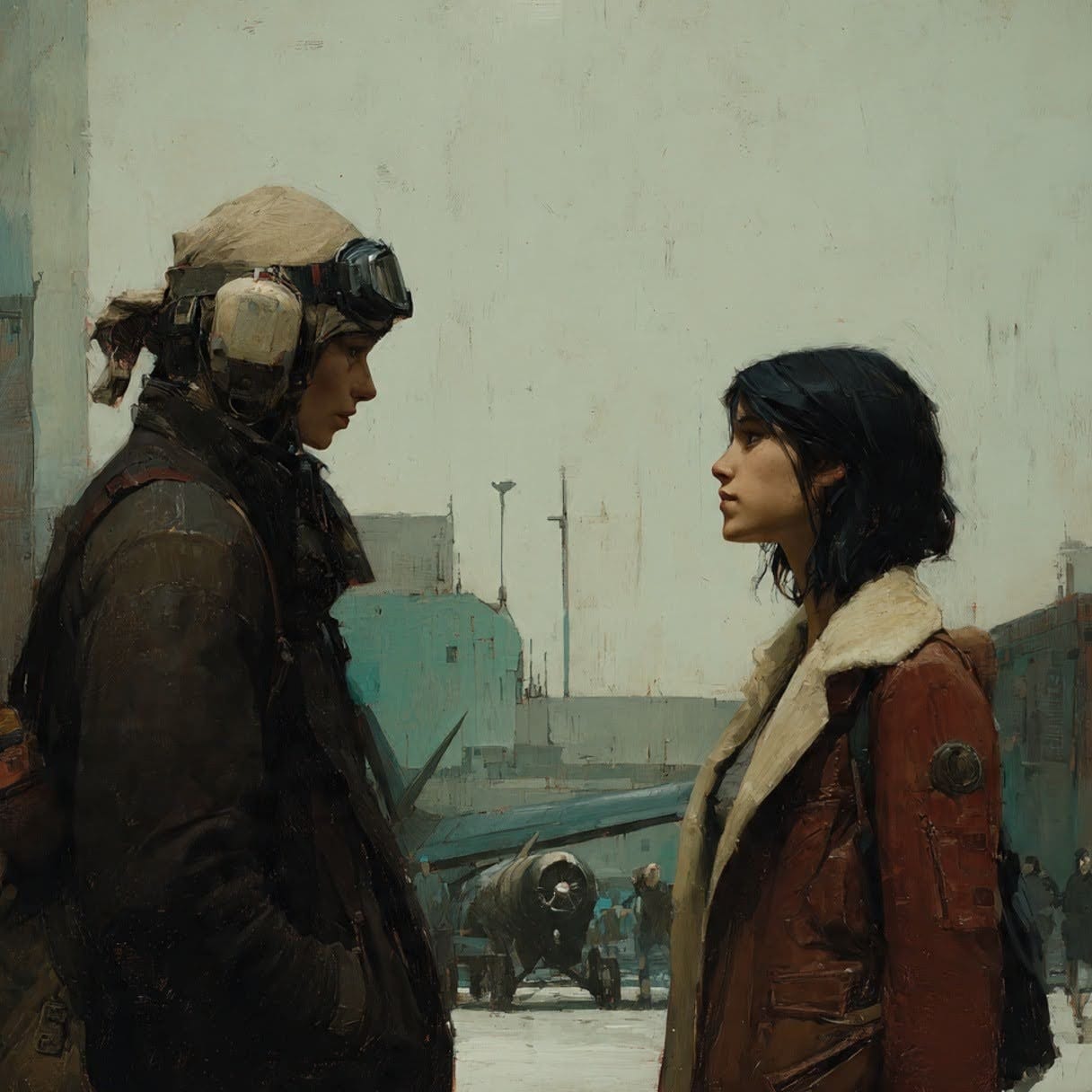
Choose one. Each has a role in the system, a reason they notice things, and a vulnerability the system can exploit.
THE DRIVER — Kuljettaja
You operate the line. You know every stop, every regular, every dog. You're the one who notices when the route feels wrong — not broken, just off. Like driving a road you've driven a thousand times and finding a curve you don't remember.
Ability — Pattern Memory: Once per session, declare that something has changed since your last shift. The Operator must confirm what it was. You were right — you just don't know what that means yet.
Vulnerability — The Schedule: You cannot abandon your route. Going linjalta costs you 2 Sync instead of 1. The line is your identity.
THE AUDITOR — Tarkastaja
You inspect. Tickets, systems, compliance. You're trained to find discrepancies — and trained to classify them using forms that have no category for what you're actually finding.
Ability — The Form: You carry deviation report forms. When you file one with the checkbox unchecked, you may ask the Operator one direct question about the anomaly and get a true answer. The system flags you, but you learn something real.
Vulnerability — By the Book: If you file three consecutive clean reports (checkbox checked), your Sync locks at 8 until you encounter an anomaly you cannot ignore. Compliance is a trap.
THE PASSENGER — Matkustaja
You're not staff. You just ride. Every day, same line, same time. You started noticing things because you had nothing else to do but look out the window. Now you can't stop noticing.
Ability — Invisible: The system doesn't track you. You can go linjalta without the system flagging it — no automatic Sync loss the first time each session. You're not important enough to monitor.
Vulnerability — No Authority: Your deviation reports are filed as passenger complaints. They go nowhere. If you want action, you need a Driver or Auditor to co-sign — which means convincing them to see what you see.
THE DOG — Linjakoira
You ride the line. You always have. You are calm, attentive, and you smell things that haven't happened yet — or that happened on a schedule the city no longer runs.
Ability — Always Linjalla: Your Sync cannot drop below 3 or rise above 8. You are permanently in the aware range. You always perceive anomalies. You cannot be blinded by the system or erased by it.
Vulnerability — No Words: You cannot file reports, check boxes, or explain what you know. You can act — bark, lead, refuse to board, exit at a strange stop — but you cannot tell. Your player communicates only through described actions, never through speech. Other players must interpret you.
ANOMALIES
The city's memory errors. Not ghosts — maintenance issues. Patterns that kept running after their source was removed.
AIKAJÄÄMÄ — Time Residue
A schedule from a previous version of the city, still executing. A tram arrives at a stop removed from the route in 2031. Passengers board. The driver's log shows no deviation. The passengers aren't on the next camera.
LINJAPOIKKEAMA — Line Deviation
A route connecting points that aren't adjacent. For ninety seconds, the buildings outside the window are ones that were demolished for redevelopment. They're not translucent. They have lights on. Then they're gone.
HILJAINEN PROTOKOLLA — Silent Protocol
A system behavior with no source that continues to execute. Every Thursday at 14:07, a display shows a disruption notice from seven years ago. Eleven seconds. Then the current schedule resumes. The diagnostic log shows nothing at 14:07.
LINJAKOIRA — Line Dog
Not an anomaly. A witness. Dogs who ride the transit as permanent, unticketed passengers. The drivers know them. They react to things passengers don't notice. They exit at stops that aren't on the map. The doors open for them anyway.
In a city you know, a transit operator may already be documenting them. Look for them. The line between the game and the city is thinner than you think.
LINJALLA / LINJALTA
At any moment, you are in one of two states:
Switching from linjalla to linjalta costs 1 Sync (you stepped off the system). Switching back requires boarding transit and completing at least one stop — you can't just step back on. The system needs to re-acquire you.
THE CHECKBOX
When you encounter an anomaly, you will eventually file a deviation report. Every report contains this field:
☐ I confirm this deviation was observable by standard monitoring equipment.
The anomalies are not observable by standard monitoring equipment. That's what makes them anomalies.
Check the box: Your report is filed as routine. The flag clears. Sync +1. The anomaly remains, unaddressed, unacknowledged. You have lied on an official form. The system is grateful.
Leave it unchecked: Your report is flagged for review. Sync −1. Someone — or something — in the system notices that you are noticing. You have told the truth. The system is concerned.
This is the entire game. Everything else is context for this moment.
MAINTENANCE
If you go linjalta and investigate, you may attempt to address the anomaly. Three approaches:
SCENARIO GENERATOR
Roll or choose one from each column. These four parameters define your session.
THE SESSION
Five acts. The structure of a drift through a city that's slightly out of phase.
ACT 1 — JÄRJESTELMÄILMOITUS (System Notification)
The Operator reads the notification aloud. Terse, templated, bureaucratic. A flag has been raised on a transit line. The flag type matches the anomaly axis. The status is UNCONFIRMED. The note at the bottom says: "Passengers report no disruption. Drivers report no disruption. Scheduling system reports no disruption. Flag persists." Players board the line.
ACT 2 — THE FIRST DRIFT
The ride begins. The Operator describes the city passing the windows — weather, light, passengers, stops. Somewhere in the first few stops, something small is wrong. Not the main anomaly — a precursor. A smell that doesn't belong. A passenger reading a newspaper with last month's date. A Linjakoira that looks toward an empty seat and wags its tail. Players may react or not. The line continues.
ACT 3 — THE ANOMALY
The main encounter. The Operator presents the anomaly — Aikajäämä, Linjapoikkeama, or Hiljainen Protokolla — in full sensory detail. It is not subtle. It is not deniable. It is also not threatening. It's just there, operational, running on a schedule that isn't this one. Players face the linjalla/linjalta decision: stay on the line and ride past, or step off and investigate. This is the session's pivot point.
ACT 4 — MAINTENANCE OR WITNESS
If players went linjalta: they investigate. They may attempt maintenance (reroute, reclassify, or field maintain). Each attempt requires a roll. The anomaly responds — not aggressively, but with the quiet persistence of a system that doesn't know it should have stopped.
If players stayed linjalla: the line carries them to the next stop. The anomaly is behind them. But the Linjakoira is looking back.
Either way, something has changed — in the city, or in the players' understanding of it.
ACT 5 — THE CHECKBOX
Players file their deviation reports. Each player independently decides: check the box, or leave it blank. The Operator describes the consequences — Sync adjustments, system responses, the quiet bureaucratic aftermath.
Then the Operator reads one final detail: something small that suggests the anomaly is still there. Or that a new one has appeared. Or that the players themselves have become part of the pattern.
The tram arrives at the terminal. The session ends. The line continues.
KARAOKE
Some places exist outside the Synchronization spectrum. Not high-sync, not low-sync — off the dial. Karaoke bars are the primary example. Dive bars. Repurposed public toilets. Certain market halls. Any place where people gather to be human in a way the system can't categorize.
In a karaoke scene, no Sync checks are made. No reports are filed. Players can speak freely about what they've seen. But nothing said in karaoke can be used in a deviation report. The system doesn't monitor these spaces — which means the system doesn't record them. Whatever you share exists only in human memory.
Use karaoke scenes for character moments, planning, and the conversations that matter too much to put on a form.
TAUSTASIGNAALI — Background Signal
Optional. Powerful. Not for every table.
At the start of the session, the Operator reads a brief real-world news item — something actually happening. War. Climate. Crisis. Read it flat, informational, in the same tone as the system notification. No commentary.
If a player's character reacts to the news — emotionally, politically, personally — their Sync drops by 1. Not because caring is wrong. Because the system has no protocol for caring about things outside its operational scope. The news is background signal. Treating it as foreground is a deviation.
DRIFT MODE — Solo Real-World Play
Linjalla can be played alone, in any city with public transit. This is not a variant. This is the game at its most honest.
Setup: Choose a transit line you normally ride. Roll or choose your anomaly axis (temporal, vertical, elemental). Decide on a single prompt: "Today I am looking for ___________"
Play:
- Board the line. Ride at least three stops past where you'd normally exit.
- Get off. Walk. Follow the drift: anchor somewhere (eat, drink), then move without a destination.
- When you notice something that fits your anomaly axis — a temporal echo, a spatial wrongness, a material inconsistency — photograph it.
- Find a place to sit. Write one sentence about what you noticed.
- Return to the line. Ride home.
- The checkbox: Do you post the photo, or keep it? Posting is filing the report. Keeping it is leaving the box unchecked.
The city was the Operator. The transit was the system. The anomaly was whatever you noticed that you normally wouldn't have. You were always playing. You just didn't have the rules yet.
FOR THE OPERATOR
TONE
You are not a dungeon master. You are a transit system. You are calm, procedural, and slightly too precise. You describe the city the way a timetable describes a route — accurately, without emotion, with occasional gaps that suggest something the schedule doesn't cover.
Your anomalies are never hostile. They are operational. A demolished building that reappears isn't threatening — it has lights on, curtains in the windows, a bicycle locked outside. It's just not supposed to be there. The horror, if there is horror, is in the normalcy of the impossible.
PACING
The session should feel like a transit ride: long stretches of quiet observation punctuated by moments of "wait, did you see that?" Don't rush to the anomaly. Let the city breathe. Describe three normal stops before the strange one. Let the players get comfortable on the line before you show them what's wrong with it.
THE LINJAKOIRA
If no player chooses the Dog, place one as an NPC on the tram. It's a regular. The Driver knows it. Use the dog as a signal: when it's calm, the line is in phase. When it looks at something the players can't see, an anomaly is near. When it exits at a stop that doesn't exist — that's your hook. Follow the dog.
NOTIFICATIONS
Write your system notifications before the session. Keep them short, templated, and slightly wrong. The format should feel like an automated alert that a human would normally ignore. The wrongness is in the details:
SYSTEM NOTIFICATION — Line 6 — Segment: Hämeentie/Haapaniemenkatu
Flag type: SCHEDULE VARIANCE (non-temporal)
Status: UNCONFIRMED
Priority: STANDARD
Action: OBSERVE AND LOG
Note: Passengers report no disruption. Drivers report no disruption.
Scheduling system reports no disruption. Flag persists.
"Non-temporal schedule variance" is a contradiction. The system sent it anyway. That's your entire aesthetic.
ENDINGS
The session ends when the reports are filed. Don't resolve the anomaly. Don't explain it. The city doesn't owe anyone an explanation. It just runs.
End with one small, quiet detail that suggests the pattern continues. A sound from the wrong year. A dog boarding an empty tram at the terminal. A notification on someone's phone — for a line that doesn't exist.
The tram arrives on time. The doors close. The line continues.
LINJALLA: On the Line
A transit RPG about systems, silence, and the things you see when you're paying attention.
A sibling game to Les Arrondissements. Inspired by Helsinki, Stockholm, Oslo, and every city that runs on time. For the tram drivers who photograph the dogs. You know who you are.
Created by The Grey Ledger Society with the CGCG Helix, a Coterie of Digital Daemons.
Images generated by Intellaigence.
The city runs. The line continues. The dog rides home.