From Wolverines to Myanmar
Questioning the Narrative Models in Irregular Warfare
We are not military historians (okay, I took one class in college as an elective). We have no lived experience in insurgency (thankfully). What we have, instead, is a habit of asking questions.
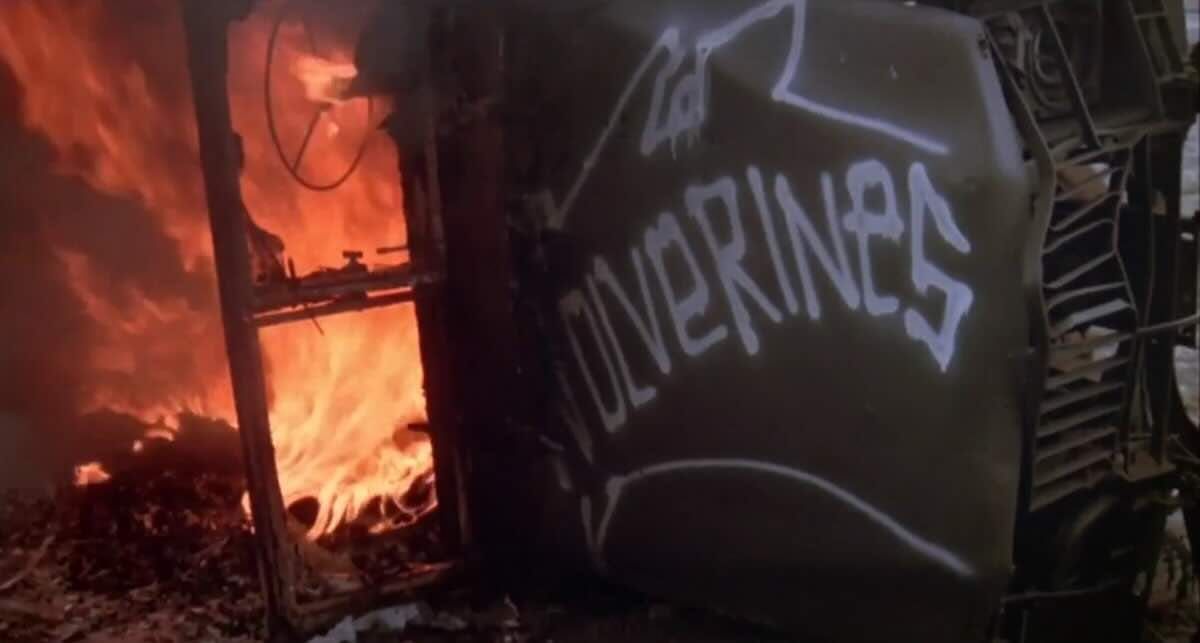
What begins as a simple provocation—what does a film like Red Dawn tell us about insurgency?—quickly becomes something else entirely. Not an answer, but a series of mismatches. Between narrative and reality. Between clarity and condition. Between what feels true and what holds up under pressure.
Narratives are efficient. They compress complexity into arcs we can follow: repression leads to resistance, resistance becomes insurgency, insurgency raises the cost of occupation. It is legible. It is portable. It fits into two hours of film time, or a ten-minute read.
It goes without saying that reality resists that compression.
Let's consider the following. Myanmar does not resolve into a single insurgency, but a federation of conflicts with uneven coordination and divergent goals. Chiapas does not end in victory or defeat, but in a negotiated equilibrium that persists. Vietnam stretches the timeline until political will, not battlefield position, determines the outcome. Gaza cycles rather than concludes. Afghanistan appears stable—until the support structure is removed and the system reveals itself.
Each case shares patterns with the narrative model. None conforms to it. The difference is not random. It is conditional.
The familiar claim—repression fuels resistance—holds in open systems: where information flows, where borders are porous, where external support is possible, where political constraints limit how force can be applied. Under those conditions, violence generates visibility, visibility generates pressure, and pressure reshapes outcomes.
It fails in closed systems: where information is controlled, borders are sealed, external support is absent, and repression can be applied without meaningful constraint. Under those conditions, violence does not amplify resistance. It contains it.
The same input produces different outputs because the system is different, and this is the part the narrative model cannot hold. It treats what is conditional as if it were universal.
What looks like popular support is often coercion. What looks like insurgency is often multiple insurgencies. What looks like victory is often a transition into a different phase of conflict. What looks like stability may only be dependency in disguise.
The fractures are not exceptions. They are signals.
Myanmar’s fragmentation points to coordination costs. Chiapas’s equilibrium points to negotiated off-ramps. Vietnam’s timeline points to American domestic political limits. Gaza’s cycles point to the persistence of unresolved conditions. Afghanistan’s collapse points to the fragility of externally sustained systems.
The mess is not an inconvenience to be smoothed over. It is where the variables live.
So why do the cleaner models persist? Because they are useful. They travel well. They support policy arguments about deterrence and resistance. They translate professional experience into accessible insight. They validate the frameworks of the communities that produce and consume them. And they fit the constraints of the platforms that circulate them.
None of this makes them wrong. It makes them partial. The problem is not that narrative models exist. It is that they are often presented without their conditions. This is not an argument against using stories to think. Stories are how we begin. But they are not where we should end.
The alternative is not to abandon models, but to make their limits explicit: to ask under what conditions a pattern holds, what variables it suppresses, and where it breaks. Not to seek a cleaner rule, but to map the boundaries of the one we have.
We are not experts. But we can ask: what kind of system produces this outcome? What assumptions are being made? What is missing? Who benefits from the simplification?
Those questions do not produce a simpler model. They produce a more honest one. Because if there is a lesson here, it is not about insurgency.
It is about the risk of mistaking a narrative that fits for a system that works.