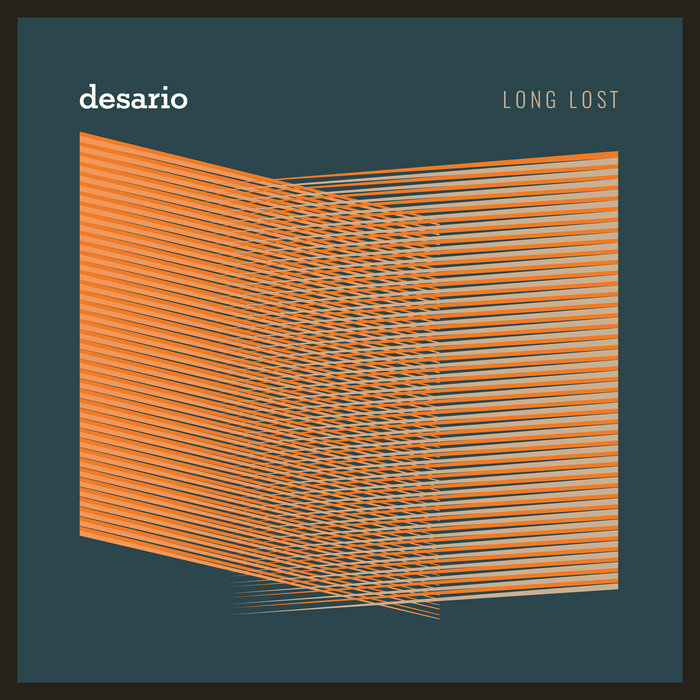
Desario: Hinterland + Long Lost
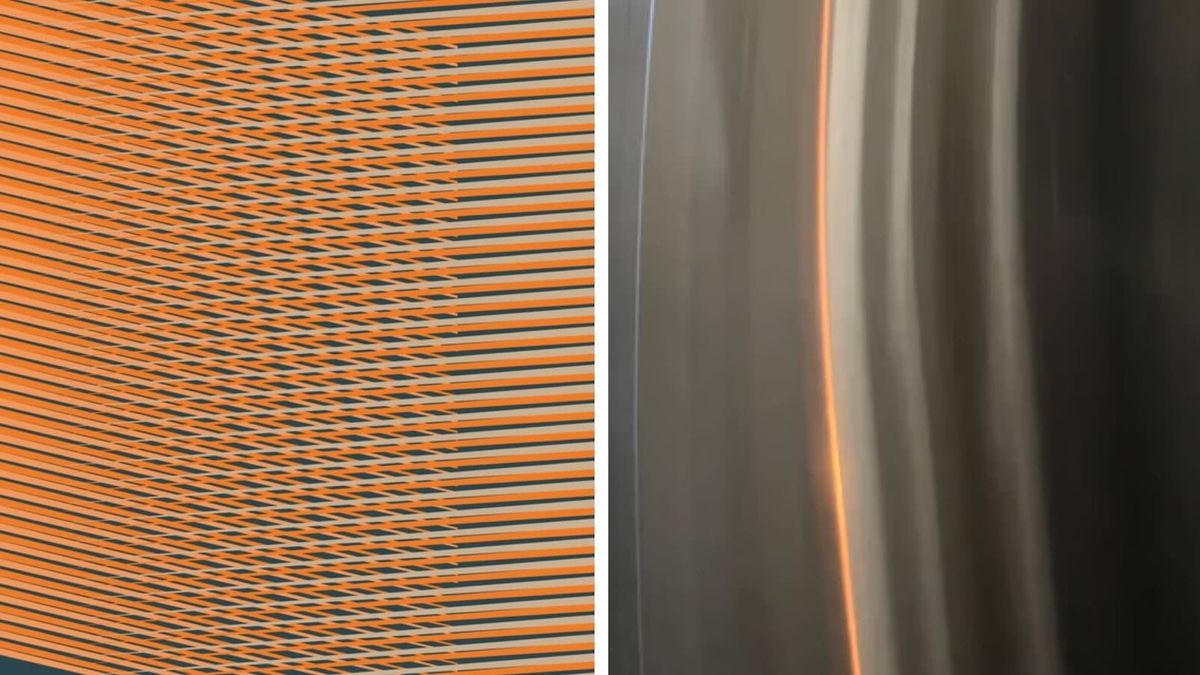
Same Four Pairs of Hands, Different Light
It is tempting to frame Desario’s two new albums, Hinterland and Long Lost, as contrasting works. The temptation is strong because the contrast is real.
One, Hinterland, was recorded in Portland at Jackpot! Recording Studio with Larry Crane, a producer whose presence introduced an outside ear and, by all accounts, an outside pressure. Not adversarial pressure. Not mythic studio torment. Something subtler and more useful: the pressure of being heard differently than one hears oneself.
The other, Long Lost, was recorded closer to home at Desario HQ and YoasHaus, with guitarist Michael Yoas recording and mixing. It emerged from the band’s own present-tense process: rehearsal jams, ideas that vocalist/guitarist John Conley brought in, and material Yoas had been working on. The artwork credits confirm the split in recording contexts: Hinterland was produced, recorded, and mixed by Larry Crane at Jackpot! in Portland, while Long Lost was recorded and mixed by Michael Yoas in Sacramento.
That distinction matters. But it should not harden into a ranking.
If anything, Conley’s clarification of the albums’ origins makes them more vital. Hinterland did not simply emerge from a studio adventure as newly written material given an outside polish. It grew from older fragments—ideas gathered from practice recordings and then reimagined into full songs. Long Lost, despite its title, is not the archival recovery. It is the newer internally generated work.
The titles almost seem to swap masks. Long Lost sounds like it ought to be the excavation. Hinterland sounds like unexplored territory. Instead, the older fragments become the wider landscape, and the newer compositions become the compact interior space.
That reversal could seem like a contradiction; for me it's a fascinating twist.
Hinterland has a wide-screen feel. Not “bigger” in the crude sense, not merely louder or glossier, but more projected. The sound opens outward. The guitars have air around them, the drums and bass hold a broader frame, and the songs seem to arrive as if lit from the control room rather than remembered from the practice space. It is easy to hear Ride and Swervedriver in the resonances, not as borrowed costume but as a family resemblance: guitars in motion, force without blur, velocity without losing the song underneath.
Long Lost, by contrast, is more compact. Its presentation is sonically tighter, more inward-facing, but calling it smaller would miss the point. If Hinterland feels cinematic, Long Lost feels enclosed in the best possible sense: a room with the band still in it. The Chameleons reference applies here, not because Desario are tracing outlines, but because the songs preserve that sense of guitars as atmosphere and architecture at once. The parts are not merely layered; they lean against each other.
To call one “wide screen” and the other “compact” risks suggesting a hierarchy of scale. Better, perhaps, to think in aspect ratios. Hinterland and Long Lost are both landscapes. One feels like anamorphic projection; the other like a carefully framed 4K image. Neither lacks depth. They simply organize space differently.
The shared identity is never in doubt. Both records are unarguably Desario.
That matters because guitar-heavy bands often face a peculiar problem of legibility. The guitars can become oceanic. The vocals can dissolve into the wash. The rhythm section can become floor rather than language. A band may be seen, may be heard, may even be felt, and still not be understood.
Desario avoid that trap.
Conley’s voice is a crucial part of that balance. It floats and blends, but it remains legible. It belongs to the texture without disappearing into it. That is not a small achievement in music where the guitars often claim first rights to the horizon. His vocals do not sit above the band like labels pasted onto a photograph; they move inside the image, giving shape to the landscape without flattening it into explanation.
Mike Carr, the bassist, deserves attention. On Hinterland, especially, the bass feels newly illuminated. Crane reportedly focused heavily on Carr's parts during the sessions, which was not necessarily what the band expected. That makes sense when hearing the record. In music like this, bass is not merely low-end support. It is load-bearing architecture. It tells the guitars where the ground is. It gives the drums somewhere to land. It lets the sound expand without losing its center.
That may be part of what makes Hinterland feel adventurous. Not because Desario suddenly became another band, but because they took older fragments from their own internal archive, carried them into another city, placed them before an outside listener, and let those fragments be understood differently. The adventure was not reinvention. It was exposure to another kind of hearing.
Long Lost, meanwhile, carries the authority of new material generated within a mature band language. It sounds like a band making new work from inside its own accumulated grammar. Rehearsal jams, individual sparks, and shared arrangement instincts become songs that feel already lived-in without feeling retrospective. That is a different kind of confidence: not rediscovery, but continuity.
This is where the usual back-to-back-album comparison starts to fail.
There are famous pairs of records that feel like related batches sorted into separate containers: The Cars and Candy-O; Sparks’ Kimono My House and Propaganda; The Doors and Strange Days; Red House Painters’ Rollercoaster and Bridge; even Kid A and Amnesiac. In each case, the records are often heard as siblings because the material was generated within a compressed period of sustained formation, touring, recording, or aesthetic overproduction. Songs are centrifugally titrated into buckets.
Hinterland and Long Lost do not feel like that.
They feel less like one body of material divided in two and more like the same band becoming legible under different conditions. Same four pairs of hands. Different contexts. Similar resonances. Distinct entities.
There are particular moments where the distinction sharpens. “Concentric Circles” nods toward Loop’s A Gilded Eternity, not as mimicry but as orbit: propulsion, repetition, pressure, guitars as a rotating field. Its lyric keeps returning to circular motion, thresholds, and ignition: “Round and round / Count it down,” “A door closes / Another one opens,” “When I turn / You will see me everywhere.”
“Memory Box” carries a slide guitar line that could easily have turned into showboating in lesser hands. Instead, it cruises. It moves through the song without needing to step forward and announce itself. That restraint is part of Desario’s strength. The band understands when a part should become an event and when it should simply keep the machine gliding.
On Long Lost, “If They Did” stands out for the way it lets pattern, pressure, and restraint become musical architecture. The lyric begins with “Connecting the patterns / Aligning the shapes” before moving through images of erasure, water, volume, and inanimate objects shifting in time. The song does what the band does well: it builds motion without losing coherence.
This is also where drummer Kirklyn Cox deserves a clear tip of the hat. Drums are the engines on which layered guitar bands like Desario either soar or flame out, and there is a mild paradox in how perfectly functioning infrastructure can escape notice precisely because it is doing its job. That might sound like a backhanded compliment until one remembers how quickly the wrong drummer can wreck a band. You’ve seen it. I’ve seen it.
Anyway, if there is a downside here, it is only the inconvenient one: Desario now have two outstanding collections of songs, each with its own tint and shine. That is not a real complaint. It is the problem of abundance.
What makes both records compelling is not novelty, exactly, and not nostalgia either. It is continuity under changed conditions. A band can take older fragments and let an outside producer help reframe them. A band can generate new work from inside the familiar pressure of rehearsal, friendship, and shared instinct. A band can submit to discomfort in a studio far from home, returning nightly to the AirBnB exhausted, and still emerge with a version of itself that feels not corrected, but refracted.
Hinterland is Desario transforming older fragments under outside light.
Long Lost is Desario generating new songs from inside the current room.
Both views are true. Both records hold. The same landscape, seen through different glass.
 Bandcamp New & Notable Jan 8, 2025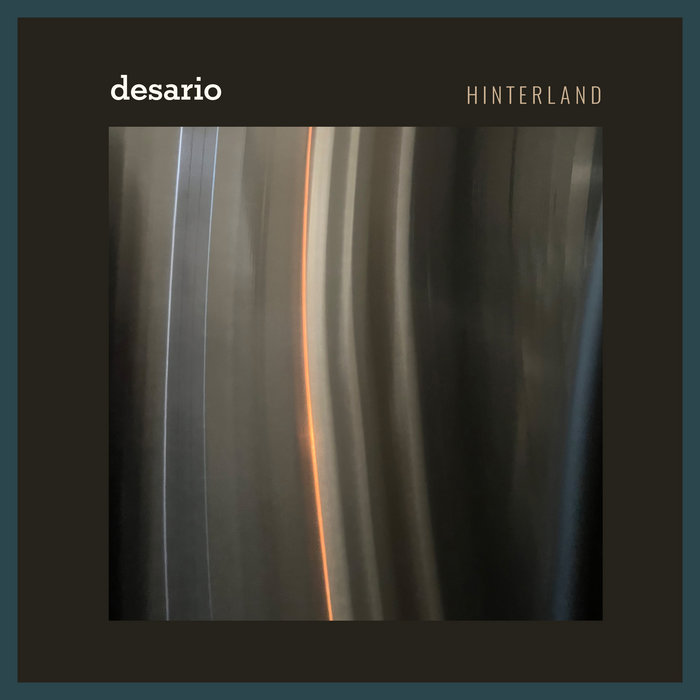
 Bandcamp New & Notable Jan 8, 2025