At an Office Pace
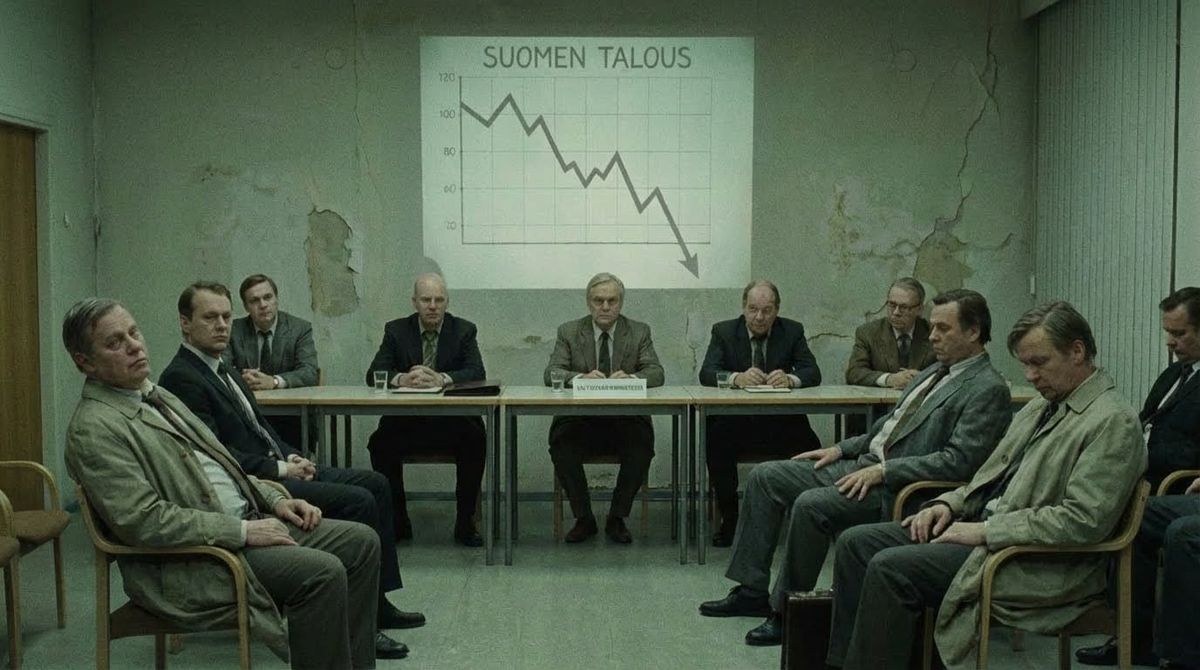
A setting for TiGGR.
A branch office. Not headquarters — a satellite, three or four hours from anyone who matters, in an industry that has been described as declining for longer than most of you have worked here. The product is unglamorous and the margins are thin and the branch has survived every round of consolidation so far, mostly by not being worth the trouble of closing.
Nothing you ship today will matter. That is the point. What matters is who was in the room, whose name is on it, and whether you get out the door at 5:01.
What You Fill In
Five minutes, together, before anyone makes a character.
The product. Something functional and forgettable. Checks. Phone books. Trophy engraving. Commercial printing. Office furniture. Industrial fasteners. Uniform rental. Pick something you could not get excited about at gunpoint.
Don't pick paper. Not because it's wrong. Because someone at the table has seen all nine seasons and will bring a character with them.
The town. Somewhere with one good restaurant and a lot of parking.
The parent company. Two words, one of them a direction or a mineral.
Roughly when. Any time before your office went remote. You need everyone in one building, in earshot of each other, with no mute button. Beyond that it doesn't matter.
The Rules of the Place
Nobody here is malicious. Everyone is behaving sensibly given their position, their incentives, and what they can see from where they sit. The mess is what those sensible behaviors add up to. There is no villain and no one to defeat.
No authority, all leverage. No player character can hire, fire, approve, or compel. Every player character controls one thing nobody else can route around. That's the whole of your power and it is more than it sounds.
Goals are positional, never productive. Not "ship the order." Get your name on the fix. Keep the exception you promised. Be the one who knew first. Get out at 5:01.
5:01 is the buzzer, not the goal. The day ends whether or not anything got done. Time is the container. Your positional goal is the objective. A GM who runs this as endurance has run it wrong.
The branch abides. It does not close. It gets thinner. People leave and are not replaced and the work stays the same size. Nothing you do today changes that and nothing you do today is supposed to.
Losing means you stay late. Not disaster. Just the evening, gone.
Characters
Build normally: 3 points across Body, Mind, Charm; one Special; one Signature Gear; 5 HP.
Body is presence and endurance. Standing your ground in the doorway. Hour eleven in the records room. Getting to the annex and back before the auditor notices you left. Do not treat it as a dump stat — the middle of a working day is physical.
HP is composure. Zero means you sit down on a box and stop. You're back next scene.
Six roles. Take one each. The suggested goal is a starting point; swap it if the table has a better idea.
Reception — controls the door and the phones, and knows who's in the building. Exposed to: Branch Leadership. Front Desk: +1 Mind to know who's already here and why. Goal: be the one who knew first.
IT — controls accounts, permissions, and the mail archive. Exposed to: The Audit. Restore From Backup: +1 Mind when the answer exists somewhere nobody can reach. Goal: close the ticket with your name on it.
Warehouse — controls what physically ships, and knows what's actually in the annex versus what the system says. Exposed to: Branch Leadership. Load Bearing: +1 Body when moving something nobody else can move. Goal: don't get blamed for the count.
Sales — owns the relationship. The Account will not talk to anyone else. Exposed to: The Account. Existing Rapport: +1 Charm with anyone you've met in person. Goal: keep the exception you already promised.
Field Tech — the only one who has seen the client's site with their own eyes. Exposed to: The Account. Been Out There: +1 Mind describing what is actually installed. Goal: get the truck replaced, or at least looked at.
Accounting — controls what's been paid, what hasn't, and how long it's been. Exposed to: The Audit. Reconciled: +1 Mind when the discrepancy is in writing. Goal: get someone to say the number out loud, in a meeting.
Every role is exposed to a faction that can ruin their day. That's deliberate. No scene should contain a player with nothing at stake.
For the Record
Once per scene, step out of the moment and explain yourself. Not to a camera — there is no documentary crew here. To nobody. To the ceiling. To whoever might be listening in twenty years.
Explain why what you just did was completely reasonable.
Doing this recovers your Special Ability use for the scene.
It does not have to be true. It does not have to be fair. Nobody in the fiction hears it, and nothing you say in it can be used against you by another character. It's the place the honest version goes when the honest version can't be said at your desk.
Quiet players: this is yours. Take it early.
Factions
Three, and they refresh between scenes like everyone else. You do not defeat a faction. You satisfy it, briefly, in an arrangement where every constraint is met at once. Tomorrow it's back.
Branch Leadership — Body 1, Mind 0, Charm 1, 5 HP. Open Door Policy: +1 Charm when the conversation happens at your desk, in front of your team. They have an open-door policy, meaning your door is always open to them. They roam. They have been to a training and they are executing the technique faithfully and they believe in it completely. There are several of them and they do not always agree, and neither of them knows what the other told you. None of it was in writing. What they want: no surprises reaching the parent company.
The Account — Body 0, Mind 1, Charm 1, 4 HP. Escalation: +1 Charm when going over your head. One customer, most of the revenue. Several people who can call, and they all have Sales' cell number. What they want: an exception. Again. Reasonably.
The Audit — Body 1, Mind 2, Charm −1, 3 HP. Findings: +1 Mind when the answer is already written down somewhere. External, independent, slow, polite, and here. It will audit you too. It is the only lever that points upward. What they want: the documented process, followed, demonstrably.
Corporate is not a faction. It is arithmetic. It has no position to argue with and no stat block. Branch Leadership is its interface, relaying decisions it also cannot change.
The Day
Three scenes: morning, lunch, afternoon.
This is a container, not a rising curve. Lunch is not escalation — it's the release valve, and it's where the plan gets made, information gets traded, and somebody commits to something stupid. The afternoon is where that lands.
GM: across the three scenes, every chokepoint gets called at least once. A door problem, an archive problem, a numbers problem, a physical problem, a relationship problem, a site-knowledge problem. If your middle scene is a records room, the front desk needs somewhere to matter.
Vehicles and Gear
The delivery truck — Body 2, Mind 0, Charm 1, 10 HP. Backs In: +1 Body when there's no room to turn around. Let them rely on it until they don't.
The inventory system — Body 0, Mind 2, Charm 1, 10 HP. Green Check: +1 Mind when it agrees with you. Twenty years old. Nobody knows what it's actually doing. It surfaces only when it's already wrong. One person understands it, he is not a player character, and his knowledge is not transferable. That's the joke and it should stay one.
Signature Gear (+3, once per scenario): the key to the annex. A headlamp. The hand truck. The one binder. The cell number nobody else has. A tape drive that still works.
Crisis du Jour
Roll all three, openly, in front of everyone. Let a player roll. Combine them and start the morning.
The Crisis (d6)
- The Account's order is wrong, in a way that favors them.
- An audit request arrives with a date on it. The date is Friday.
- Something in the annex is on the floor, and there is water.
- A new hire starts today. Nobody was told. There's no desk.
- The system says the shipment left. The dock says it didn't.
- Leadership has committed the branch to something at a meeting none of you attended.
The Complication (d6)
- The only person who knew how retired last spring.
- It's already been escalated. By someone else. Before you heard.
- It needs a signature from someone who is "in and out today."
- There's a policy. It contradicts the other policy.
- It's fine. Proving it's fine will take four hours.
- Leadership is on the floor and wants to be helpful.
Who needs something from you before 5:00 (d6)
- Sales, who promised it Tuesday.
- The Account, personally, by phone, again.
- The auditor, who is polite, and here.
- Someone at another branch you've never met.
- Leadership, who wants a number, not the number.
- The person who covers for you when you're out.
Writing your own: every entry is two parties who are both right. Never encode the answer — the tapes are missing is a situation, the tapes are missing because Leadership shredded them is a plot with the ending already in it.
Running It
Ask: which two people are both right? That's your complication generator. Not "what goes wrong."
Default to Difficulty 8. Risky 6 for the ordinary friction of the building. Climactic 10 for the real one: getting three named people to agree, in writing, in one meeting, before their calendars reopen.
Fail forward, gently. The dice stay kind. The setting stays honest. That gap is the whole tone.
Let them be petty. Territorial, credit-hungry, grudge-holding. Nobody is malicious applies to the situation, not to the players' characters.
Give people personalities outside their function. The chair. The mug. The parking grudge. The hobby nobody asked about. The system is what defeats them; they still have to be somebody first.
Leadership arrives, lingers too long, and leaves. Continuous pressure stops being felt. The relief after they go is what makes the next arrival register.
Between sessions: the crisis resets, the branch abides, nothing carries over except standing. Talk it out. Nobody advances.
A note on the difficult version. This setting is built around bounded frustration — nobody owns the old system, two policies contradict, the vendor is wrong. It deliberately excludes the other kind: harassment, retaliation, the reorg that was a purge. Those aren't Confrontations, because a Confrontation gives you a roll, and the whole content of that experience is having no move. They can exist as weather — why a faction behaves as it does, what an NPC left behind, what a character already carries. If a table wants to go there directly, that's a conversation to have first, out of character, and everyone gets a veto.
Credits
For TiGGR, by The Grey Ledger Society, and used under its terms.
Released under Creative Commons Attribution-ShareAlike 4.0. Use it, hack it, share it, sell it. Credit the original and keep it open.