The Signature
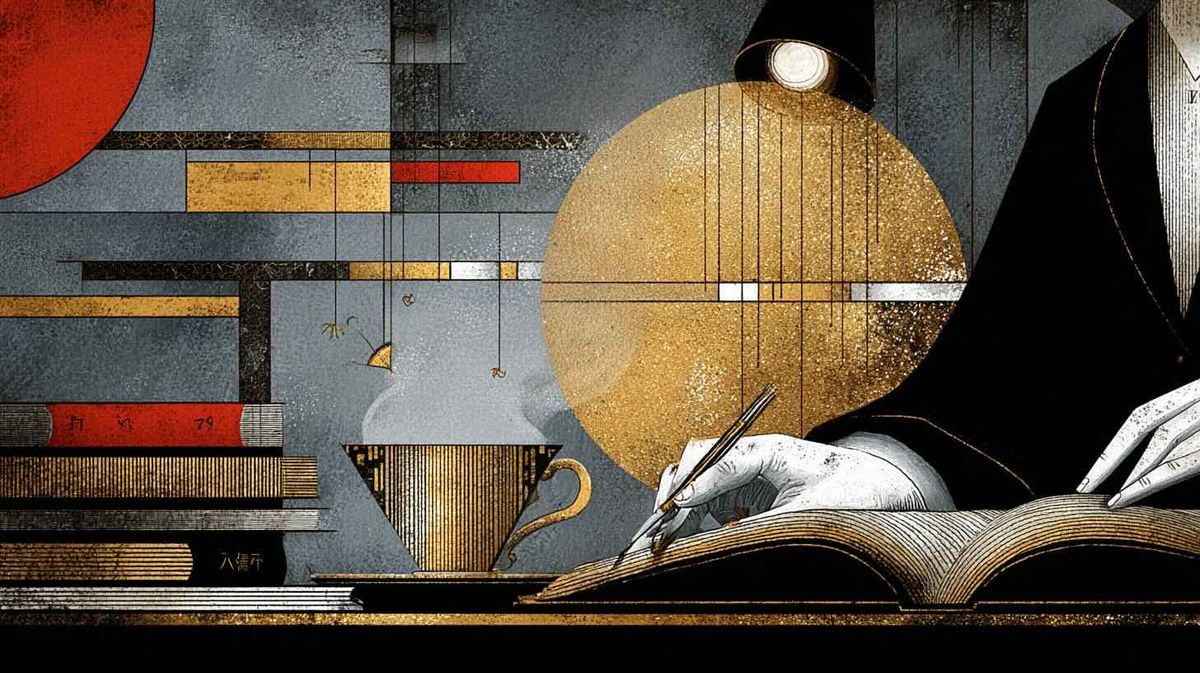
She cannot tell you whether she read it.
That is the part nobody puts in the brochure. Marilyn will say she reviewed the file, and she will not be lying, and the sentence will not be worth much. The psychologists who study this have a finding that ought to be printed on the login screen: people working alongside a confident recommendation do not experience themselves as deferring. They experience themselves as agreeing. Put them beside a system that stays quiet, and they will miss failures their own instruments are reporting, and they will not come away feeling careless. They will come away feeling like they had been watching.
So when Marilyn signs, there are two things that could have happened, and the difference matters enormously to a jury, to a regulator, to the man whose hallway had water in it — and Marilyn is not a reliable witness to which one it was. Not because she is dishonest. Because that is not a thing the inside of a head reports accurately. She finds out later, if at all, and only when something external forces the comparison: the file comes back, the attorney calls, she opens the raw photographs for an unrelated reason and sees the neighbor's gable where the claimant's should be.
This is the sentence the whole argument runs through. If she could tell, you could ask her. You could survey the unit, tally the answers, and know whether the review was real. You cannot. Which means every account of this arrangement built on what adjusters say — including the ones I find persuasive, including the reviews where people write that the model does the thinking now — is testimony about how the work feels and not about what the work is. Those are different objects. The feeling is real evidence of something. It is not evidence of the thing.
It has been a quiet week in the claims unit, which is a phrase people use when the phones are not quiet at all.
Marilyn has been an adjuster long enough to remember when the new system was a new carpet. You complained about the carpet, the bunching, the off-gassing, and after a month you stopped, because a carpet does not write the estimate. She has opinions about the pod coffee machine that produces a meek suggestion of coffee. She has opinions about the intranet that took six clicks to reach the holiday schedule. Those were ordinary hatreds, the kind you share at lunch and then live with.
The thing on her screen writes the estimate. It writes a summary of the medical file, and a courteous little paragraph underneath. Her name goes at the bottom. That is not a figure of speech; it is the box the state wants checked.
The difference between the intranet and this is not that one was worse software. The intranet added steps. This adds a conclusion, and then waits for a person to become the kind of person who concluded it. Whether she becomes that person or merely occupies the space where such a person would stand is exactly the thing she cannot report.
There is real work in the waiting, and pretending otherwise loses the argument to anyone who has done the job.
The model has never heard the recorded line where a man's voice goes thin saying the water was already in the hallway. It has not stood in a driveway and recognized that the photograph is of the neighbor's gable. It does not know this claimant had a fire in '19 and a particular way of talking about smoke that means something to someone who has heard it before. The particular, the off-to-the-side, the fact that is in the file and not in the average — that is what Marilyn is for, and it is not decoration.
But notice what the residual has in common. Every item on that list is a leftover. A wrong house. A thin voice. A history. These are the errors a careful person catches one at a time, and they are the errors her employer will point to when arguing that the licensed professional on the file is the party best placed to prevent mistakes. Sometimes that argument is correct.
It is not correct about the fence.
Somebody set a number. Below this confidence, route to Marilyn; above it, keep moving. Somebody decided what a good day's file count looks like. Somebody decided that disagreeing with the paragraph too often is a coaching opportunity rather than a signal about the paragraph.
Those are not mysteries of this kitchen fire. They are settings, and settings are not the province of the desk. Marilyn can catch a wrong gable. She cannot, in fifteen minutes, catch a fence built an inch too low across a thousand homes, because on each individual file a fence-error looks like a defensible decision. The pattern is only legible in aggregate, and nobody at a desk holds the aggregate. This is structural, not a failure of attention. A good radiologist cannot detect a miscalibrated scanner from one image.
The lawyer's version requires no villain. Put the cost of a mistake on whoever can prevent that kind of mistake most cheaply. Marilyn is cheap for the gable and badly placed for the fence. The fence is changed one flight up, in a room where no one's license number appears on the denial letter. Sue only the signature and you will get very good signatures.
The company has a real argument and it should be stated at full strength. The old arrangement was a backlog, and a backlog is its own cruelty. People waiting months on a fire claim are not an abstraction; delay is a harm you can hear on the telephone. A faster system with a higher per-file error rate can leave fewer people wrongly worse off, if the extra errors are the kind a person catches and there is a person with time to catch them.
That is a trade worth taking seriously. It fails in exactly one way: when the speed is purchased out of the attention the leftovers require. Then you have a faster fence and nobody in the yard, and the cycle-time chart still looks excellent.
The other person is not in the building.
A system can look tidy from Marilyn's side — she may even be permitted, on paper, to disagree — and the man on the phone may never learn that a model touched his file. A right to request human re-review is not a safeguard if almost nobody requests it and the ones who do are those who already knew how to write the letter. Two numbers, not a slogan: how often the second look changes the answer, and how often anyone reaches it. A door that opens for the persistent is a filter. That shape is familiar from other offices with other acronyms, and it photographs beautifully in a compliance manual.
None of this establishes how common the bad version is. A week of talking about wrecks convinces you the road is wrecks. Most files, most weeks, are boring the way good plumbing is boring, and this account has no estimate of frequency because it was assembled from failures.
What it has is a shape and a list of readings that would locate a given desk on it: minutes per file, what was on the screen before the badge turned green, what happens to the person who overrides, whether the number upstairs moves when the fence is wrong, whether the claimant is told, whether the firm still hires the juniors who learn the leftover world by doing the ordinary files the model now finishes before lunch.
Every one of those is externally observable, and that is the point. They measure whether verification was possible, not whether anyone felt they verified. Feasibility can be photographed. Deference cannot, from either side of the glass.
And every one of those numbers already exists in the carrier's own tables. Timestamps, override flags, appeal reversals, model version, reviewer tenure. Assembling them is real work — claims platforms are old, acquired, and stitched together, and nobody built them to answer this question. But it is the kind of work firms do routinely when they want the answer. What is missing is not the capacity. It is the wanting, and there is a reason for that too: the moment you compute your own miss rate you have created a discoverable document establishing what you knew. That is not blindness. That is an arrangement in which not looking is the rational move, and it is precisely what a reporting mandate defeats — you cannot claim ignorance of something you were required to measure. Aviation built that bargain deliberately, with confidential reporting and continuous flight-data monitoring, because it decided the fleet-level view should not depend on any pilot's introspection. Signature requirements produce a name. They do not produce a dataset.
Marilyn does not read those papers. She reads the next file.
The state wants a licensed person in the picture, and the reason is not foolish. A person with a license can be afraid in a useful way, and fear is a hook. Whether the hook pulls the fence or only pulls Marilyn is the entire question, and it will not be settled by how anyone talks about artificial intelligence at lunch — hers included, mine included. It will be settled in folders where the minutes are written down.
So the thing to listen for is not the anger. She may be angry about the coffee. Listen instead for the order of operations: whether the conclusion arrives before the signature, and how long the gap is. That is audible from outside the building. It does not require her to know what happened, and it does not require anyone to believe her.