Your Caulk Gun Is Not an SBR
Notes on Misclassification, Water Ingress, and Why You Shouldn't Be the Red Shirt
There is a moment, familiar to anyone who has taken a defensive handgun course and then returned to ordinary domestic life, when you realize you are indexing your trigger finger along the frame of a Windex bottle. You are not doing this ironically. You are doing this because somewhere between the first drill and the fifteenth, your nervous system quietly decided that anything with a lever deserves accountability. The spray bottle does not care. You do it anyway.
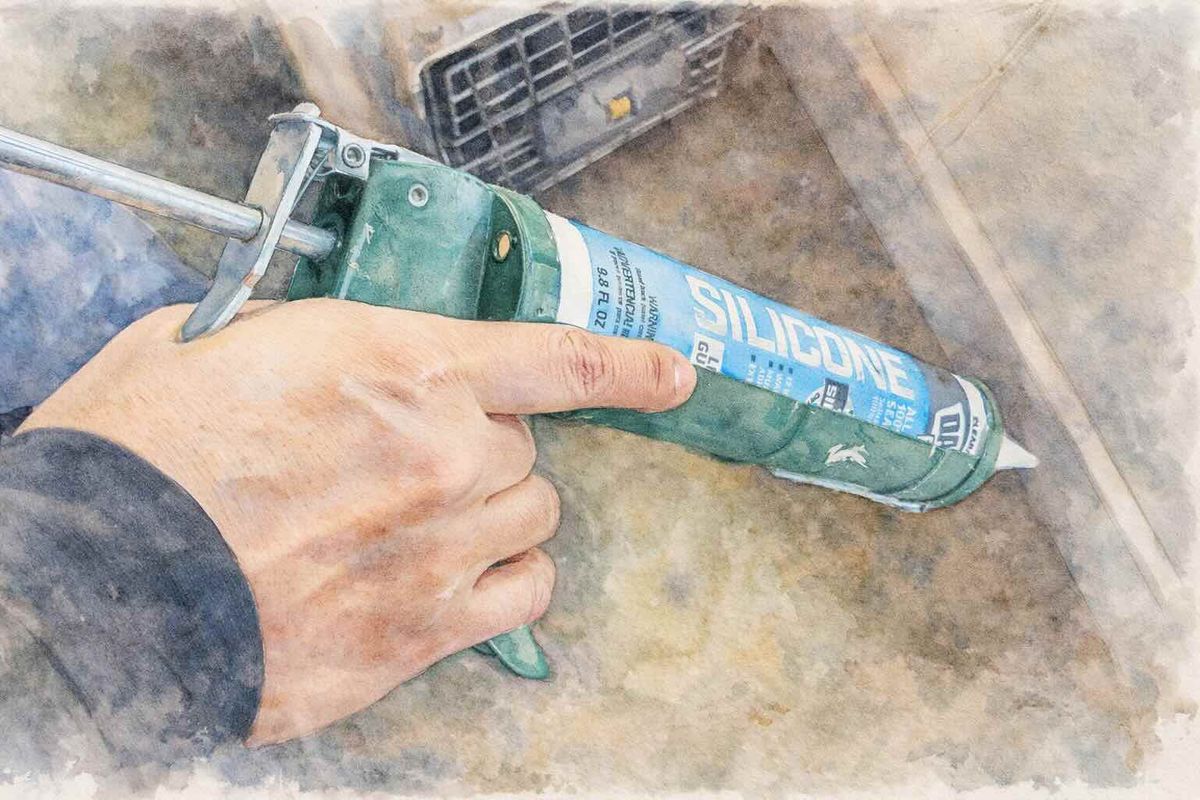
This is how I found myself standing on the second floor of my house in Portland, caulking gun in hand, finger indexed along the frame, thinking about short-barreled rifles.
The caulk gun, for the record, is not a short-barreled rifle. It has never been a short-barreled rifle. It has a tubular receiver-shaped body, a linear push-pull action, a forward projection point you align visually, and a long rod in the back that your cheek could, theoretically, find purchase on. But it dispenses silicone. Its regulatory status is, to date, uncontested. No one at the Bureau of Alcohol, Tobacco, Firearms and Explosives has issued an interpretive letter about bead length. This is, in the current environment, a kind of luxury.
The task at hand was sealing the sill of a south-facing second-floor window. For most of the year, this window leads an uneventful life. Sun hits it. Wind hits it. Rain, when it arrives, runs off and minds its own business. But twice in recent years, during multi-day atmospheric rivers accompanied by north-blowing winds, a slow leak appeared in the ceiling above the dining room table. About a cup of water, arriving around day four or five, with the quiet confidence of something that had been planning this for a while.
It was, if I'm honest, more irritating than it had any right to be. Not because of the volume — a cup of water is nothing — but because it meant the house had a secret, and it had been keeping it through every ordinary rainstorm for years, waiting for exactly the right combination of duration and wind direction to reveal it.
The first time this happened, Nancy was out of town. The second time, she was at home, and I was at an all-day workshop with our Datadog reps, shuffling our use cases against their up-and-coming AI products like two decks of cards. The frantic Telegram message in the midst of discussing how we could deprecate Pagerduty led to a distracted Google search for a roofing company and a quick call with their dispatcher between sessions.
A roofer confirmed that the roof was fine. The flashing was fine. Everything overhead was doing its job. The culprit, it turned out, was the insect screen. Under sustained wind-driven rain, the screen formed just enough of a wet seal against the sill to allow water to pool. Given enough time and enough water, hairline cracks in the sill seams became viable paths inward. The water would enter laterally, travel along framing or sheathing, and eventually announce itself as a stain on the dining room ceiling, like a memo routed through three departments before reaching the person who actually needed it.
The proper fix would be to dismantle the window assembly, examine the sill, reassemble, and repaint. The window is sandwiched between glass and screen on the second floor. The proper fix can wait.
Instead, I applied silicone. Not a thin, elegant bead — a slathered, unapologetic layer of sealant across every visible seam and crack. Then I took two pieces of plastic straw and wedged them under the insect screen to break the surface tension and give pooled water a low-resistance escape route. This is not something you will find in a building science textbook. But it is not random, either. The diagnosis was specific: the screen creates a temporary dam, water pools, pressure finds the weakest seam inward. So the fix was specific: break the dam, give water somewhere better to go. Sealing alone would have been a guess. Drainage was the insight.
The logic, if you want to dignify it with that word, is old: when you cannot eliminate the input, design the exit. The rain will come. The wind will push it where it doesn't belong. The screen will do its accidental dam impression. But now the system has a path that leads outside instead of inside. Two straws and a blob of silicone, quietly outperforming a full teardown. For now.
This is, whether I like it or not, the same pattern that governed my decision to trade in a pair of pistol-braced firearms two years ago for a Glock 19 MOS with an enclosed Holosun green dot.
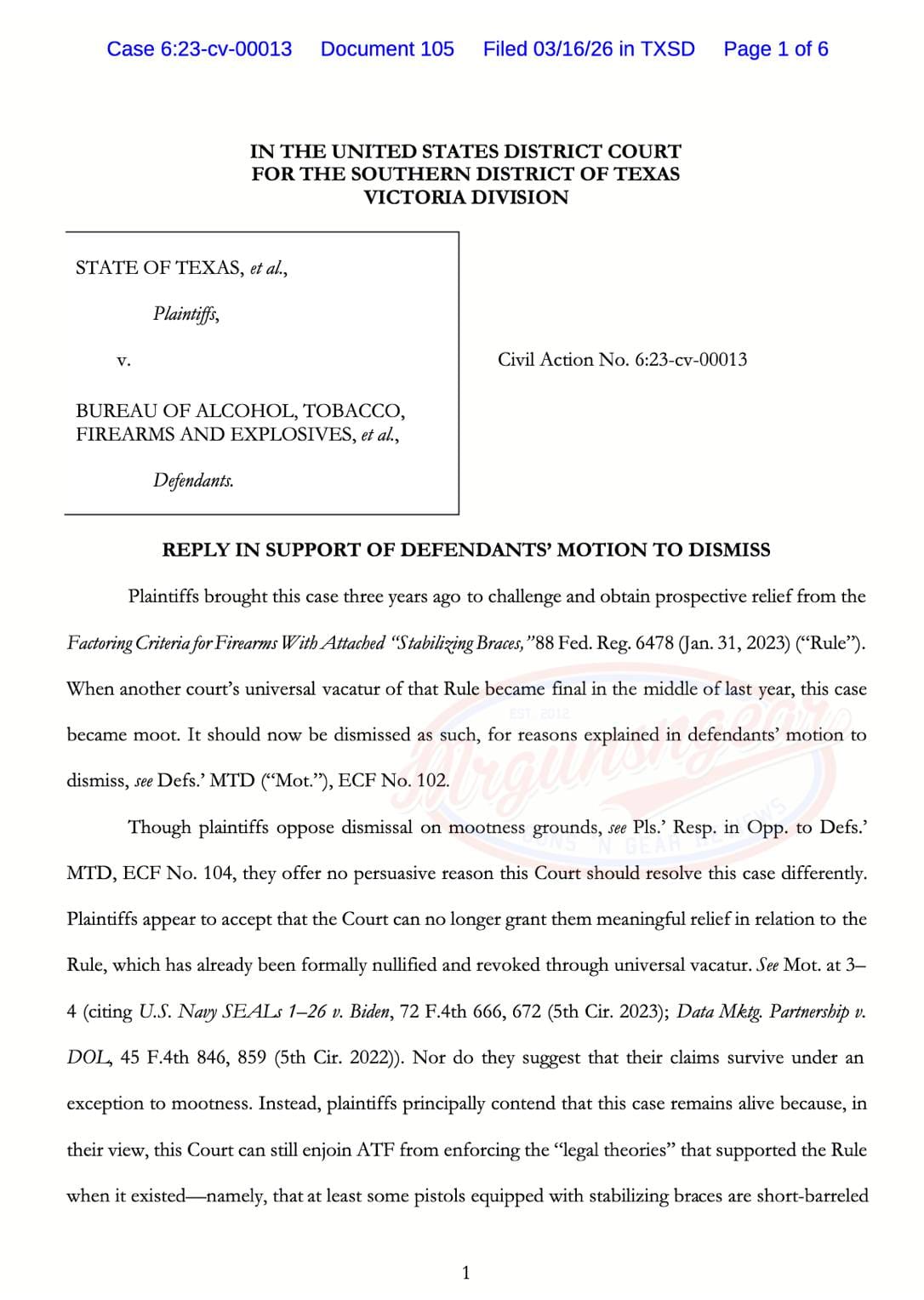
The brace saga, for those fortunate enough to have ignored it, was a decade-long exercise in classification instability. Whether a pistol equipped with a stabilizing brace constituted a short-barreled rifle under the National Firearms Act depended, at various points, on who you asked, when you asked, how the device was used, and possibly the prevailing mood in Washington. The ATF approved braces, then reconsidered, then proposed a rule, finalized the rule, saw it challenged in court, saw it vacated nationwide, appealed, and then dropped the appeal — while carefully not conceding the underlying legal theory. A normal person attempting to stay compliant across this timeline would have needed a subscription service and a dedicated attorney. Most people had neither. They just owned a thing and hoped the classification didn't shift under them while they weren't looking.
That low-grade uncertainty — not crisis, not safety, just the persistent hum of is this still okay? — is more fatiguing than it sounds. It is the regulatory equivalent of a slow leak: invisible under normal conditions, corrosive over time.
The rational response to this environment is not to argue about where the line is. The rational response is to step into a part of the map where no one is arguing. A Glock 19 is a pistol. It has always been a pistol. No one is writing interpretive letters about it. It is, in classification terms, boring. Boring is underrated. Though it is worth acknowledging that boring is also not guaranteed to stay boring. Today's settled category is only settled until someone decides to revisit it. The safe zone is current, not permanent.
This is the same logic as the window repair: do not stand where the system is most likely to thrash. Do not build dependencies on interpretations that are actively contested. And above all, do not volunteer to be the test case.
Many systems, it turns out, need their red shirts. In the original Star Trek, the red shirts were the crew members who beamed down to an alien planet and discovered, through the empirical method of dying, that the local fauna was hostile. They generated valuable data. The cost of generating that data was concentrated entirely on them. The benefits were distributed to everyone who came after, most of whom had the good sense to stay on the ship.
This dynamic is not confined to science fiction. In regulatory environments, someone has to be the first person to find out that the classification has changed, or that the enforcement posture has shifted, or that the thing they thought was clearly legal is now ambiguously not. That person absorbs the cost. Everyone else gets the precedent. Some of those people choose to be there — activists, litigants, advocates who deliberately test boundaries because they believe the boundary is wrong and someone has to push it. The system only stabilizes because someone eventually takes that hit, and not always voluntarily.
The uncomfortable refinement to this observation is that who ends up wearing the red shirt is not random. It is patterned. It correlates with who has the resources to step aside and who doesn't. The person who can swap platforms, hire a painter, or wait out a storm season is not the person most likely to become the test case. The person who bought one configuration of one firearm and doesn't track Federal Register notices — that person wakes up one morning on the wrong side of a line they didn't know had moved. The "let someone else discover the piranhas" strategy is available to those with options. For everyone else, the strategy is just called Tuesday.
And this is where the systems-as-neutral framing starts to fray. It is one thing to say that complex systems produce uneven outcomes. It is another to notice that some systems are structured in ways that reliably push risk toward people with the least capacity to absorb it — and that this arrangement is, if not designed, then at minimum tolerated by those who benefit from it. You do not need to call it conspiracy. You only need to notice that the pattern is stable, which in systems terms means something is sustaining it.
Which is worth sitting with, even if the immediate subject is a caulk gun.
For now, the ceiling is dry. The straws are holding. The Glock is boringly, unambiguously, a pistol. And the caulk gun continues to live its best life, untroubled by the knowledge that in a different regulatory universe, someone might have questions about its overall length.
My trigger finger, indexed along its frame, has no comment.