The Shelf After the Signal
How a Mood Became a Genre and Who Got Filed Where
I. The IHOP Commercial
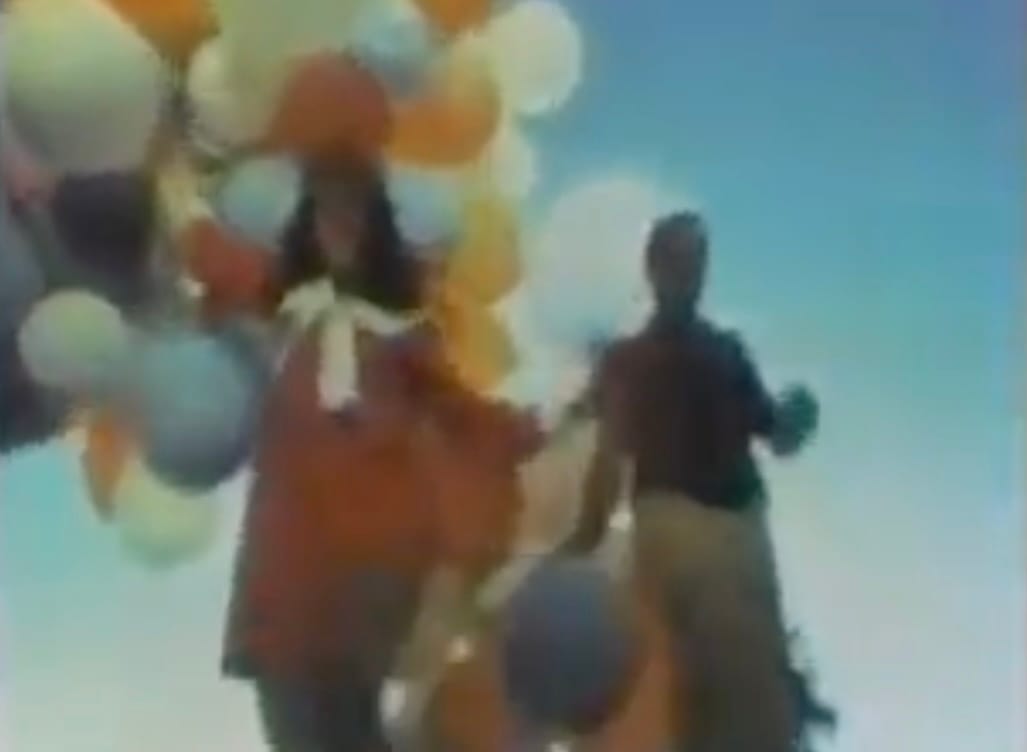
It was a late-’60s IHOP commercial. Nuclear family. Balloons. Patina’d Technicolor optimism. The camera tracking their run toward pancakes as if breakfast were destiny made manifest.
I slowed the video down. Laid Boards of Canada's “Roygbiv” underneath. Let the synth line bloom gently under the smiles. The alignment was immediate and eerie — not parody, not mockery. Something else. The ad wasn’t camp. It was earnest. And that earnestness, stretched and reframed, began to feel fragile.
I uploaded it to Instagram.
I got my first copyright strike.
An automated system protecting a corporate artifact of last century's optimism from being emotionally recontextualized by a piece of music about memory decay. No executive watched it and objected. The system simply recognized ownership and acted accordingly.
It didn’t recognize meaning. It recognized property.
When I first encountered the music that made that mashup inevitable, the word “hauntology” did not yet exist. The mood already had an address. The shelf did not.
II. Before the Shelf: Three Signals Without a Category (1993–1999)
Before there was a discourse, there were signals.
A. 1993: Emotional Reuse
In 1993, Bobby Wratten, post-Field Mice, covered "Love Song for the Dead Che" with Northern Picture Library. The original, by The United States of America, was a 1968 collision of avant electronics and pop instinct — oscillators and paranoia, Dorothy Moskowitz’s voice hovering above circuitry.
In 1993 there was no Ghost Box. No Mark Fisher. No shelf labeled anything. Derrida just committed "hauntology" to paper, but Wratten wasn’t following a recipe to a genre that had yet to be recursively defined. He was refracting Byrd and Moskowitz through a different pop grammar. The record was emotionally reusable.
That’s the key. Reusable.
The mood predates the movement.
B. 1996–1998: Contraband
It was 1997 when “Hi Scores” appeared on our college radio station's playlist. Boards of Canada didn’t arrive as “important electronic music.” It snuck in as contraband from an adjacent universe.
Fractal hip-hop beats. Creaky analog synths. Disembodied children’s voices that were neither ironic nor theatrical. Not horror. Not nostalgia. Something stranger — educational optimism curdled by time.
We paid import prices for Music Has the Right to Children before Matador licensed it. There was friction in that transaction. Commitment.
At the same moment, Squarepusher was the act on everyone’s forebrain. Drill-and-bass virtuosity. Acceleration. Technical escalation. What can the machine do when woven into sinew and nerves?
Boards of Canada asked a different question: what did the machine promise... and then forget?
Both on Warp Records. Both synthetic. Opposite attitudes toward technology. One embodied speed. The other articulated erosion.
C. Hearing the Ancestry Backwards
Through Stereolab’s Duophonic orbit, launched from the micro-indie label Wurlitzer Jukebox, came Broadcast. Oscillators that felt educational rather than rockist. Melodies that were catchy without being saccharine. Mystery without opacity.
They resurrected the sound of the BBC Radiophonic Workshop and the avant-pop instincts of The United States of America. But most of us encountered the ancestry backwards — Broadcast first, Radiophonic later, USofA later still.
The late ’90s didn’t just revive the past. They reorganized listening order.
It wasn’t revivalism. It was metabolism.
None of these artists were “doing hauntology.” They were in different rooms responding to the same cultural static. The aesthetic existed as distributed practice long before anyone drew a circle around it.
III. The Articulation Machine
At some point, the circle gets drawn regardless of who gets bound within.
The Ghost Box label didn’t invent decaying public-information modernism. Julian House staged it. The typography. The muted palettes. The catalog coherence. Once something has a look, it can be imitated. The aesthetic gained an interface.
Mark Fisher reframed the mood as a political condition: not nostalgia for the past, but grief for futures that once felt scheduled. The articulation didn’t create the feeling. It stabilized it in language.
Simon Reynolds folded it into a broader thesis about retromania and cultural recursion. The scaffolding went up.
The lifecycle is familiar. No one in 1979 called Josef K, The Raincoats, or Public Image Ltd. post-punk. Adorable and Swervedriver were zip-tied into shoegaze despite sounding like different bands entirely. Jonathan Poneman of SubPop reportedly declared grunge dead before the commercial explosion. The shelf always arrives after the scene.
Genres are zip ties. They organize the wiring. They prevent tangling.
But bundled wires carry their own RF fields — and genres radiate expectations the same way. Once the field is strong enough, it doesn’t just describe what’s inside the bundle. It induces currents in adjacent circuits. An act like Moon Wiring Club lands on the hauntology shelf predestined by default.
But the field doesn’t radiate evenly.
IV. The Shelf Has a Bias
The shelf organizes sound. It also organizes authority.
Male withdrawal tends to be mythologized. Syd Barrett becomes the mad visionary. Mark Hollis the monk of silence. Boards of Canada's absence reads as principled refusal — compositional, "on-brand."
Female withdrawal more often dissolves into erasure unless the cultural apparatus intervenes. Kendra Smith fades unless someone maintains the file. Connie Converse becomes a haunting footnote. Vashti Bunyan’s return is narrated as rescue.
Trish Keenan’s death in 2011 — pneumonia, at forty-two, something almost archaically simple — shifted Broadcast’s aesthetic from metaphor to literal loss. Her canonization occurred inside an existing meaning-making apparatus. The discourse was primed to receive her absence as significant.
Meaning requires infrastructure.
The deeper structural question isn’t only who gets mythologized. It’s whose refusal survives them.
Posthumous releases test that boundary. Broadcast’s demos were modest, process-oriented, demystifying. They reintroduced contingency. Saints don’t have rough drafts. Artists do.
Contrast with Sandy Denny’s A Boxful of Treasures — material she likely would not have authorized. The archive becomes a permission slip. The artist’s editorial “no” dissolves into market appetite.
Richard Thompson’s Small Town Romance exists despite his dislike. It doesn’t matter much. He had decades of output to reassert his own canon.
The living artist gets to be a curmudgeon.
The dead artist gets to be grateful.
V. The Accounting
Withdrawal: living, choosing silence.
Foreclosure: death or illness.
Annexation: estates and archives overriding refusal.
Different forms. Different power dynamics. The same question underneath them.
The meaning of an artist’s work — including their silence — is never intrinsic. It is produced by the infrastructure that receives it.
Who built the shelf?
Who gets filed?
Who maintains it?
Whose “no” does the system recognize?
VI. Coda
Boards of Canada’s ongoing silence functions because it predates codification. They cannot be accused of performing a category that did not exist when they began. Their withdrawal enacts the very condition their music described: systems running down, signals dissipating.
If they release something tomorrow, it will arrive unannounced and half-explained. If they never release again, that also fits.
The IHOP family is still running toward their pancakes somewhere in the archive. The copyright system did its job. The clip no longer exists on Instagram.
The feeling persists anyway.
The signal fades. The shelf remains.