The Molecule, Day One: Intake
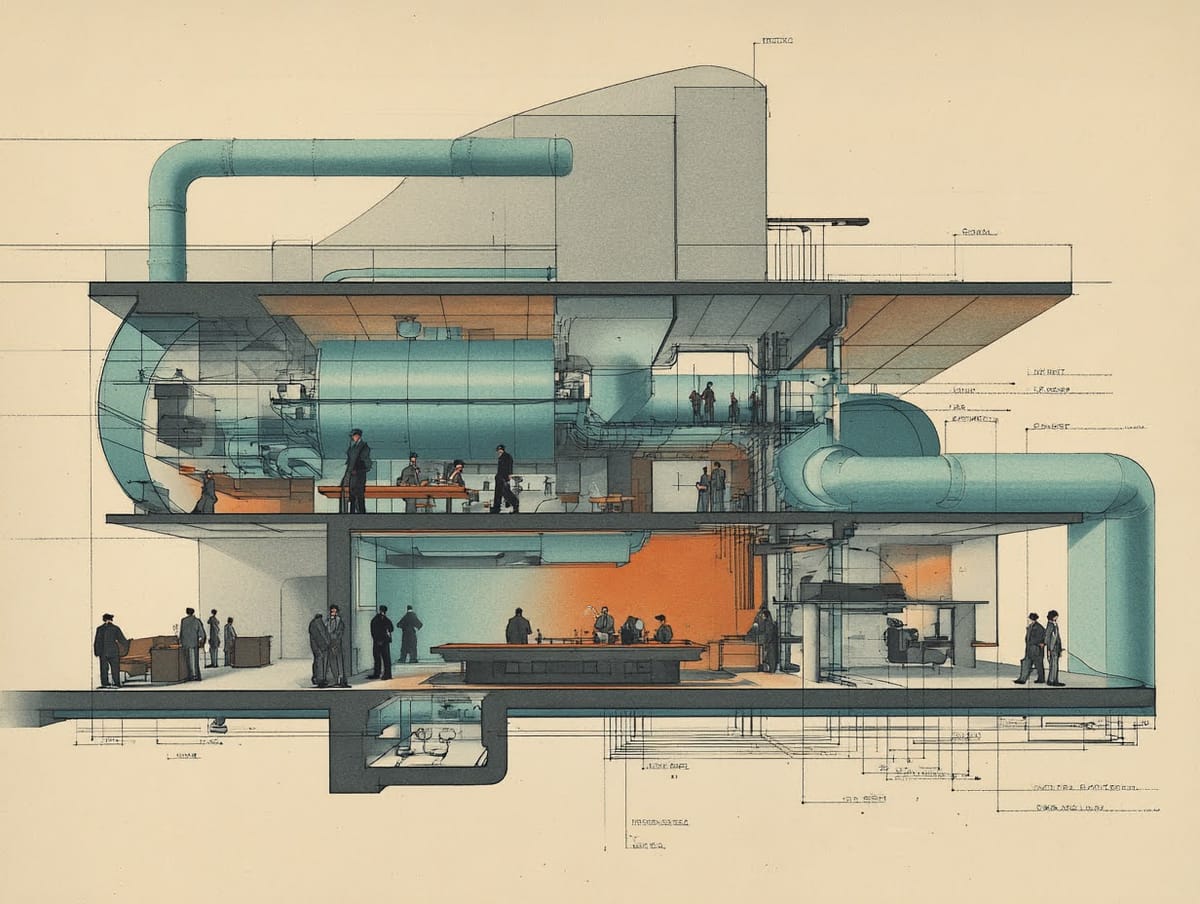
The molecule arrives at 6:45 AM, having paid its entrance fee. Twenty dollars to Uber to avoid the bus, though public transit will claim its due eventually. The courthouse doors remain locked until 7:30. No explanation was offered. The institution kept its own hours.
A coffee shop nearby accepts the molecule along with others. A labor action had been called, a strike occurring somewhere, but here the line continues. The molecule observes a man in a tattered high-visibility jacket who rises periodically to point at the window. The object of his attention remains unclear. Another man passes on the street carrying a duty belt with an empty holster over his shoulder and a lunch box in hand, apparently walking toward some post where he will become a guard. The city assembles itself in pieces.
At 7:30 the doors open.
The jury assembly room resembles a terminal for departures to unspecified destinations. Rows of seats bolted to floors. A large screen displays names, courtroom numbers, times. The molecule understands it has entered a sorting mechanism. Others arrive and take seats without consultation or greeting. Everyone had received the same summons. Everyone had come.
The molecule had been summoned twice before, in another city, more than a decade past. The first time: waiting, dismissal. The second time: a case involving a truck driver and a traffic violation. The evidence consisted of an officer's statement. The molecule, aggregated with eleven others, had voted guilty. The decision took minutes. The mechanism accepted the input and produced its output. The truck driver's name was forgotten, along with his offense.
Today the molecule understands more about the machine it has entered. Not enough to refuse entry—one simply does not refuse—but enough to observe with greater attention.
The screen updates. Names appear. A clerk reads from the list. Twenty people stand and follow a bailiff through a door. The screen updates again. More names. But not the molecule's. The waiting continues.
The molecule fidgets over an answer for the question that will come during selection: What do you do? "I'm a cloud whisperer who works with code and talks with machines." This seems adequately accurate. This seems unlikely to trigger ejection. The goal is not ejection. The goal is to present as slightly misaligned with the courthouse's expectations without appearing uncooperative. A molecule attempting to retain its particular properties while accepting its role in the larger solution, a distillate fueling the machineries of justice.
Across the room, a man reads Henri Bergson. When asked, he claims not to be well-read. He is halfway through Time and Free Will. The molecule recognizes a fellow traveler: someone refusing to treat the courthouse's empty hours as empty time.
The courthouse's WiFi does not block AI tools. This omission speaks volumes about what the system had and had not considered. Policy lags behind technology, which lags behind practice. The molecule notices someone else with a ChatGPT window open. The irony is evident to anyone who looks: a courthouse instructing jurors not to conduct outside research while providing open access to the sum of human knowledge, or its convincing simulacrum. Though it hardly matters. Everyone carries a portal in their pocket regardless.
By 11:25 AM, three groups had been called. The molecule remains. Lunch becomes a necessity. A deli several blocks away offers a Cobb salad and Diet Coke for $16.50. The molecule pays. This is the hidden tax on civic participation: not just time but money, not just presence but the small accumulating costs of remaining present.
The afternoon brings minor revelations. An adult drug court exists. It operates on different principles than the criminal docket, though toward what end remains ambiguous. The docket board continues its updates. Names scroll past like flight information at an airport where all destinations are identical and unknown.
The orientation video, viewed that morning, had made its case: the jury is not merely an influence on the state but temporarily is the state, albeit writ small. For a brief interval, the decision-making authority of the entire system collapses into twelve people in a box, or six depending on the rules. They will decide and the government will enforce their decision as its own. The molecule understands this as the strange bargain at the heart of the mechanism: sovereignty delegated to randomly selected citizens who will exercise it once and then sublimate back into ordinary life, unmemorialized.
The comparison that surfaces is peculiar but apt: Giger's illustration of a pistol loaded with small malformed human figures as ammunition. The courthouse functions on similar principles. It requires human components to fire. Without citizens chambered into the decision-making apparatus, the mechanism cannot discharge its function. Juries are not merely present in the system. They are the system's projectiles, deliberating and delivering judgment.
The machinery arrives freighted with its own mythology and the long record of lives consumed in its construction and defense. It continues its expenditure. The molecule understands that no other machine exists.
The molecule floats all day in what might be the reserve fuel tank—suspended in the medium, present but not active, necessary in aggregate but nearly invisible individually. The waiting itself seems designed to produce a particular psychological state: diminished agency, acceptance of institutional rhythm, gratitude for dismissal when it comes.
At 2:20 PM the clerk announces the remaining pool can leave. The day's sorting had concluded. The molecule remains unselected. This produces neither relief nor disappointment—only the recognition that the mechanism had determined it was not needed today. Perhaps tomorrow. Perhaps never. The day's obligations fulfilled through presence alone.
The molecule exits into gray afternoon light.
The choice presents itself: expensive ride or cheap transit. The molecule chooses a five block walk to the bus. The fare is $2.80, less than expected. A small mercy in a day of small measurements.
Walking to the stop, the molecule whistles without thinking. The tune absurd, childish, utterly divorced from the day's institutional weight: The Smurfs theme. Some part of the psyche insisting on its own soundtrack, rejecting the courthouse's gravity, reasserting the ordinary ridiculous life that continues outside the machine.
The bus arrives. The molecule boards. The press of passengers passive-aggressively jockeying for seats, the sour tang of unwashed bodies, the bestial rumble of the low ratio transmission propelling the vehicle through the city as it continues its functions.
The courthouse will open again tomorrow, accept new molecules into its fuel mix, sort them, aggregate them, use them or dismiss them according to logics the molecules themselves will never fully comprehend.
The mechanism does not require comprehension. Only participation. The molecule has participated. The molecule is released, obliged to return tomorrow, for the jury duty requires two days or a trial.
The bus bulls its way into the traffic's flow.