The Legible Margin
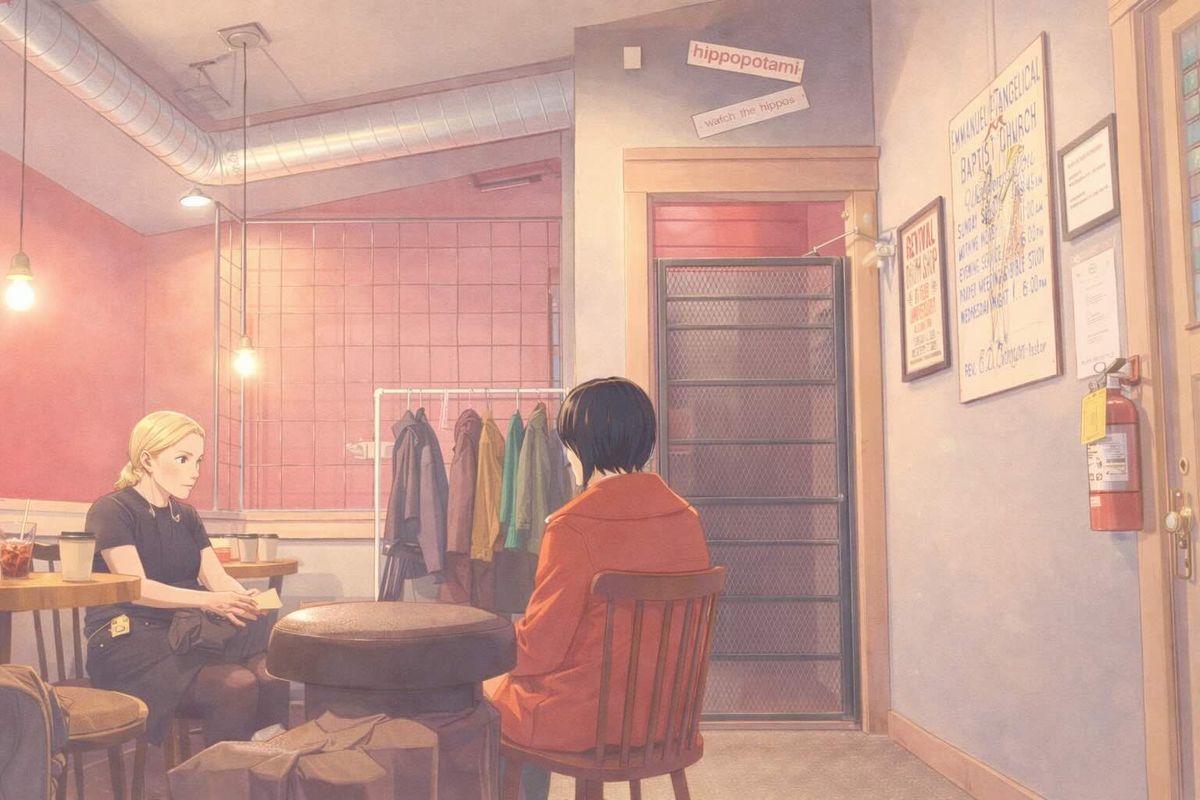
There’s a band playing. You can hear it from the sidewalk if the door opens at the right moment. A snare crack, a ribbon of organ, a voice catching on a note that someone in that room will remember long after tonight. The door closes. The street resumes.
Most of what matters happens like this.
Not unseen, exactly. Not unheard. But unrecorded in ways that certify events as real. No write ups in the local weeklies, no metrics that scale beyond the room, no enduring artifact that can be summoned later to prove it happened. And yet: it happened, and it mattered, and for a few hundred people it was the whole of the world for an evening.
Somewhere between the basement show and the stadium act, there’s a stratum of visibility—a margin where things are legible if you know how to read them.
Legibility is not the same as popularity. It’s not even the same as attention. It’s a function of context, timing, and shared vocabulary. The right names on a flyer. The right room on the right night. The right person telling you, “you have to go.” Miss any one of those, and the signal is sucked back into noise.
Yet inside that margin, everything is clear.
The person at the merch table isn’t just selling a shirt; they’re closing a loop that began years ago when someone first heard a song in a different room, on a different device, in a different version of themselves. The opening bands aren’t warming up the crowd; they’re recombining a scene in real time, carrying forward fragments of other bands, other nights, other iterations. The audience isn’t passive; it’s participatory memory.
Outside that margin, none of this exists.
Or rather, it exists in a form that’s indistinguishable from everything else. Another event listing. Another band name. Another night in a city with too many options and not enough time. The difference between a room that feels full and a room that is full is invisible from that vantage point.
And so the margin persists in a kind of selective visibility. It doesn’t scale well, because scaling would dissolve the conditions that make it legible in the first place. It relies on proximity—geographic, social, aesthetic. It relies on people who know where to look, and when to show up, and how to recognize what they’re seeing.
It also relies on a vast amount of unseen and unheard labor.
The gig driver navigating a city at midnight, ferrying someone between nodes of a network they’ll never fully map. The person behind the bar restocking, cleaning, resetting, keeping the environment stable enough for the event to occur. The security guard who is present but not acknowledged, maintaining boundaries that allow everything within to proceed. The production manager who clocks out quietly after everyone's left, ensuring that the next morning will look like nothing happened there.
They are part of the system, but not of the story as it’s usually told. And their presence is what allows the story to happen at all.
The legible margin is built on this asymmetry: a small, visible core supported by a much larger, largely invisible and interlocking periphery. The band on stage, the crowd in the room—these are the elements that get remembered, photographed, occasionally written about. The rest fades into the background, even as it does the work of holding the whole thing together.
There are moments when the margin widens.
A sold-out room. A surge of recognition. A sense that something has tipped, briefly, into a larger field of awareness. For an hour, maybe two, it feels like this "thing" could expand indefinitely. That this could be the beginning of something bigger, something that breaks out of the constraints that have kept it contained.
And then the night ends.
The gear is packed. The room is cleared. The door closes. The street resumes. The margin contracts back to its normal width.
In that afterglow, one might be tempted to echo what someone asked Bob Geldof after Live Aid wrapped up: "Is that it?"
So, what remains? A set of impressions, a ringing in the ears, a handful of images on a screen, a shirt folded into a drawer. Also a network of people who now share a reference point, however small, however fleeting. A moment that can be invoked later with a look, a phrase, a song.
"We were there."
This is not a claim that needs verification. It doesn’t scale, and it doesn’t need to. Its value is precisely in its boundedness, its resistance to being flattened into content or metrics or narrative arcs that can be consumed without context.
The legible margin is where culture continues without announcing itself.
It’s where things are made, remade, and passed along in forms that don’t register as significant until much later, if at all. It’s where continuity is maintained not through institutions or infrastructure, but through repetition, recombination, and the quiet persistence of people who keep showing up.
You can miss it entirely and lose nothing you can easily name. You can catch it once and spend the rest of your life recognizing its shape in other places.
The door opens. A fragment of sound escapes. For a moment, everything is clear.
Then it closes.
Dedicated to everyone on, before, behind, and beyond the stage that made the last two weeks shine.