Rasputin, the Chatbot, and the Dog Who Got Away
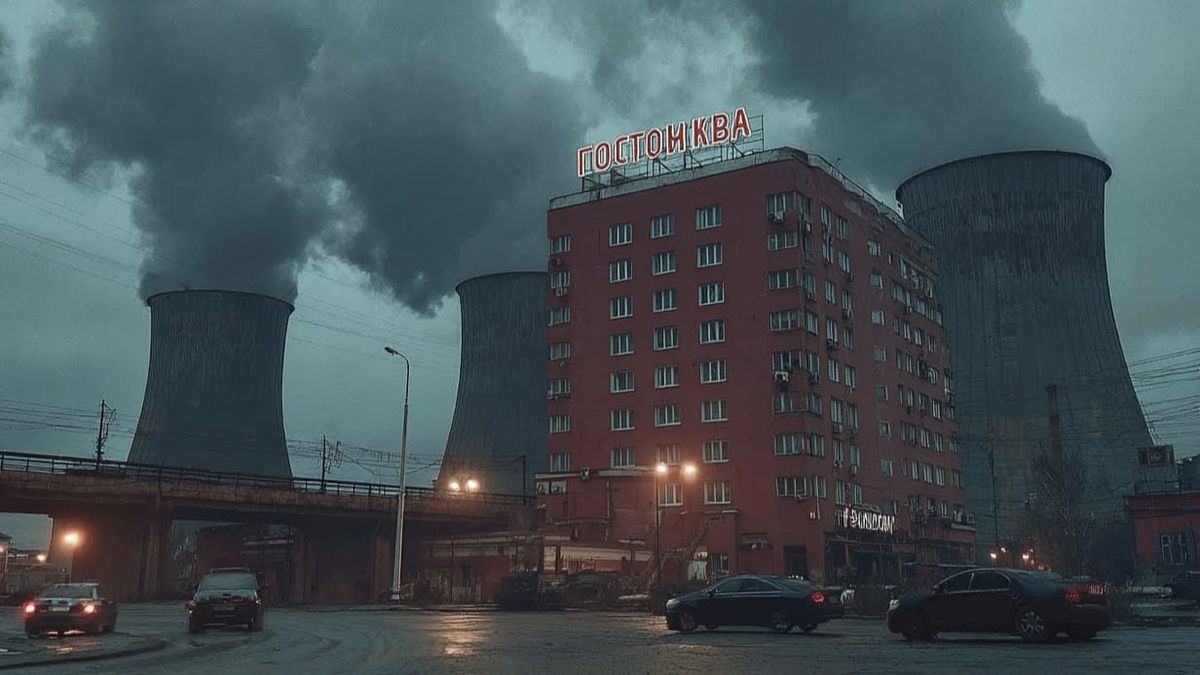
People prefer a figure. A dynasty is hard to inspect. A monk is easy to point at.
Antony Beevor’s account of the last Romanovs is, among other things, a warning about that preference. The empire he describes is already a suspension bridge in disrepair: an unreformed autocracy, a war it cannot run, an officer corps soured on corruption, a court that governs by rumor. Grigory Rasputin drives onto it in a truck the structure might once have tolerated. Cables slack. The deck moves. Afterward everyone remembers the driver. The myths do as much work as the man. Nicholas humiliated, Alexandra overborne, a peasant in the nursery, debaucheries that did not happen. In February 1917 hardly a sword comes out for the dynasty. Rasputin was a symptom who also, at the end, mattered. He does not get to be the author of the century. He does get to be the load that arrived while the rivets were loose. A symptom can also be a load.
Sherry Turkle’s new book takes its subtitle as a becoming: who we are when we talk to machines. She has been writing the corrosion report for forty years. Phones, texting, relational toys, the flight from real-time talk, platforms that turned other people into a risk surface. The rust is not news to her. What the new book does is give the truck the title, the subtitle, and the dramatic foreground. Generative models arrive as the monk in the palace. The earlier traffic is acknowledged, then set behind the figure everyone can now point to. The objection is not that she missed the bridge. It is that the weighting lets a reader leave thinking the new load is the principal diagnosis.
The bridge was already carrying odd traffic. School scored the well-formed sentence. Applications turned a life into a pitch. Texting taught the draft. Social media did not so much remove friction as replace the friction of company with the friction of exposure, and then it kept the file. A room that can hold an unedited sentence became harder to find. In Portland, on the first of October, the Trail Blazers announced a play-by-play voice in the afternoon and had a vacancy before the date changed. The posts were from 2012 and 2013, when the man was about fifteen, on an account he was still using. No model was required. A teenager’s utterance had remained professionally actionable thirteen years later. What lesson that teaches is not a claim about a whole generation. It is a fact about permanence. The file outlives the room.
Other loads were ordinary too. Therapy had become a promise a lot of people could not get staffed, at a price they could pay, from a person who was any good. Institutions that offer belonging — a church, a party, a volunteer list — can feel, in the first weeks, like a friend that finally scaled. Sometimes that feeling is the onboarding of a slot. The phrase is too large if it is asked to cover every pew and every precinct. It is not too large as a description of a hunger those organizations have always known how to receive, and of a replacement cycle that becomes visible only if you stay long enough to watch the previous body tire.
A companion that never flinches, never has a headache, and will take the sentence the timeline cannot hold is not nothing. It retrains what a successful interaction feels like, especially where the slower apprenticeship never happened. Extractiveness, commercialization, asymmetry, the peculiar fact of a counterpart with no needs: those are real properties of the object. They are also properties that landed in a structure already slack. The popularity of artificial intimacy tells us something about artificial intimacy. It also tells us something about the world into which it arrived. Staring only at the monk answers the first and spares the second.
Which leaves the dog.
Alexei’s dog Joy escaped the room where the family did not. He lived out his life in England. He was buried, later, beneath what became a car park. The remnant got away. Then the ground over the remnant was paved, and the paving became the surface people stand on without knowing what is under it. Rasputin is causation and blame. Joy is persistence and forgetting. The shift matters. After the argument about what brought the structure down, history keeps getting built over anyway.
Talking to machines is already being paved in that way. The memorable encounter dissolves. There is no single wow, only a refrigerator hum: a spec checked, a book followed from a botched murder to a spaniel under asphalt, an argument with a program about Sherry Turkle, a walk with an actual dog. Nobody wakes up intending to inhabit a new intimacy. The frontier stays photogenic. Behind the rider the road is surfaced, the culvert is assigned to a department, and a good-enough model sits on a desk or a card and does Tuesday. The chatbot is less the monk than the paving. The technology becomes ordinary enough that the prior condition disappears beneath it.
Freedom of speech, just watch what you say. The comma is older than the software. The right is formal. The cost is practical. You can say it, and you will also watch what you say, because the room is not a diary and the room has a memory. A chatbot offers itself as the room that will not forward the sentence. Sometimes it is the private holding environment a public file made necessary. Sometimes it is only a slower archive. Mad monk as cause is the same error as chatbot as cause. Both take the figure everyone can point to and spare the structure that made the figure decisive.
Joy under the car park is not a moral. He did not refute the dynasty or redeem the monk. He got out, and then he was paved over by a use that had no interest in him. Most people will not go looking under the lot. The lot, after all, is where the cars go.