Neighbors
Play tonight. 1 GM, 2–4 players, 30–45 minutes.
The city has always been shared. Most tenants just aren't on the lease.
THE PITCH
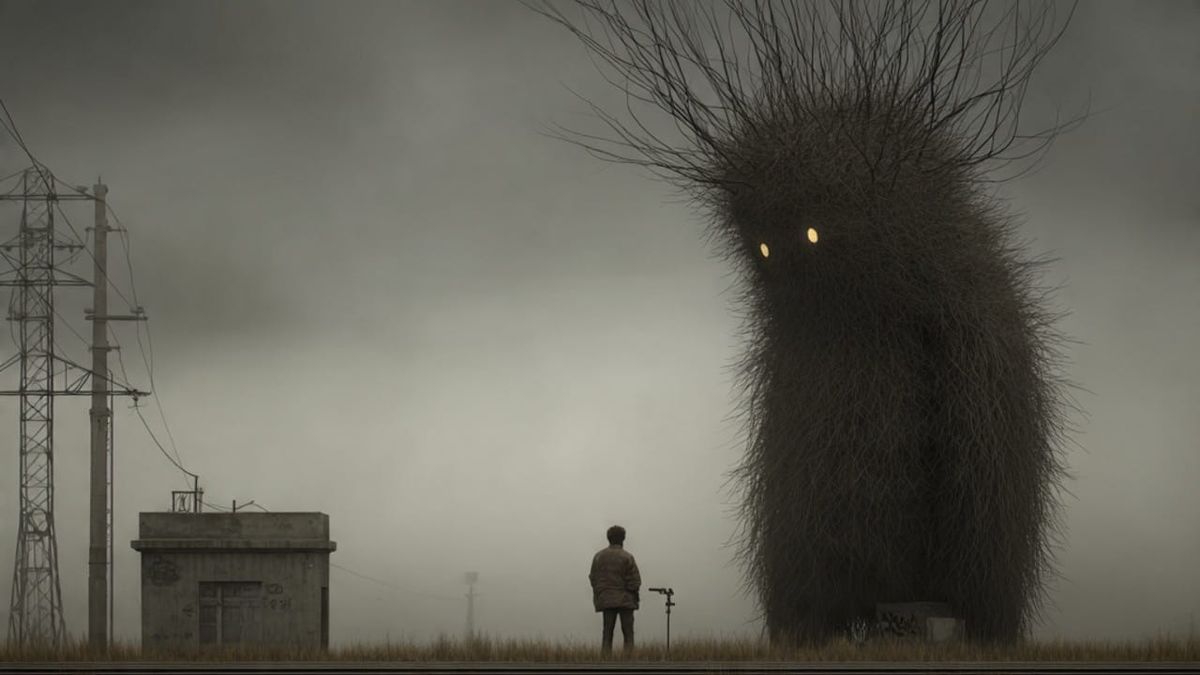
A city has cracks — literal ones, and the gaps between old agreements. Things live in those cracks: the accumulated residue of a city's shared life, its lonelinesses and grudges and maintenance needs, wearing the shape of monsters. We call them Neighbors.
You don't hunt them. You negotiate, appease, and live around them. Every case looks like a threat and turns out to be a misunderstanding — the chupacabra isn't really out for goat. Your job is to find out what the Neighbor actually wants before someone frightened makes it worse, then broker terms everyone can live with.
Nobody dies. Fights are rare. Even the scary scenes resolve as complications, not casualties. The tension isn't danger — it's figuring it out in time.
You'll need two six-sided dice, pencils, and paper.
THE ONE RULE THAT MATTERS
When you try something risky, roll 2d6 + the relevant stat and compare to a difficulty:
- Risky (6): pick a lock, sweet-talk a guard, recall a name.
- Dramatic (8): the default. Read a situation, bluff the boss, leap the gap.
- Climactic (10): the hard, story-deciding thing.
Meet or beat it → success. You do the thing. Miss → the GM adds a complication. Not a wound — a wrinkle. The tentacles get into the kitchen; the inspector arrives early; the phone comes out and starts recording.
If it isn't risky, don't roll. Just narrate it and move on.
MAKE A CHARACTER (2 minutes)
Stats — spread 3 points across:
- Body — carry, brace, chase, restrain, endure.
- Mind — investigate, recall, decode, notice, plan.
- Charm — persuade, soothe, read people, negotiate, perform.
(A 2/1/0 spread is punchy; 1/1/1 is flexible. Zero in a stat is fine — you just roll 2d6 flat.)
Role: one phrase for who you are. Bureau worker. Shop clerk. Retired sign-painter. The kid everyone overlooks.
Special Ability: a +1 to rolls in a specific situation, once per scene. "+1 Charm when talking to locals." "+1 Mind when reading old records."
Signature Gear: one standout item, +3 to a roll, once per session. A stamped official form. A ring of keys. A grandmother's box of odd objects.
HP: 5. Hit zero and you're knocked out, stunned, or overwhelmed until the next scene — describe how. Everyone resets to full HP between scenes. This game is about momentum, not attrition.
Two friction notes that make the table sing
Give each character a want — their private idea of "case closed." The bureau worker needs the file to close cleanly; the shop clerk just wants things back to normal; the kid wants the Neighbor kept safe. These rub against each other, and that friction is the fuel. Characters argue about what counts as done — never about whether to take the case. Nobody walks.
If one character is "the one Neighbors trust" (+1 Charm with entities, and they can act on the obvious-thing-nobody-will-say without justifying it) — only one person at the table gets that. Everyone else has to earn a Neighbor's trust the hard way, through work, keys, offerings, or memory.
THE NEIGHBOR (how the monster works)
Every Neighbor has two layers:
- Surface Read: what frightened people assume. It's hungry / hostile / infesting the place.
- Truth: what it actually needs, hidden underneath. It's lonely / grieving / doing maintenance / waiting for an old custom.
Discovering the Truth is the heart of the middle scene. Acting on the Surface Read always makes things worse.
Agitation is the Neighbor's "HP," but it runs backward from a health bar. Wrong moves (threats, weapons, breaking a taboo, filming it) raise it; right gestures (offerings, respect, the correct custom) lower it. At 0 Agitation it's settled — appeased, relocated, satisfied. Never destroyed.
The Golden Rule: nothing is killed at zero. A Neighbor is part of the shared civic world. If a thing's only function is to kill for its own sake, it isn't a Neighbor and this is the wrong game for it.
Big Neighbors (a whole bridge, a market, a building) start at 10 Agitation and can't be touched by ordinary force. The only thing that reaches them is the right key — the correct offering, the true name, the apology from the right person, the old custom performed correctly. Treat that key as "+3 gear," never a weapon.
Scuffles (danger without combat)
Lots of scenes are physical but not fights: bracing a door against a press of tentacles, catching falling debris, carrying a sleeping spirit up six flights, chasing a panicked young Neighbor through a market. Roll Body vs. difficulty. Nobody takes damage — failure is a complication. The broom is the whole physics of this game: you beat the tentacles back, you don't kill them, and they can't kill you either.
BUILD A CASE (roll 2d6 or pick)
Roll once on each table. Middle results (6–8) are everyday cases; 2s and 12s are the strange ones.
1. THE NEIGHBOR 2 Something older than the city · 3 A grief-eater · 4 A swarm acting as one · 5 A hoarder of lost things · 6 An infrastructure spirit (the bridge / substation / water main) · 7 A boundary-keeper · 8 A mimic that passes as a resident · 9 A gentle nocturnal migrant · 10 A grudge given shape · 11 A luck-drinker · 12 A newly-woken young one
2. THE HAUNT 2 A decommissioned ferry · 3 A rooftop garden · 4 A 24-hour laundromat · 5 The storm drains · 6 Under the rail viaduct · 7 The vacant lot dogs avoid · 8 Parking level 4½ · 9 The night market after close · 10 A sealed 13th floor · 11 The retention pond · 12 The old tree slated for removal
3. THE DISTURBANCE (why now?) 2 A rival moved in next door · 3 Its caretaker died · 4 Construction broke a boundary · 5 Someone posted it online · 6 A new tenant breaks its taboo nightly · 7 Its offering/ritual stopped · 8 It's molting or blooming · 9 The city sent an inspector or notice · 10 It fell in love or went broody · 11 Someone's exploiting it · 12 It's started answering people
4. WHAT IT ACTUALLY WANTS (keep secret) 2 Seems territorial → it's dying, wants proper observances · 3 Seems to steal → collecting evidence of a broken promise · 4 Seems hungry → it's lonely · 5 Seems to attack the building → doing maintenance the only way it knows · 6 Seems to want tribute → wants the old custom, not the goods · 7 Seems territorial → wants acknowledgment (a name, an apology, a greeting) · 8 Seems to hunt someone → trying to return something to them · 9 Seems destructive → fleeing something worse · 10 Seems to lure people → recruiting help · 11 Seems to multiply → trying to leave, needs something back · 12 Seems mindless → grieving a companion the city paved over
5. THE HUMAN FACTION (who makes it harder?) Give them stats, 3–5 HP, one ability. 2 A rival crew · 3 The developer with a permit · 4 A cult of admirers · 5 One frightened person with a weapon · 6 City services and their paperwork · 7 The landlord · 8 Content creators streaming it · 9 The old guard who won't share the customs · 10 An exterminator whose methods "work" · 11 A grieving family · 12 A politician promising a monster-free district
RUN THREE SCENES
A scene is one encounter; a case is three scenes, about 30–45 minutes total.
- Scene 1 — Signs & Rumors. The Surface Read is everywhere. Players investigate, meet the Human Faction, form (wrong) theories.
- Scene 2 — It Gets Worse. Acting on the Surface Read backfires. The Truth surfaces — through investigation, a mishap, or the Neighbor's own clumsy attempt to communicate.
- Scene 3 — The Accommodation. Negotiate terms everyone can live with. Success is coexistence. Failure means the problem grows, moves, or gets the politician involved.
Aim for one Body, one Mind, one Charm scene. A good default: the Disturbance needs Body (contain, carry, chase), the Truth needs Mind (research, decode), the Accommodation needs Charm (mediate, apologize).
The Accommodation is mundane. Resolution is a small, specific, slightly ridiculous standing arrangement — not a banishment. The bus pauses ten seconds. One unsold item is left out at closing. The drain is reopened every spring. That's a win.
GM quick tips
- Default to Difficulty 8 when unsure. Roll only for risk.
- The Human Faction's worst move should raise Agitation — the person with the weapon, the streamer, the exterminator. That's your ticking clock.
- Stuck? Ask: "What would happen in a cartoon?" Grab the weird answer and run.
A READY-MADE CASE: "THE RIVER REMEMBERS WHICH WAY IT RAN"
Built from the tables so you can play right now. A big, physical Neighbor — the best first case for learning how the game turns a "monster" into a misunderstanding.
The setup. The city is doing something enormous to its river: reversing the current, so waste flows away from the drinking water instead of into it. A triumph of engineering that will save thousands of lives. But where the new canal locks are going in, the work keeps stopping. Crews report flesh mounds in the cut — vast, pale, semiconscious masses that shudder when the pumps run. One is estimated at seventy tons. A worker was hospitalized. The lead engineer has requisitioned enough dynamite to "subdue" it, and the papers already have their headline: MONSTER IN THE CANAL.
You've been sent to clear the obstruction before the blasting permit comes through at dawn.
The Neighbor: The Turned Water (the old body of the river itself). Big entity, Agitation 10, currently 6. Once per scene it can heave — a slow surge of tissue and cold water through the cut. Surface Read: monstrous, mindless, dangerous; it attacks the workers and must be destroyed. Truth: the mounds aren't attacking. The river has run one way for ten thousand years, and the city is turning it around. The mounds are the current's own body, disoriented — groping, trying to remember which way is downstream. What looks like terrorizing the workers is a thing that has lost its direction and is feeling for the sea.
The key: not force. The river needs to be told the new way — a marker, a channel, a sluice opened in the right sequence so the current has somewhere to go. Show it downstream and it will follow. (Treat "opening the way correctly" as +3 gear. Dynamite is the opposite of the key.)
Agitation: +3 whenever explosives are used on it · +1 each scene the pumps run against it with no channel open · +1 if a mound is cut, drained, or "specimen'd" · −1 when someone treats it as confused rather than hostile · −2 when a channel is opened that shows it the new downstream.
The Faction: Chief Engineer Halloran (Mind 2, Body 1, 4 HP). Not a villain — a brilliant, exhausted man who has already saved the city once and cannot afford to be wrong now. He believes the mounds are vermin, and every day of delay is a day of cholera. His dynamite raises the Turned Water's Agitation by 3 each time it's used. He can be turned — but only in his own language: drainage, flow, sequence. "It's not a monster, it's a routing problem" is the one argument he'll hear.
The pregens (all 5 HP):
- Priya, the bureau worker — Mind 2, Charm 1. Special: +1 Mind with records/permits. Gear: an official form that can halt or authorize works. Wants: the file closed cleanly — and "the river is confused" fits no form.
- Sam, the handler — Body 2, Mind 1. Special: +1 Body restraining or moving something without harming it. Gear: a work-crew's rig of winches and cofferdam gear. Wants: nobody hurt — worker or mound.
- Aggie, the old hand — Body 1, Mind 1, Charm 1. Special: +1 doing a custom correctly. Gear: a river-pilot's chart from before the reversal, showing the old downstream. Wants: the old ways respected — you don't turn a river without asking it.
- Niko, the kid — Charm 2, Body 1. Special: +1 Charm with entities; they trust him first. Gear: a bag of small useful things. Wants: the mound kept safe from the man with the dynamite.
Scene 1 — The Cut (Body / investigate). Dawn is the deadline. In the canal cut, a seventy-ton mound shudders against the pump-wash; a crew won't go near it; Halloran is timing the blast.
- Pull a panicking worker back from the heaving mass (Body 8 scuffle — fail: they're knocked into the cut and now need carrying).
- Examine the mound instead of fleeing it (Mind 8 — success: it isn't lunging, it's groping — every surge reaches the same direction, toward where the water used to go).
- Buy time from Halloran (Charm 8 — fail: he moves the blast up an hour).
Scene 2 — Which Way Is Down (Mind / the Truth). The pumps keep running; the mound grows more agitated the harder they push. The Truth surfaces however the table gets there.
- Compare Aggie's old chart to the new canal plans (Mind 8 — success: the mounds sit exactly on the old downstream line — they're following a current that no longer exists).
- Niko climbs down and puts a hand on it (Charm 6 with his Special — it goes still; it isn't hunting, it's lost).
- If anyone lets Halloran blast a mound: it works for a moment — then the whole cut heaves, the river shoves back twice as hard, Agitation +3, and now there are two mounds.
Scene 3 — Show It the Sea (Charm / the Accommodation). Blasting permit at dawn. Build terms:
- Open the channel in the right sequence (Sam's rig and Aggie's chart, a sluice cracked to reveal the new downstream — Climactic 10; drops to 8 if Niko "leads it," or if Priya's form has legally paused the blasting): Agitation −2, and the mound flows — pouring down the new canal the correct way, dissolving back into ordinary current as it goes.
- Turn Halloran: frame it as flow, not fight — a routing problem, not a monster (Charm 8). Won over, his engineering becomes the key; he'll open the locks himself.
- Priya's file closes only by classifying the whole event as something ("hydraulic obstruction, cleared, non-recurring"). Her form makes it stick — and quietly makes the blasting permit disappear. Her want never fully ticks: there's no box for the river needed to be told where it was going. That's the good ending, not the bad one.
AFTER THE CASE: THE LEDGER
Keep a running page. After each case, add: the Neighbor (with a disposition — befriended, settled, sore — and any debt owed either way), any contacts you made, and every unticked box — the file left open, the normal that never came back. Those loose ends are next session's hooks, and a settled Neighbor can return as an ally or a complication.
Bring characters forward. They don't level up with numbers; they change through story. After a case, if the fiction supports it, shift one stat point or redefine a Special to match what happened. The clearest trigger for growth is giving up your want — choosing the neighborhood's accommodation over your own idea of "done."
That's the whole game: find the Truth under the Surface Read, keep the membrane open, and leave the block a little more itself than you found it.
Sweep east, not west. Goodnight; keep the lights.