Leo Fender's Chimera
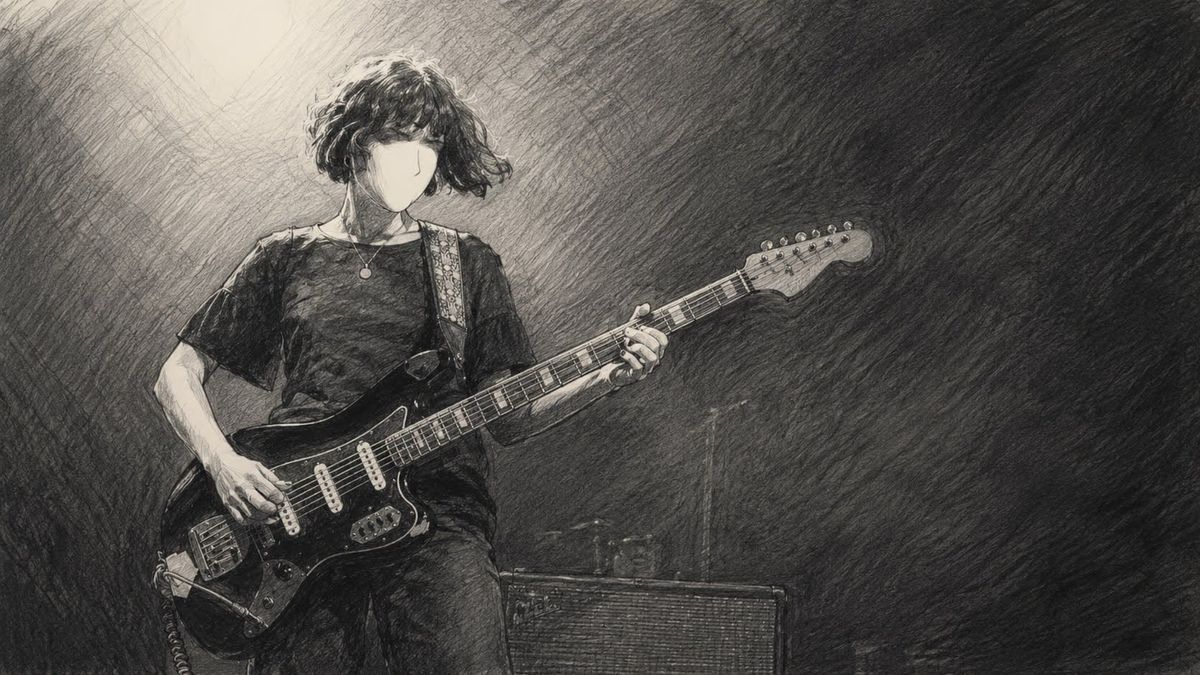
How You Can't Play the Bass VI "Wrong"
In 1961, Leo Fender built something that refused to be one thing. The Bass VI is tuned like a guitar — E to E, the same six intervals — but pitched a full octave down, so the range overlaps a standard four-string bass and then keeps going, two strings higher, into territory no bass dares occupy. You can voice a guitar chord on it. You can walk a bassline on it. You can do both, in fact — convincingly, even — but not in the manner either instrument expects. The chords ring a bit too thick. The bassline reads as too articulated, too bright, too aware of its own pitch. The Bass VI was built around a hybrid premise: a single instrument standing in for two, for guitarists who needed bass coverage without switching axes mid-session. What its limits turned into, decades later, became the whole reason anyone still cares.
The idea didn't take, commercially. Bassists found it foreign — too little string gap, too much treble, chords where there should be none. Guitarists found it foreign in the other direction — too low, too boomy, the action and tension all wrong for lead work. Fender discontinued it in 1975, a footnote, an oddity that didn't know what it was for.
And yet it endured, eventually being reissued through Fender's Vintera and Squier product lines.
The Bass VI doesn't prove the meaninglessness of categories; rather, it demonstrates what can happen when a category fails to contain the thing it was meant to describe. An instrument that fails to be legible as one thing becomes available to be something else entirely. Google will return a list of recordings that feature this chimera. For me, having been enamored with the bass line of "Fascination Street," seeing Simon Gallup wield the Bass VI in the video was when adding one and one equaled three. The clank, the metallic ring with the menacing grime, the way a low-end anchor became a signature melody, not quite a bass cosplaying a lead guitar, but becoming something wholly else.
Nancy saw the indie trio Horsegirl when they played in town, and she reported back that instead of a standard four-string, they had a Bass VI on stage. Their Phonetics On and On became one of my favorite albums of 2025 through what I considered an intentional and disciplined "three pairs of hands at play" arrangement, and hearing that they had a Bass VI made a lot of sense for extending a palette with a hybrid brush.
We recently acquired a second-hand Vintera II Bass VI. Yes, two Roman numerals in a single designation, and considering that we're up to Vintera III, there's almost an air of a royal succession. The shop also had a Squier version, which we tried and decided that the playability difference more than made up the 2x price gap. Our initial fiddlings already resulted in the instrument replacing a Jazz bass take on a song that I'd been working on – not because the Jazz was lacking, but because the VI brought a new tonal legibility to the composition. No, it will not be replacing our Player Mustang's flatwound-driven pillowy thump, nor the Jazz's growly Bassman-emulator-boosted voicing. It is its own paintbrush.
There's a kind of permission embedded in an instrument like this. A "real" bass has a correct voice, and you either find it or you don't. The Bass VI has no correct voice to find — only a tendency, toward clank, toward thinness, toward chords that sound slightly off and basslines that sound slightly too articulate. And a tendency isn't a standard you can fail to meet. You can lean into it or away from it, but you can't be wrong about it, because nobody agreed in advance on what right would even sound like. Even Fender's own circuit seems to know this: a fourth switch, doing nothing but a passive low-cut, exists for no reason except to let you thin out the only frequency range the instrument has going for it as a bass. The "strangle switch" isn't a mistake in the design. It's the design admitting, quietly, that correctness was never really on offer.
This is, it turns out, a pretty good way to think about a category of people too — the ones who never quite landed in a single pigeonhole, who play an instrument they "don't play," who hold a position on something while knowing the position is built on absorbed mythology rather than direct evidence, who can love a record and distrust the man who made it in the same breath. There's no clean technique for that. There's no chord voicing that resolves it. You simply lean into the tendency, find out what the in-between actually sounds like in your hands, and stop waiting for someone to tell you you're holding it right.