Failure as a Curriculum
Reflections on spending Super Bowl Sunday in a concrete box
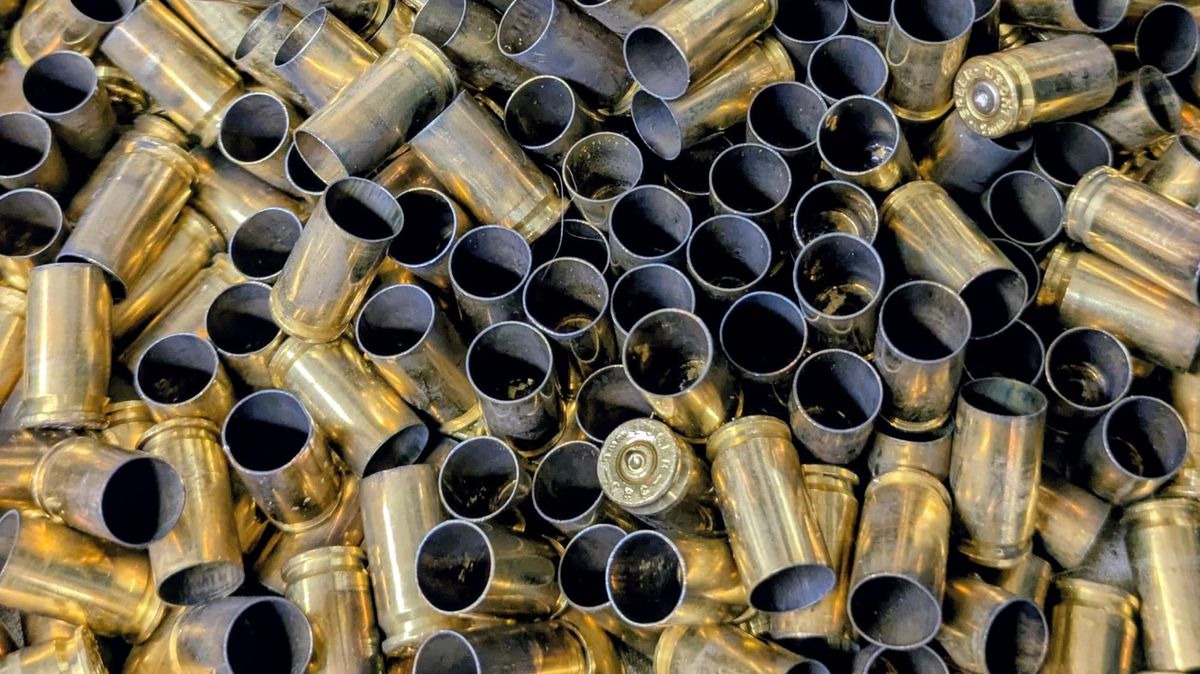
I spent Super Bowl morning in an indoor range at the local sheriff's department facility, putting about 350 rounds through a stock Glock 19 over four hours. The class was called Performance Skills Group — drills designed to push you past the speed where conscious thought can manage the gun. The description promised something like: if you want to get comfortable driving 100 mph, practice going 150 on a closed track.
I was the only person shooting iron sights. Everyone else was running red dots, competition holsters, angled magazine holders I didn't know existed until that morning. My ammo pouch was from Amazon. I felt every inch of the gap.
But this isn't a story about gear. It's about what happens when you deliberately go to a place where your habits break, and what you find in the wreckage.
The Premise I Carry
I came to firearms late in life. Prior to taking a fundamentals class in 2019, my total training history was a bolt-action .22 at Boy Scout summer camp. No military service, no law enforcement background, no family tradition of shooting. Everything I know was deliberately acquired as an adult, which means everything I believe about it was examined on the way in.
The core of what I believe is this: the moment a firearm comes out in a real-world encounter is a failure state. It means every prior point of friction — awareness, avoidance, de-escalation, simply leaving — wasn't enough. And once you're in that failure state, you face a collision that doesn't resolve neatly. You need enough capability to act decisively. And you carry total accountability for every round as a civilian, with no qualified immunity, no institutional backing, and no use-of-force continuum to shelter under. That accountability gets assessed after the fact, by a DA and a grand jury, working from incomplete information under pressures of their own.
It's almost the judicial version of predestination. You're justified or you're not, and the determination comes later regardless of what you do. But like any good predestination problem, that doesn't release you from the obligation to think and act ethically in the moment.
So I train. Not eagerly. Not because I want to be tested. I train because if that failure state ever arrives despite every effort to prevent it, I want the mechanics to be so far below my limit that my brain is free for the things that actually matter — identifying what I'm shooting at, knowing what's behind it, deciding when to stop.
What Does 150 MPH Actually Feel Like?
It feels like disruption.
The class introduced drill structures I wasn't used to — doubles, triples, quads, and more on targets at mixed distances. My usual shooting is deliberate, one shot at a time, each one its own decision. These drills revoked that luxury immediately.
There's a framework the instructors use: reactive versus predictive shooting. Reactive means each shot waits for visual confirmation — the sights return, you verify, you press. Predictive means the next shot is already committed based on an internal model of how the gun behaves. You're not ignoring the sights; you're using them as supervision rather than permission. The difference sounds academic until you're standing in a lane trying to run quads on iron sights while the guy next to you is printing dime-sized groups through a red dot.
I spent most of the day oscillating between two failure modes. Too much conscious input — trying to verify every sight picture, editorial oversight seizing the process mid-string. Or too little — committing to a cadence that outran my ability to track what the gun was doing. Both felt bad. Both were informative.
A video game analogy kept coming to mind. In Half-Life, the firing reticle starts tight and blooms wider with each shot. That's what was happening to my visual tracking. The first shot was coherent. By the third or fourth round, my perceptual confidence had scattered.
I was essentially firing into a widening cone of uncertainty.
Vision was the failure mode. Everything else — grip stress, timing errors, shot placement — cascaded from that. There were moments where I was just cycling the trigger to get the required number of rounds out, then getting stuck mentally mid-string. For a class designed to induce failures, I'd call that a success.
The Moment It Organized
Near the end of the class, when fatigue was highest, there was a drill: present from retracted, doubles on a close target at five yards, slower doubles in the head box at twelve yards, then fast doubles on a different five-yard target.
And it worked. Vision led. The gun followed. Cadence adjusted to distance without conscious negotiation. The transitions were smooth, the holes landed in the right places, and the whole string felt like a single event rather than a series of desperate individual decisions.
That drill only worked because of everything that came before it. Four hours of breaking had calibrated the system. The failures weren't obstacles to that moment — they were the raw material for it.
Failure As Telemetry
I've been a volunteer range coach for the entry-level handgun class at the same facility for over four years now. One of the things I've come to believe in that role is this:
Fatigue and failure are telemetry, not judgment.
You read them the way an engineer reads logs — diagnostically, not morally.
Sunday forced me to apply that same principle to myself, which is harder than it sounds when you're surrounded by shooters with tighter groups and faster splits. The imposter syndrome was real. The failwagon was idling in the parking lot with my name on it. But the only standard of belonging that actually matters in a room full of firearms is this: the weapon only goes bang when it's supposed to, and makes holes only in what it's supposed to. By that measure, I belonged completely. Everything above that floor is preference. Everything below it is non-negotiable.
The Weight That Shouldn't Disappear
Something I tell students in the 101 class: it is ludicrously easy to shoot someone. The mechanical act of putting rounds into a person-sized target at realistic distances is trivially simple. A true beginner can achieve consistent center-of-mass hits inside ten yards. That's both a testament to modern firearms engineering and a deeply unsettling fact.
Doing so as a responsible and accountable civilian is enormously harder.
I think about this every time I carry. The slight pull of the holster against my belt. The unconscious check of concealment when I pass a window. The low-grade awareness that the thing on my hip can irreversibly end a human life. If you don't feel at least a little awkward carrying a deadly weapon in public, something isn't wired right — not in terms of skill, but in terms of awareness.
In a nation with more guns than people, this might be a heretical position. I'm comfortable with that.
The Concrete Box
Here's the thing that sounds contradictory but isn't: that loud, uncomfortable indoor range — 300-plus rounds times eight people in a concrete echo chamber — was the safest space I could have possibly failed that badly.
No legal exposure. No moral weight. No irreversible outcomes. Just paper targets, a timer, and an instructor who expected me to break. Every missed shot, every mental lockup, every blooming visual reticle was a free lesson that would cost enormously outside those walls.
Training for the worst day of your life should look like the best kind of failure — deliberate, contained, diagnostic, and conducted with enough humility to know that the real skill isn't shooting. It's maintaining the capacity for judgment when everything around you is trying to take it away.
I don't want to be tested in the real world. I don't crave validation scenarios. I believe deeply that every bullet has a lawyer attached to it, and that I'll win every gunfight I don't get into.
But if that failure state ever finds me despite everything, I'd rather meet it with margin than desperation. And that's worth spending Super Bowl Sunday in a concrete box, running a stock Glock with an Amazon ammo pouch, feeling outclassed and learning anyway.
Not heroic. Just careful.