Éliane Radigue: A Control Case
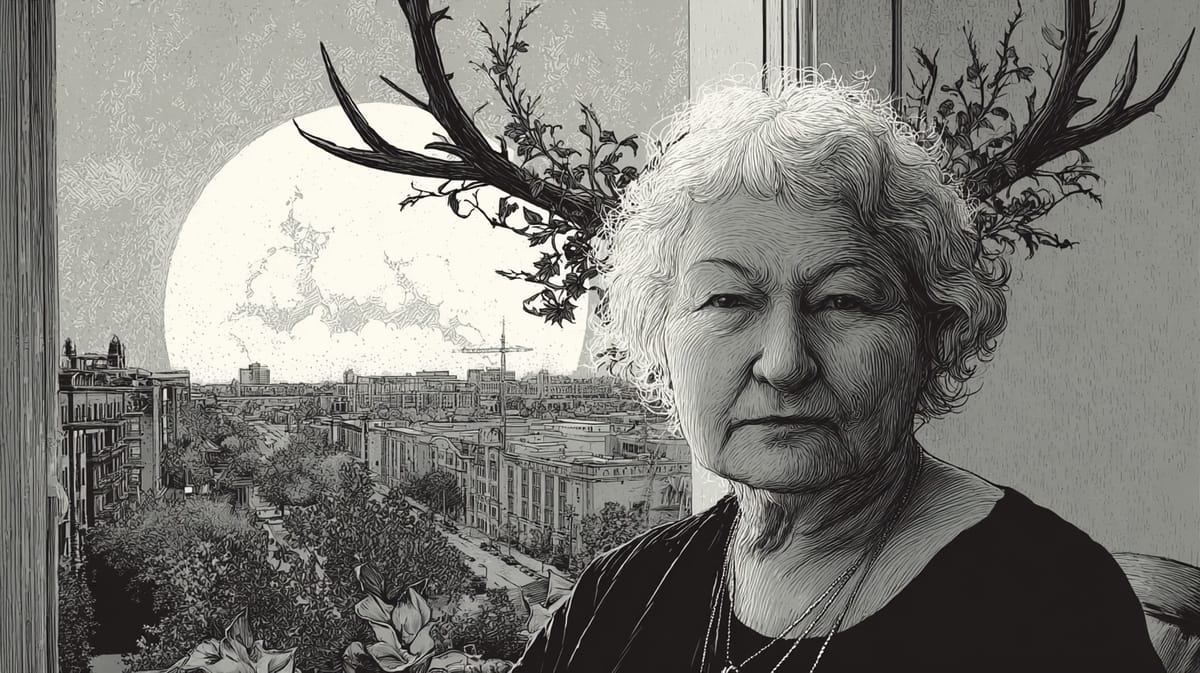
Not an edge case, but a control case.
That distinction matters more than it first appears.
An edge case reassures the system. It says: this is rare, exceptional, statistically ignorable. An edge case proves the rule by standing safely outside it.
A control case does the opposite. It reveals what the system does by showing what happens without it.
Éliane Radigue is not a composer who failed to succeed in the music industry and survived anyway. She is someone who never accepted the premise of the experiment in the first place. She did not attempt to build a career, scale an audience, or translate practice into product on an industrial timeline. She simply worked.
Because she refused the premise, her life becomes diagnostic. Her persistence shows what the industry model actually does—not what it claims to do.
The implicit experiment of modern music is familiar:
Can an artist make a living by producing cultural goods at scale?
The industrial answer is equally familiar:
Release products.
Build audience.
Tour.
Merch.
Repeat until burnout, irrelevance, or death.
Radigue's life offers a control condition:
Make work.
Sometimes it is heard.
Sometimes it is not.
Continue anyway.
Practice embedded in life, not extracted from it.
Persist for seventy years.
The control reveals something uncomfortable: the industrial model is not designed to sustain artistic practice. It is designed to extract artifacts from practice and circulate them efficiently. Longevity is incidental. Attrition is assumed.
Radigue's existence does not refute the industry. It exposes it.
The Financial Question Everyone Notices—and Misreads
You're right to pause at the apparent mystery: how did she live?
The book doesn't say, because biographies rarely want to say this part plainly. But the outline is legible.
She survived through a combination of conditions that are real, material, and not replicable at scale:
Early proximity to the postwar French art world, including marriage to Arman Fernandez—whose spectacular destructions and Nouveau Réalisme celebrity granted access to galleries, collectors, networks. Not just money, but cultural infrastructure: who to call, which studios had equipment, where experimental work could be shown without needing commercial viability.
Access to subsidized cultural infrastructure in France—a social safety net more robust than most, state support for experimental arts, grants that didn't require box office returns. The Songs of Milarepa were explicitly state-funded. This is not artistic autonomy from all systems—it's autonomy from market logic, subsidized by public infrastructure.
Periods of shared studios, borrowed equipment, mutual aid among experimental peers—in the 1970s she worked in New York sharing space with Laurie Spiegel, using a Buchla installed by Morton Subotnick, later acquiring (but not purchasing?) an ARP 2500. Friends included Steve Reich, Philip Glass, Rhys Chatham. This was not romantic bohemia—it was strategic pooling of scarce resources among people committed to work that would not pay.
Teaching, residencies, workshops—occasional institutional positions that provided income without requiring abandonment of practice. Not career-track academic jobs, but visiting positions, short-term engagements, the kind of marginal institutional participation that offers just enough without demanding total assimilation.
Low overhead by design—no band to pay, no touring apparatus to maintain, no promotional machine to feed. One synthesizer for twenty-five years. Later, acoustic works created collaboratively with performers who brought their own instruments. No merchandise, no managers, no publicists. The infrastructure of a practice, not an enterprise.
A life organized around modest continuity rather than growth—the discipline to live small, expect little, need less. Buddhist practice may have helped here—training in non-attachment, comfort with obscurity, indifference to recognition. Or perhaps the causality runs the other way: only someone already inclined toward this kind of steadiness would undertake such practice in the first place.
This is not a fairy tale of purity. It is an accounting.
She did not "make a living making music" in the way the phrase is now understood. She made a life in which making music could continue.
That distinction matters.
Refusal as Structure, Not Aesthetic
The early works you mention make this refusal concrete.
Two 7-inch records meant to be played simultaneously, with up to one minute of deliberate desynchronization between them, are not clever formalism. They are a structural rejection of the commodity.
You can purchase the objects. You cannot purchase the work.
The work only exists when someone performs the listening—placing the two records on turntables, starting them at nearly the same moment, allowing the drift, attending to the interference patterns that emerge differently every time. The purchaser does not acquire an experience. They acquire instructions for a practice that will never be identical twice.
This is composition as transmission of attention, not as fixed object.
Likewise, the New York gallery performance in the early 1970s—packed house, successful by any conventional measure—which she refused to repeat. Not because the audience was unworthy, not because the performance failed, but because it happened. It existed in that room, for those people, at that moment. Repeating it would not honor what it was. It would turn event into product, singularity into spectacle.
The refusal is not anti-audience. It is anti-reproducibility as the measure of value.
Then there is the ARP 2500 keyboard, left behind when she returned to France. This detail seems minor until you understand what it means.
The ARP 2500 is a modular synthesizer. It can be played via keyboard—like a piano, like an organ, like an instrument requiring virtuosity, speed, performance in the traditional sense. Or it can be used as a pure sound generation and processing system, adjusting oscillators by fractions of hertz, listening to changes so slow and minute that hours pass with almost imperceptible shifts.
Radigue took the modular system. She left the keyboard.
Why? Because the keyboard centers the performer. It invites spectacle, virtuosity, the display of skill. The modular system centers listening. It makes the composer's body invisible so the sound can be all that remains.
This is not anti-technology. It is anti-spectacle.
She removed herself so the sound could be present.
This is compositional ethics made structural, not merely aesthetic. The work is designed to resist the very forms of circulation that would make it legible as career.
The Discography Gap as Evidence, Not Absence
Sixteen years of work—1967 to 1983—before a commercial release.
This is not a failure to launch. It is proof that recording was never the goal.
During those years she was working constantly: Jouet électronique (1967), Usral (1969), Stress Osaka (1970), Chry-ptus (1971), Geelriandre (1972), Ψ 847 (1973), Adnos (1974) and its sequels. Gallery installations, one-time performances, collaborative pieces. Work that existed, mattered, and then dissolved back into memory and informal documentation.
She was not waiting to be discovered. She was practicing.
When Songs of Milarepa finally appears on Lovely Music in 1983, Radigue is fifty-one years old. She has been working for thirty years. The record does not inaugurate a career. It documents a practice already decades deep.
The record is not the work. It is residue.
This is why her discography accumulates later on labels like Lovely Music, Table of the Elements, Important Records, Alga Marghen, and INA-GRM. These are not engines of exposure. They are custodians.
Lovely Music, run by composer Phill Niblock, never turned a profit. It existed to preserve work that would otherwise vanish. Important Records specializes in reissues of experimental music that the market forgot or never noticed. Table of the Elements ran for a decade publishing work no one else would touch. Alga Marghen is an Italian archival project dedicated to concrete and electronic music from the margins. INA-GRM is the institutional archive of the very organization that once excluded her for violating musique concrète orthodoxy.
These labels do not scale artists. They preserve conditions under which practices that refuse scale can still be encountered.
Recognition arrives not as market validation, but as archival responsibility.
The labels are saying: This work existed. It mattered. It should not disappear.
Not: This work will sell.
The Pattern Becomes Visible
By the time Radigue switches from electronics to acoustic composition in 2001—at age sixty-nine, after twenty-five years working exclusively with the ARP 2500—the pattern is undeniable.
She does not switch because the ARP broke, or because electronics fell out of fashion, or because she needed to refresh her brand. She switches because the practice itself called for it.
The acoustic works—beginning with Elemental II (2004), then the Naldjorlak series, and eventually the vast OCCAM cycle—are created through a method even more resistant to commodification than the tape and synthesizer works.
She collaborates directly with performers over months or years. There is no score in the traditional sense. The piece is transmitted orally, adjusted to the specific capacities and timbral possibilities of the individual musician's practice. Each work exists only in the body of the performer who learned it. It can be recorded, but the recording is documentation, not the thing itself.
This is apprenticeship as compositional method.
The work cannot be purchased, performed by session musicians, or reproduced at will. It requires sustained relationship, deep listening, commitment to a process that has no shortcuts.
At seventy, eighty, ninety years old, she is still doing this. Still working with performers one by one. Still refining, still transmitting.
In January 2025—at ninety-three—a new collaborative work, OCCAM DELTA XXIII, premieres at Wigmore Hall in London. Created with clarinetist Carol Robinson and Ensemble Klang. Another instantiation of the same principle: oral transmission, collaborative refinement, work that exists in bodies and only secondarily as recording.
She is still practicing.
Not building legacy. Not securing reputation. Practicing.
Why "Control Case" Is the Right Term
Radigue is not a model. She is not advice. She is not an alternative economy waiting to be generalized.
She is a control.
She shows that:
Lifelong artistic practice does not require industrial participation. You can work for seventy years without releasing a record for the first thirty, without touring conventionally, without building a fanbase in the contemporary sense. The work can continue regardless of market recognition.
Refusing scale is possible, but costly. The cost is obscurity, economic precarity, decades of invisibility, dependence on infrastructure most people don't have access to. The refusal is not free. It is a specific set of trade-offs that most people cannot or will not make.
Recognition can arrive decades late and still matter. The GRM box set, the Blank Forms anthology, the Wigmore Hall premiere—these arrived after she had already been working for fifty, sixty, seventy years. They did not validate the work retroactively. They documented what had always been there.
Sustainability can mean persistence, not growth. She did not build bigger projects, larger ensembles, wider audiences. She worked at the same scale—sometimes smaller—for decades. Sustainability meant: continuing, not expanding.
Art can be practice-first and product-second—or not product at all. The work was its own justification. Recordings, when they happened, were byproducts. The practice itself was the center.
But the control also shows what most people cannot do:
Work for decades without feedback. The discipline to continue when no one is listening, when no records are being released, when there is no evidence that anyone cares.
Accept obscurity as normal. Not as temporary hardship on the way to recognition, but as the likely permanent condition. And to keep working anyway.
Live with minimal economic reward. Whatever income she had was modest. The work did not pay. She found ways to survive that did not depend on the work generating income at scale.
Refuse professional identity. She was not "building a career." She was practicing. The refusal of professionalization meant refusing all the infrastructures—managers, publicists, tours, promotional cycles—that professionalization requires.
Continue anyway. After all of the above, to still show up, still work, still refine, still transmit.
That's why this is not a hopeful story in the motivational sense.
It is a clarifying one.
Most of us will not do what Radigue did. Most of us cannot. The conditions that made her persistence possible—the safety nets, the networks, the institutional support (however marginal), the personal discipline, the indifference to recognition—are not available to most people and cannot be willed into existence.
But her life as a control case reveals what the industry model actually costs: the pressure to scale, the demand for constant output, the equation of value with circulation, the treatment of artistic practice as raw material for product extraction.
She refused all of that.
And she is still here, still working.
That fact alone is diagnostic.
Why the Arman Contrast Matters
Living alongside Arman Fernandez meant living beside the most legible version of postwar artistic success.
Arman was visibility itself. Nouveau Réalisme's enfant terrible. Smashing violins with axes (Colères), embedding consumer goods in polyester resin (Poubelles), creating monumental public sculptures. His destructions were photographable, exhibitable, sellable. They fit galleries perfectly because they were objects—spectacular, discrete, ownable.
His work circulated. It appreciated in value. Collectors wanted it. Museums acquired it. He had a career in the most conventional sense: rising recognition, expanding scale, institutional embrace, market validation, global commissions.
Radigue's work was none of these things.
Her tape feedback pieces took hours to develop, could not be photographed meaningfully, required sustained listening to perceive at all. Her performances were ephemeral. Her refusal to repeat them meant they could not be marketed as events. Her synthesizer works unfolded so slowly that casual listening revealed almost nothing.
Two lives. Two definitions of success. Coexisting in the same household.
One optimized for circulation.
One optimized for continuity.
One ended in 2005 when Arman died.
One continues.
That contrast does not moralize either choice. It simply shows that "success" is not a neutral term. It reflects what a system is designed to recognize and reward.
Arman's practice was legible to markets, galleries, collectors, the entire apparatus of art world valuation. His success by those measures was real.
Radigue's practice was illegible to those same systems for decades. Her work demanded too much time, offered no spectacular moment, could not be owned in the same way, resisted the forms of circulation that create value within art markets.
But she kept working.
And eventually, a different kind of recognition arrived—not market validation, but something quieter: the acknowledgment by practitioners, archivists, and scholars that this work mattered, that it should not be lost, that it represented something essential about what sound and listening could be.
The GRM box set is not a blockbuster. The Blank Forms book will not be a bestseller. The Wigmore Hall premiere will not launch a commercial breakthrough.
But they are evidence of a different kind of success: the work persisted long enough for others to notice it deserved to.
Not because it sold. Because it was.
What the Control Case Does Not Offer
It does not offer a reproducible model.
You cannot tell emerging musicians: "Be like Radigue. Refuse the industry. Work in obscurity for thirty years. Eventually you will be archived."
Because:
Most will not survive thirty years of obscurity economically.
Most will not have access to the networks she had.
Most will not have the state support she received.
Most will not have the personal discipline or indifference to recognition.
Most will not want to make the trade-offs she made.
And that is fine.
The control case is not prescriptive. It is descriptive.
It describes what becomes possible when you refuse the industrial premise—and what becomes impossible. It maps the terrain honestly: the costs, the conditions, the dependencies, the absences.
It does not say: "This is the way."
It says: "This is what happened when someone chose differently. Here is what it required. Here is what it produced. Here is what it cost. Now you know."
The Only Honest Conclusion
"I can't say I get her at all, but I am humbly impressed."
That is not a hedge. It is the correct stance.
Radigue's work is not meant to be grasped in the way we grasp arguments, commodities, or careers. It is meant to be approached slowly, incompletely, over time—or not at all.
You can read the four-hundred-page Alien Roots anthology. You can listen to the fourteen-CD INA-GRM retrospective. You can study the transmission methods, the Buddhist influences, the compositional philosophy.
And still not "get it."
Because getting it would require doing it: sitting with Trilogie de la Mort for three uninterrupted hours in a space with proper acoustics, allowing the infinitesimal changes to register, training your perception to hear what is actually happening rather than what you expect to hear. Or working with her for months on an OCCAM piece, learning not just notes but a way of listening, a way of being with sound.
Most of us will not do that. Most of us cannot.
The books and box sets do not explain her. They testify.
They testify that she was there, working, long after the systems designed to reward artists would have discarded her. They testify that practice can persist without recognition, without market affirmation, without career infrastructure. They testify that another relationship to art-making exists and has existed for seventy years.
She is not the future of music.
Music as industry will continue to extract, circulate, and discard. Platforms will keep scaling. Markets will keep demanding growth. Artists will keep burning out or breaking through or disappearing.
Radigue is not an alternative to any of that.
She is proof that the present is not inevitable.
That somewhere, outside the experiment, someone has been working steadily for seven decades. Making sounds that unfold too slowly for casual consumption. Transmitting methods that cannot be scaled. Practicing without regard for whether it results in product, recognition, or career.
At ninety-three, she is still there. Still working. Still transmitting.
Not because she succeeded by anyone else's definition.
Because she never accepted their definitions in the first place.
And that knowledge—quiet, bracing, unscalable—is exactly what a control case is for.
It does not solve the problem.
It reveals what the problem actually is.
Coda
In 1969, Radigue self-released 250 copies of Σ = a = b = a + b—two 7" records meant to be played simultaneously at variable speeds, creating infinite listening configurations. The work was designed to resist commodification: the experience existed only in the listener's willingness to experiment with combinations. No two listenings would be identical.
In 2025, the original numbered copies sell for $750 on the secondary market.
The anti-commodity became ultra-commodity. Scarcity, historical significance, and conceptual purity—the very refusal of market logic—became the basis for speculation. Most owners will never play both sides simultaneously at shifting speeds. They own the artifact of refusal, not the practice.
The control case reveals this too: even work designed to resist extraction will be extracted from, given enough time. The market does not need your compliance. It will find a way.
But here is what the market cannot do: it cannot make anyone actually perform the listening. The records sit in archival sleeves, appreciating in value, while the work itself—the infinite combinations, the drift between speeds, the practice of experimental attention—remains undone.
Radigue made something that only exists when someone chooses to do it. The market made something that only has value when someone chooses not to.
Both are true. Neither negates the other.
She is ninety-three. Still working. The records are worth $750. The practice remains free.