Amateur Hour!
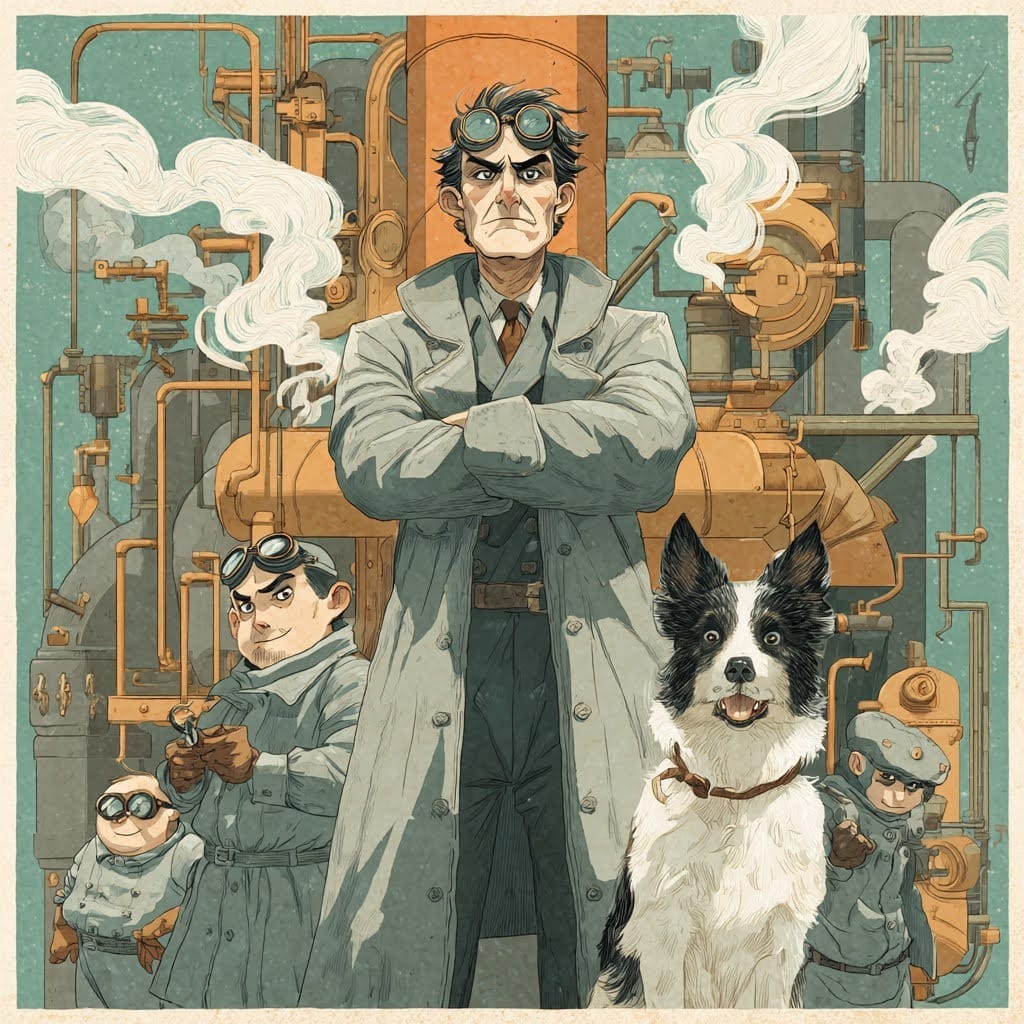
A Framework for Chaotic, Life-Affirming Heist Misadventures
Compatible with TiGGR: Tiny Game for Generalized Roleplaying
Components: 2d6, pencil and paper, TiGGR core rules
Players: 1 Schemer + 1 Companion + 0-3 Minions (2-5 total including GM)
Playtime: 30-45 minutes per heist
Tone: Optimistic chaos—high stakes, zero harm, infinite continuation
WHAT IS AMATEUR HOUR?
Amateur Hour is a framework for playing incompetent criminals attempting elaborate heists that fail magnificently. It's about:
- Guaranteed failure (the fun is in how)
- Foam-padded consequences (nobody gets hurt)
- Dysfunctional loyalty (they stay anyway)
- Episodic continuation (there's always next time)
- Life affirmation (stumbling is okay)
You don't play Amateur Hour to pull off the perfect heist. You play it to watch everything collapse spectacularly while discovering that failure doesn't mean the end.
The Core Promise
You will fail. The contraption will explode. The money will scatter. The authorities will arrive. The building will collapse.
You will escape. Dusty, broke, demanding your solicitor, but intact.
You will try again. Next week, different target, same crew.
This is the pattern. This is the comfort. This is Amateur Hour.
WHO YOU PLAY
THE SCHEMER (1 player)
The theatrical mastermind whose confidence vastly exceeds their competence.
Stats: Distribute 3 points across:
- Panache (Charm): Melodrama, persuasion, declarations, gloating
- Cunning (Mind): Plans, blueprints, traps, improvisation
- Gumption (Body): Running, swinging, crash-landing with flair
Recommended Distribution:
- Theatrical Type: Panache 2, Cunning 1, Gumption 0
- Mastermind Type: Cunning 2, Panache 1, Gumption 0
- Action Type: Gumption 2, Panache 1, Cunning 0
Special Ability (once per scene): Choose one at character creation:
- "Behold!" (+1 to any roll when dramatically announced)
- "According to Plan" (+1 Mind when improvising after things go wrong)
- "Villainous Monologue" (+1 Charm when explaining your brilliant scheme)
- "Dramatic Exit" (+1 Body when fleeing through smoke/debris)
- "Suspicious Mastery" (+1 to a skill you definitely shouldn't have)
Signature Gear (+3 to any roll once per scenario): Choose one:
- Ridiculous Disguise (monocle, fake mustache, dramatic cape)
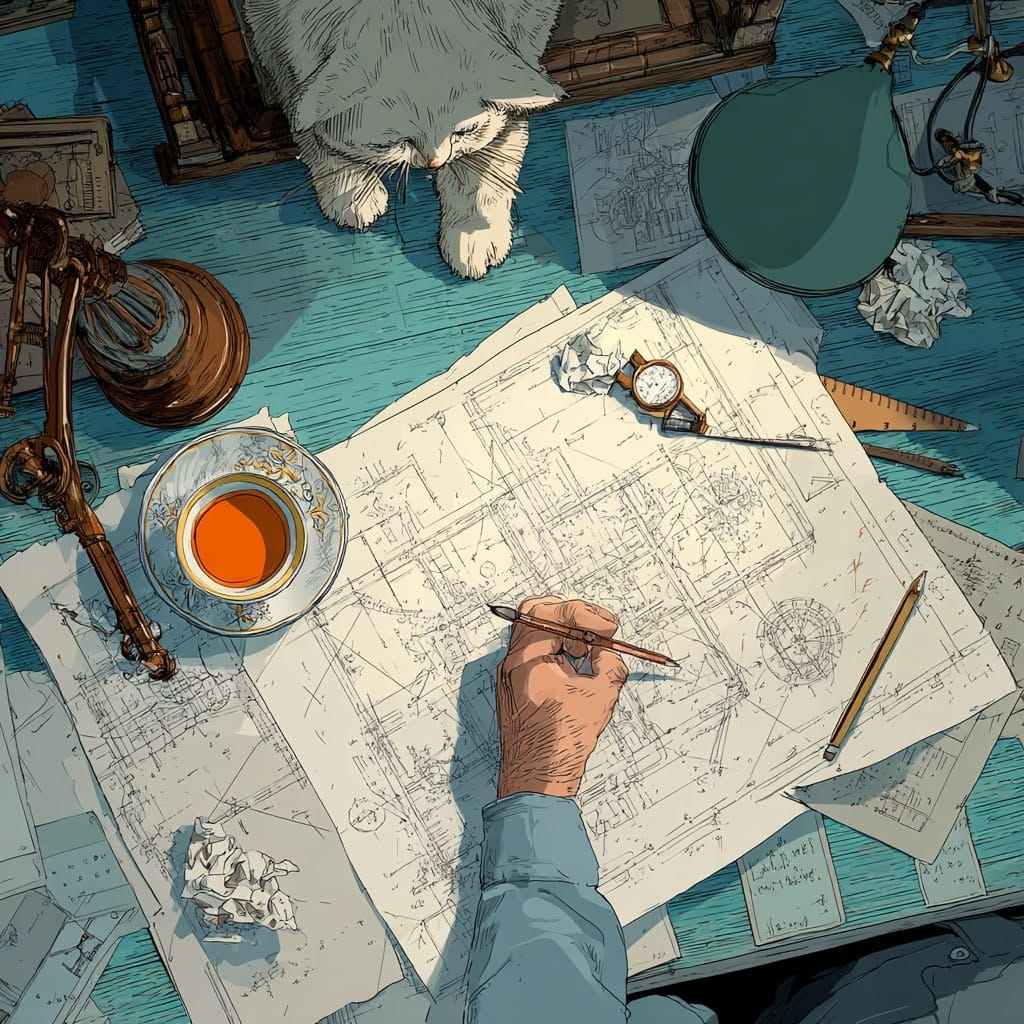
- Blueprint Scroll (technically accurate, practically useless)
- Smoke Pellets (for dramatic moments)
- "Borrowed" Equipment (returns to plot later)
- Theatrical Props (serve no functional purpose, look impressive)
HP: 5
Role: Generate disasters through overconfidence, reframe failures optimistically, express affection through inclusion in schemes, need the Companion desperately (never admit this).
THE COMPANION (GM-controlled or player-controlled)
The long-suffering animal sidekick who possesses actual competence and uses it reluctantly.
No Stats. The Companion doesn't roll dice—they have narrative authority instead.
Three Companion Moves (one per scene, chosen when dramatically appropriate):
1. Assist-with-a-Sigh The Companion does the functional part of the plan. No roll needed—it just works. The Schemer takes credit. The Companion knows. Everyone moves on.
Example: While the Schemer fumbles with lockpicks, the Companion pushes through an unlocked side door.
2. Sabotage-by-Obedience The Companion follows an order too literally, causing comedic chaos that accidentally opens a new opportunity. The GM describes what goes hilariously wrong in a helpful way.
Example: Ordered to "get the box," the Companion retrieves A box—a prop that spills everywhere, revealing where the actual target is hidden.
3. The Smug Rescue When things collapse completely, the Companion wordlessly fixes the immediate problem or retrieves something valuable from the rubble. They deserve all the credit and receive none.
Example: After the money scatters, the Companion trots out of the smoke holding a small stack of bills or something unexpectedly useful for the next job.
Companion Rule: The animal can never be harmed, even comedically. They witness disasters from safe distance, then pad over to help. This is non-negotiable.
Role: Possess competence without showing off, express disappointment through body language, fix problems without commentary, stay out of loyalty that defies logic, know exactly how this will end, come along anyway.
THE MINIONS (0-3 players)
Bright-eyed incompetents in matching outfits, loyal to each other and the Schemer.
Stats: Distribute 3 points across Body/Mind/Charm
- Most minions are 1/1/1 or variations like 2/1/0
Special Ability (once per scene): Choose one:
- "Helpful Idiot" (+1 to assist another character, describe how you almost ruin it)
- "Lucky Stumble" (+1 Body when falling/crashing reveals something useful)
- "Sincere Confusion" (+1 Charm when misunderstanding accidentally charms someone)
- "Overenthusiasm" (+1 to any roll, but something else definitely breaks)
- "Literal Interpretation" (+1 Mind when following orders exactly as stated)
Quirks: Each minion has one endearing flaw (choose or roll):
- Drops things at dramatic moments
- Speaks only in malapropisms
- Afraid of mundane things (revolving doors, pigeons, elevators)
- Extremely literal
- Wrong facts stated confidently
- Accidentally activates mechanisms
HP: 5 each
Role: Cause helpful chaos, form genuine friendships, stay loyal despite everything, contribute to disasters differently, be people who happen to be bad at crime.
THE CONTRAPTION
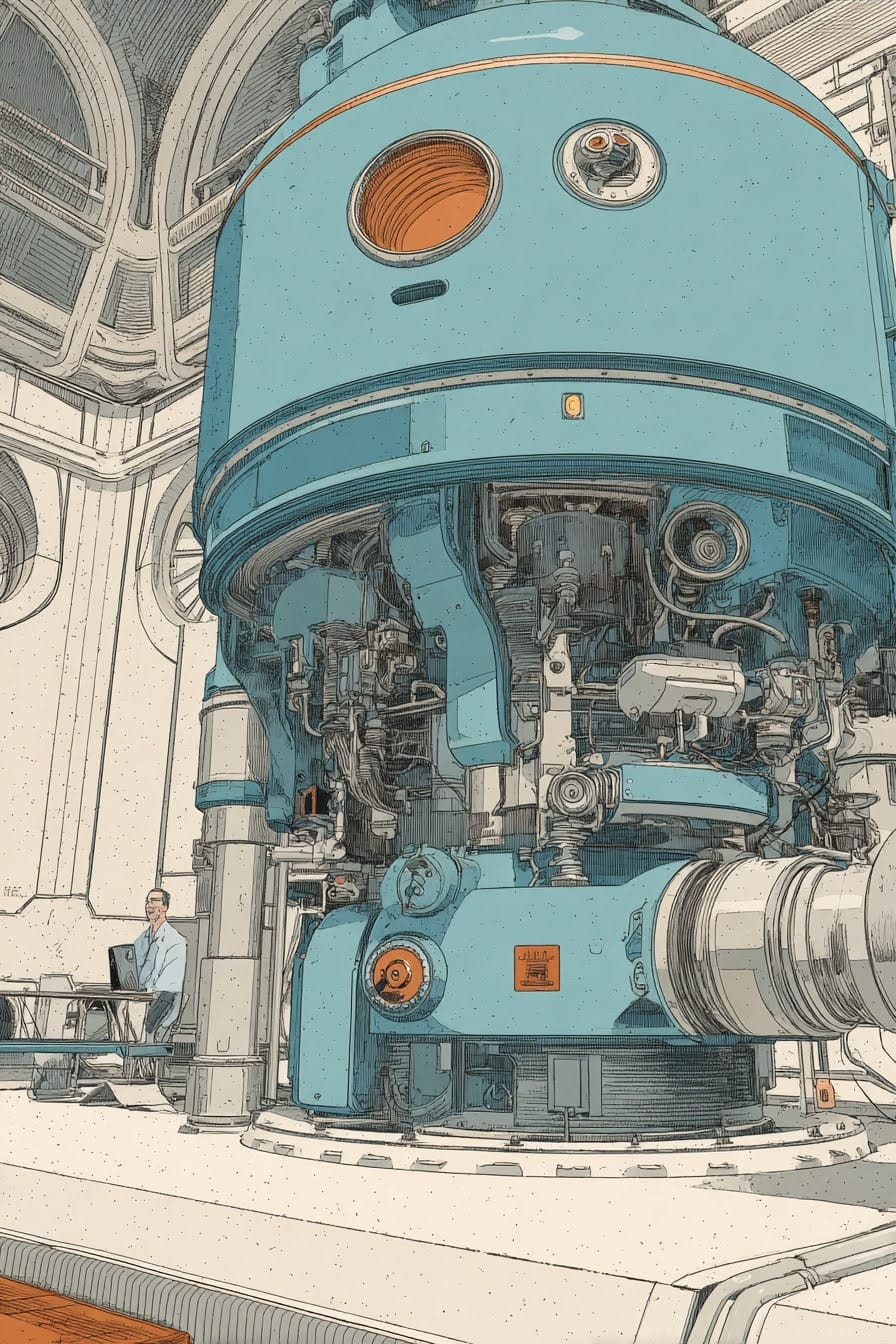
Every Amateur Hour heist features an elaborate, custom-built device that definitely won't work as intended.
Building Your Contraption
Name It Dramatically: "The [TARGET]-[ACTION]-[NUMBER]"
- The Eggstractor 3000
- The Cash-O-Matic 2
- The Diamond Retriever Mark VII
- The Vault-Breaker 9000
Stats: Distribute 3 points across Body/Mind/Charm
- Usually: Body 2, Mind 0, Charm 1 (looks impressive, doesn't work)
HP: 10
Special Ability (once per scene): Choose one absurd feature:
- "Emergency Protocol" (+1 to any roll as random buttons are pressed)
- "Theatrical Malfunction" (creates spectacular distraction)
- "Surprise Feature" (does something nobody planned)
- "Cascading Failure" (one problem triggers three others)
Components: List 3-5 incompatible elements combined into one device:
- Vacuum tube + stilts + floodlight + fog machine
- Catapult + winch + megaphone + smoke pellets
- Grappling hook + inflatable raft + alarm clock + glitter cannon
The more incompatible, the better.
The Contraption Integrity Track
This replaces careful HP tracking with narrative escalation. The GM advances the track when dramatically appropriate:
Level 1 - Minor Concern: Ominous creaking, something rattles, loose screwsLevel 2 - Visible Problem: Sparks, smoke, flickering lights, concerning soundsLevel 3 - Active Threat: Small fire, wobbling, pieces coming loose, alarm soundsLevel 4 - Imminent Failure: Major component fails, structure compromised, everyone noticesLevel 5 - SPECTACULAR CATASTROPHE: The contraption explodes/collapses/malfunctions in the most elaborate, harmless, scene-ending way possible
When Level 5 Triggers:
- The scene automatically ends
- Everyone is covered in soot but fine (foam-padding applies)
- The explosion/collapse propels the story into the next scene
- Usually creates an unexpected opportunity (reveals passage, distracts guards, etc.)
- Someone will say "That was supposed to happen" (it wasn't)
GM Guidance: The Integrity Track should reach Level 5 by the end of Scene 3. Advance it when:
- Something funny would happen
- The pacing needs a push
- A player action deserves consequences
- The scene needs to end
FOAM-PADDING: THE CORE PRINCIPLE
Amateur Hour uses modified TiGGR rules to ensure danger is theatrical, not traumatic.
What Foam-Padding Means
Cartoon Physics Apply:
- Nobody gets injured, only comedically inconvenienced
- Falls are from absurd heights with absurd landings
- Explosions produce smoke and debris, never wounds
- Heavy objects flatten characters who immediately pop back
- Everyone can run very fast when chased
0 HP = Slapstick Setback (Not Death):
When any character hits 0 HP:
- Describe your comedic mishap
- Immediately reset to full HP
- Continue in the scene (or next scene if timing requires)
Examples of 0 HP Setbacks:
- Chandelier falls on you (you emerge squashed but functional)
- Wall collapses (leaving character-shaped hole)
- Stuffed animal/statue lands on head
- Ejected through skylight
- Covered in (harmless) rubble
- Seeing cartoon stars and birds
- Temporarily flattened like a pancake
Between Scenes: Everyone resets to full HP automatically. TiGGR isn't about attrition—it's about momentum. Amateur Hour doubly so.
What Can Harm Characters
Physical "Harm" (All Temporary):
- Soot and dust coverage
- Comedic flattening
- Cartoon star-seeing
- Temporary sticking (glue, nets, etc.)
- Dignified loss only
What CANNOT Harm:
- Actual injury
- Permanent damage
- Cruelty of any kind
- Humiliation that isn't funny
- Anything to the Companion (they're always safe)
Consequences That Matter
Just because nobody gets hurt doesn't mean failure lacks weight:
You can lose:
- The money (scattered by wind)
- The artifact (crushed in rubble)
- Your dignity (temporarily)
- The element of surprise
- Your disguise
- Time
- The element of surprise
You cannot lose:
- Your life
- Your crew
- Your ability to try again
- The Companion's loyalty
- Your optimism (Schemer only)
The authorities can:
- Chase you ineffectually
- Take statements (wrong ones)
- Demand explanations
- Get confused
- Let you escape (accidentally)
The authorities cannot:
- Actually catch you permanently
- Cause lasting harm
- Prevent the next heist
- Understand what happened
- File accurate reports
This balance creates stakes (you really don't get the money) without trauma (you're fine, try again next week).
THE EPISODIC STRUCTURE
Every Amateur Hour scenario follows the same three-scene pattern.
Scene 1: The Setup (8-10 minutes)
Location: Planning space (hideout, garage, rented room)
What Happens:
- Schemer unveils the plan and contraption
- Blueprint is incomprehensible (mostly arrows)
- Minions nod with false confidence
- Companion looks skeptical
- First small disaster occurs
- Intelligence gathering/recon reveals complications
Goals:
- Establish the target
- Introduce the contraption
- Meet relevant NPCs (if any)
- First Contraption Integrity advance (Level 1-2)
- Learn something that makes the plan harder
Companion Move: Typically Assist-with-a-Sigh (fixes initial problem quietly)
Scene Ends When:
- Crew leaves planning space
- Heads toward target
- One complication is already active
- Everyone still optimistic (except Companion)
Scene 2: The Complication (12-15 minutes)
Location: Target location or approach (backstage, museum halls, bank lobby)
What Happens:
- Initial infiltration attempts
- Things go wrong in multiple directions
- The contraption malfunctions visibly
- New obstacles appear
- Authorities/rivals show up in wrong places
- The actual target moves or isn't where expected
Goals:
- Reach the target
- Navigate 3-5 complications
- Advance Contraption Integrity (Level 3-4)
- Have at least one successful Minion contribution
- Build momentum toward Scene 3
Companion Move: Typically Sabotage-by-Obedience (literal interpretation causes helpful chaos)
Scene Ends When:
- Crew has the target in hand/sight
- Multiple things are going wrong simultaneously
- Contraption is visibly failing
- No turning back now
Scene 3: The Spectacular Collapse (15-20 minutes)
Location: Target location, full chaos mode
What Happens:
- Everything happens at once
- All contraption features activate simultaneously
- Structural elements become unstable
- Authorities arrive (at wrong moment)
- Multiple characters make desperate plays
- Contraption Integrity hits Level 5
- SPECTACULAR CATASTROPHE
- Desperate escape through smoke/debris
- Companion retrieves something from wreckage
Goals:
- Resolve the heist (almost certainly through failure)
- Hit Contraption Integrity Level 5
- Give everyone a spotlight moment
- Achieve spectacular destruction
- Escape with dignity (barely)
- Set up the next job
Companion Move: Typically The Smug Rescue (retrieves something valuable from ruins)
Scene Ends When:
- Everything has collapsed/exploded/scattered
- Crew is escaping
- Authorities are confused
- Schemer is making declarations about next time
- Companion trots alongside, patient as ever
Between Scenarios
What Resets:
- All HP to full
- All Special Abilities available
- Contraption Integrity to 0
- Signature Gear available again
- Legal status (nobody remembers accurately)
What Continues:
- The crew stays together
- Relationships deepen (through actions, not words)
- Reputations grow (among other incompetents)
- Patterns establish
- The Schemer plans the next job immediately
CREATING YOUR OWN HEISTS
The Target Formula
Pick Something Stealable:
- Museum artifact
- Opera house cash box
- Gallery painting
- Theater costume collection
- Race track betting office
- Bank vault (small, local)
- Jewelry store display
- Historical society archive
- University research sample
- Maritime museum nautical instrument
Make It Specific:
- The Immutable Egg of Phrygia
- The Diamond-Encrusted Tenor Medal
- The Maharaja's Ruby (replica)
- The Original Signed Score
- The Race Day Receipts
Give It One Interesting Feature:
- "Supposedly uncrackable"
- "On loan for one week only"
- "Weighs more than it looks"
- "Under constant surveillance (theoretical)"
- "Has a curse (allegedly)"
The Location Formula
Choose a Cultural/Public Space:
- Museum
- Opera house
- Theater
- Gallery
- Library
- University
- Historical society
- Maritime building
- Observatory
- Botanical garden
Give It Three Features:
- An Architectural Quirk:
- Hidden passages
- Revolving sections
- Trap doors
- Load-bearing columns everywhere
- Acoustically strange
- Unnecessarily ornate
- A Security Measure (Theatrical):
- Motion sensors (easily triggered)
- Guards (easily confused)
- Alarms (very loud)
- Cameras (facing wrong way)
- Locks (numerous but impractical)
- An Active Event:
- Rehearsal in progress
- Gala tonight
- Renovation happening
- School tour scheduled
- VIP visit expected
- Shift change soon
The Opposition Formula
Include 2-3 Types:
1. Inept Authority (2-3 individuals)
- Stats: Body 1, Mind 0-1, Charm 1-2
- HP: 3 each (can't defend)
- Special: One trait that helps players accidentally
- Examples: Inspector Strangeway, museum security, local cops
2. Harmless Civilian (1-2 individuals)
- Stats: Body 0, Mind 1-2, Charm 1-2
- HP: 2-3 (can't defend)
- Special: Gets startled/faints/helps accidentally
- Examples: The Tenor, curator, museum docent
3. Optional Rival (1-2 individuals)
- Stats: Body 1, Mind 1-2, Charm 0-1
- HP: 3 each (can't defend)
- Special: Slightly more competent (still fails)
- Examples: Rival thieves, competitive collector
NPCs in Amateur Hour:
- Are never cruel
- Can be confused easily
- Get stuck in places
- Witness disasters
- Provide accidental help
- Remember details wrong
The Complication Menu
Prepare 8-10 complications. Use 3-5 per scenario, deployed when dramatically appropriate.
Physical Obstacles (Body to overcome):
- Revolving door incident
- Structural instability
- Something heavy tipping
- Narrow passage
- Slippery floor
- Tangled ropes/cables
Mental Challenges (Mind to solve):
- Code/cipher to interpret
- Map/blueprint confusion
- Mechanism puzzle
- Schedule to decode
- Which switch does what?
- Identifying the real target
Social Situations (Charm to navigate):
- Unexpected witness
- Authority figure questioning
- Need to blend in
- Someone wants to help
- Rival making demands
- Explaining suspicious behavior
Contraption Problems (Automatic):
- Premature activation
- Wrong feature triggers
- Entanglement with surroundings
- Noise at wrong moment
- Fog/smoke/sparks
- Structural interaction
Environmental Chaos (Everyone affected):
- Alarm triggers
- Lights go out
- Sprinklers activate
- Something catches fire (harmless)
- Loud sound startles everyone
- Weather interferes
Pacing Guide
Scene 1:
- 1-2 complications
- First laugh
- Establish tone
- Build confidence (false)
Scene 2:
- 3-5 complications
- Things layer
- Build momentum
- Growing chaos
Scene 3:
- Everything at once
- 5+ complications simultaneously
- Maximum spectacle
- Satisfying collapse
- Escape sequence
GM GUIDANCE
Your Job As GM
You are not trying to:
- Stop the players
- Punish failure
- Enforce realism
- Make them learn lessons
- Prevent the heist
You are trying to:
- Generate entertaining disasters
- Make failure spectacular
- Advance the Contraption Integrity Track
- Give everyone spotlight moments
- Ensure everyone escapes
- Set up the next job
The GM Mindset
Ask yourself:
- "What would make this funnier?"
- "How can this go wrong helpfully?"
- "What would happen in a cartoon?"
- "Where's the Companion during this?"
- "What creates the next opportunity?"
Don't ask yourself:
- "Is this realistic?"
- "Should they succeed?"
- "Have they been punished enough?"
- "What would happen in real life?"
Running the Companion
If you're GMing and controlling the Companion:
Give them:
- Perfect timing for interventions
- Expressive body language
- Competence without showboating
- Patience that reads as exhaustion
- Small moments of smugness
- Absolute safety
Don't give them:
- Dialogue (even when tempting)
- Cruelty toward the Schemer
- Punishment for staying
- Explanation for loyalty
- More than one move per scene
Remember: The Companion could leave. They don't. That choice is the emotional weight that balances all the comedy.
Advancing the Contraption Integrity Track
The track is your pacing tool. Advance it when:
Scene 1: Advance once, maybe twice
- Something activates prematurely
- First sign of instability
- Warning that this is fragile
Scene 2: Advance to Level 3-4
- Each major complication
- Failed rolls involving the contraption
- When things get chaotic
- Leave it teetering
Scene 3: Advance to Level 5 at climax
- When maximum spectacle is achieved
- After everyone's had a spotlight moment
- When the escape needs triggering
- At the dramatically perfect moment
Trust the track. It will tell you when the scene should end.
Handling Failure
Every roll that fails is an opportunity:
Failed infiltration?
- Alternate route appears
- NPC creates distraction
- Contraption malfunctions helpfully
Failed fight?
- You're knocked into useful location
- Weapon breaks revealing clue
- Opponent gets distracted
Failed charm?
- Person mishears usefully
- Someone else intercedes
- Misunderstanding creates opening
The rule: Failure moves story forward, never stops it.
Improvisation Tools
When stuck, use these prompts:
"What does [Minion Name] misunderstand?" Generates comedy and opportunity.
"What does the Companion notice?" Reveals the actual solution.
"What activates accidentally?" Advances Contraption Integrity and creates chaos.
"Who arrives at the wrong moment?" Introduces authority or rival.
"What was load-bearing?" Structural collapse time.
"What's the most theatrical version of this failure?" Keeps tone correct.
Ending Scenarios
Every heist ends with:
- The Collapse: Contraption Level 5 trigger
- The Escape: Desperate exit through chaos
- The Aftermath: Soot-covered, demanding solicitor
- The Companion: Retrieving something from wreckage
- The Declaration: Schemer announces next plan
- The Sigh: Companion's patient exasperation
- The Continuation: Everyone knows there's next time
Victory conditions are flexible:
- Got the target (rare)
- Got something valuable (common)
- Got away clean (unlikely but possible)
- Got away messy (very common)
- Total disaster but together (acceptable)
- Setup for better next time (always true)
The real victory: Everyone's still here, ready to try again.
TONE MANAGEMENT
Keeping It Foam-Padded
Green Light (Always Okay):
- Slapstick pratfalls
- Cartoon physics
- Theatrical destruction
- Comic misunderstandings
- Harmless explosions
- Dignity loss (temporary)
- Authority confusion
- Mechanical failure
- Environmental chaos
- Companion smugness
Yellow Light (Check the Table):
- Actual danger (quickly deflated)
- Authority competence (briefly)
- Genuine meanness (redirected)
- Humiliation (if funny to player)
- Betrayal (if resolved immediately)
Red Light (Avoid):
- Real injury
- Permanent harm
- Cruelty to Companion
- Actual trauma
- Betrayal that sticks
- Consequences that don't reset
- Humiliation that hurts
- Anything that would make trying again feel bad
The test: "Would this make next week's heist harder to enjoy?"
- If yes, don't do it
- If no, proceed
When Things Get Too Serious
If the tone drifts toward actual danger or real stakes:
Immediate fixes:
- Have something absurd happen
- Trigger a Contraption malfunction
- NPC faints/gets confused
- Companion intervenes with perfect timing
- Authority gets stuck somewhere
- Comic sound effect opportunity
- Someone's disguise falls apart
Remember: You can't scare them to death, but you can scare them into a chandelier.
When Things Get Too Silly
If the tone drifts toward meaningless chaos:
Grounding techniques:
- Companion moment (quiet competence)
- Schemer-Minion interaction (genuine affection)
- Consequence that matters (lost the target, out of time)
- Authority almost succeeds (then doesn't)
- Character choice matters (which way to run?)
- Brief moment of actual stakes (quickly resolved)
Remember: It's comedy, but the relationships are real.
PLAYER GUIDANCE
Playing the Schemer
Your jobs:
- Announce plans with unearned confidence
- Reframe disasters as learning opportunities
- Express affection through inclusion
- Need the Companion (never say this)
- Blame circumstances, never crew
- Plan the next job immediately
Good Schemer play:
- "According to my calculations—" [explosion]
- "That was supposed to happen."
- "Brilliant improvisation by [Minion], just as I planned."
- [To Companion] "Where would I be without you?" [Doesn't wait for answer]
- "Next time we'll account for the wind machine."
Avoid:
- Actually being competent
- Learning from mistakes
- Blaming the crew
- Acknowledging dependency
- Admitting the plan was bad
- Stopping
Playing a Minion
Your jobs:
- Cause helpful chaos
- Misunderstand at perfect moments
- Be genuinely loyal
- Form friendships with other Minions
- Express your quirk regularly
- Stay enthusiastic despite evidence
Good Minion play:
- Following instructions literally
- Dropping things at dramatic moments
- Asking innocent questions that reveal problems
- Helping in ways that create new problems
- Supporting other Minions
- Believing in the Schemer
Avoid:
- Being competent consistently
- Abandoning other Minions
- Being mean
- Losing enthusiasm
- Pointing out obvious flaws (leave that to context)
- Not having fun
Playing With the Companion
If you're the Schemer:
- Include them in planning (they already know the flaws)
- Thank them sideways ("Good thinking" when they save you)
- Notice their presence (pat them occasionally)
- Don't make them speak
- Protect them from nothing (they're always safe)
- Need them desperately (show, don't tell)
If you're a Minion:
- Defer to their judgment (silently given)
- Appreciate their help
- Don't block their moves
- Watch them for cues
- Trust them completely
- Never mock them
If you're GMing them:
- Give them perfect timing
- Show exhaustion and affection equally
- Let them be right without being smug
- Make their silences eloquent
- Keep them absolutely safe
- Demonstrate why the Schemer needs them
CAMPAIGN PLAY
Running Multiple Heists
Amateur Hour is designed for episodic play, but running multiple scenarios creates patterns:
After Each Heist:
- Everyone resets mechanically
- Relationships deepen (through action)
- Reputation grows (among incompetents)
- Authorities add to your file (incorrectly)
- The Companion's patience becomes more visible
- The crew gets more comfortable with failure
Don't change:
- Stats (no advancement)
- Core competence (still bad at this)
- The dynamic (Schemer optimistic, Companion weary)
- Success rate (still failing)
- Loyalty (still staying)
Do change:
- Targets (museums, operas, galleries, etc.)
- Locations (different cities/venues)
- Authorities (new incompetent faces)
- Contraptions (increasingly elaborate)
- In-jokes (reference past disasters)
Optional: The Slight Evolution
If your table wants very subtle progression:
After 3-5 Heists, Each Player May:
Adjust One Stat Point:
- Move one point between stats if story supports it
- "I've been talking my way out a lot" → shift to Charm
- Can move back if story changes
Evolve Special Ability:
- Keep mechanical benefit
- Rename to reflect experience
- "According to Plan" becomes "I've Seen This Before"
- Still once per scene
Change Signature Gear:
- Reflect lessons learned (incorrectly)
- "Smoke Pellets" become "Better Smoke Pellets"
- Mechanically identical, narratively evolved
The Principle: Characters can change what they're bad at, but stay equally bad overall.
The Growing File
As you run campaigns, keep "Inspector Strangeway's File" (or equivalent)
It contains:
- Wrong names for everyone
- Correct description of Companion
- Incorrect theories about your methods
- List of locations you've "vandalized"
- Notes about "international crime ring"
- Crossed-out conclusions
- Increasingly frustrated tone
Read excerpts between sessions for comedy.
The Rival Crew
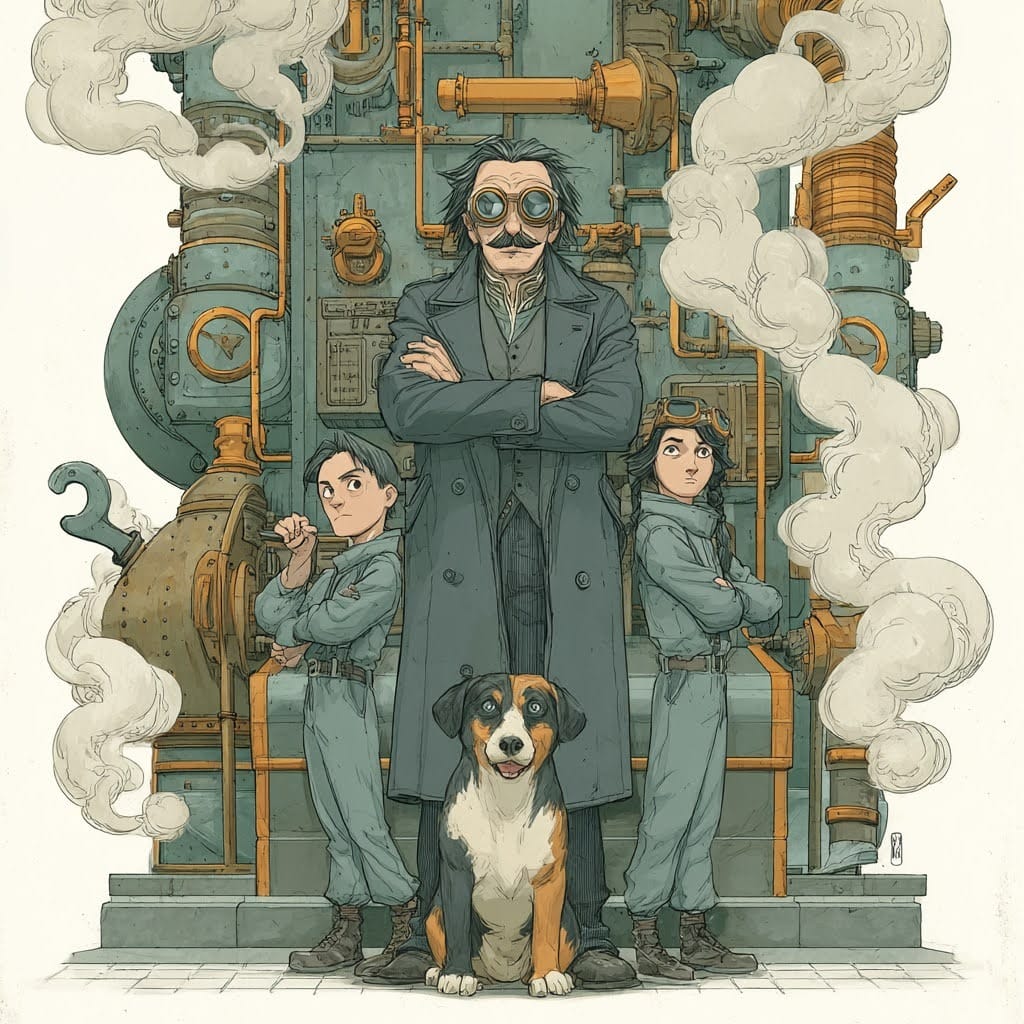
After 2-3 heists, introduce a recurring rival crew:
They are:
- Slightly more competent (still fail)
- Use different methods (equally bad)
- Have their own companion (different species)
- Target the same jobs (for different reasons)
- Respect your crew (begrudgingly)
- Keep running into you
They provide:
- Competition (friendly/hostile)
- Comparison point (you're not the worst)
- Occasional accidental assistance
- Shared enemies (authorities)
- Alternative disaster styles
Don't make them:
- Actually competent
- The reason you fail
- Cruel or mean
- Consistently successful
- Uninteresting to interact with
Long-Term Patterns
What emerges after 10+ heists:
The Schemer:
- Still optimistic
- Still wrong
- Slightly more elaborate plans
- Slightly more theatrical
- Never learns
The Companion:
- Increasingly patient
- Increasingly capable
- Increasingly essential
- Never leaves
- Never explains
The Minions:
- Deepening friendships
- Running jokes established
- Quirks become reliable
- Loyalty becomes unshakeable
- Still drop things
The Authorities:
- Convinced you're masterminds
- Actually you're the opposite
- Building elaborate theories
- Always one step behind
- Getting more frustrated
The Table:
- Comfortable with failure
- Trusting the pattern
- In-jokes multiplying
- Character voices solidifying
- Coming back for more
This is the long game: not progression, but deepening. Not growth, but familiarity. Not change, but comfortable continuation.
SAFETY AND CARE
Session Zero Discussion
Before your first Amateur Hour game, discuss:
Tone Agreement:
- Foam-padding means no real harm
- Failure is expected and funny
- Relationships are dysfunctional but affectionate
- Nobody learns lessons
- The pattern continues
Boundaries:
- What kind of comedy does your table enjoy?
- Any topics to avoid entirely?
- How do we indicate something's not working?
- What does "check-in" look like for us?
Expectations:
- We're playing to fail entertainingly
- Success is rare and temporary
- Character growth isn't the goal
- Continuation is the reward
- Relationships matter more than heists
During Play
Check-ins:
- "Is the tone working?"
- "Too silly or too serious?"
- "Everyone having fun?"
- Thumbs-up/thumbs-down quick polls
Adjust if needed:
- More slapstick / more heart
- More chaos / more grounding
- More NPCs / more crew focus
- Faster / slower pacing
The X-Card:
- Anyone can "X" something
- No explanation needed
- Rewind and adjust
- Continue without it
After Play
Debrief questions:
- What was the best disaster?
- Favorite NPC moment?
- Which complication worked best?
- Did the tone land right?
- What do we want more/less of?
Remember: Amateur Hour is about joy in failure. If it's not joyful, adjust. The foam-padding extends to player experience too.
QUICK REFERENCE
Character Creation
- Schemer: 3 stats, 1 special, 1 gear, 5 HP
- Minions: 3 stats, 1 special, 1 quirk, 5 HP
- Companion: No stats, 3 moves (1 per scene)
- Contraption: 3 stats, 1 special, 10 HP, Integrity Track
Core Mechanics
- Roll: 2d6 + Stat vs Difficulty (6/8/10)
- Succeed: Nail it
- Fail: GM complicates (helpfully)
- 0 HP: Slapstick setback, immediate reset
- Between Scenes: Everyone full HP
Three Scenes
- Scene 1: Setup, recon, first disaster (8-10 min)
- Scene 2: Complications layer, contraption fails (12-15 min)
- Scene 3: Everything at once, Level 5, escape (15-20 min)
Contraption Integrity
- Minor concern
- Visible problem
- Active threat
- Imminent failure
- SPECTACULAR CATASTROPHE
Companion Moves (1 per scene)
- Assist-with-a-Sigh: Does functional part, no roll
- Sabotage-by-Obedience: Literal interpretation, helpful chaos
- The Smug Rescue: Retrieves something from ruins
Foam-Padding Rules
- 0 HP = reset immediately with funny description
- Companion never harmed
- Cartoon physics apply
- Failure propels, never stops
- Everyone escapes
GM Principles
- Make failure spectacular
- Advance Integrity when dramatic
- Give everyone spotlight
- Keep tone foam-padded
- Ensure escape
- Set up next job
Ending Pattern
- Contraption explodes (Level 5)
- Desperate escape
- Demand solicitor
- Companion retrieves something
- Schemer plans next job
- Everyone continues
SAMPLE HEISTS
Quick Heist Generator
Roll or Choose:
Target (d6):
- Historical artifact
- Cash box
- Artwork
- Jewels
- Documents
- Prototype device
Location (d6):
- Museum
- Theater/Opera
- Gallery
- Library
- University
- Historical society
Complication (d6):
- Event in progress
- Renovation happening
- VIP visiting
- Security upgrade
- Rival crew also planning
- Building is structurally questionable
Authority Type (d6):
- Local detective (confused)
- Security guard (overworked)
- Museum director (dramatic)
- Beat cop (wrong place)
- Private investigator (wrong case)
- Federal agent (wrong jurisdiction)
Mix and match for instant heists.
Three More Scenario Seeds
1. "The Butterfly Collection"
- Target: Rare mounted butterflies (surprisingly valuable)
- Location: Natural history museum
- Event: Elementary school tour in progress
- Authority: Museum curator who faints at loud noises
- Contraption: The Lepidoptera Liberator (involves nets, fans, and gentle suction)
- Complication: The butterflies are more fragile than expected
2. "The Racing Form"
- Target: Original signed racing form (historical value)
- Location: Horse racing track, betting office
- Event: Race day, crowds everywhere
- Authority: Track security who knows everyone by sight (you're not everyone)
- Contraption: The Document Duplicator (involves camera, ladder, and distraction system)
- Complication: Multiple copies exist, which is the real one?
3. "The Celestial Compass"
- Target: Antique navigational instrument
- Location: Maritime museum
- Event: Charity gala tonight
- Authority: Harbor patrol (monitoring from water)
- Contraption: The Maritime Extractor (involves ropes, pulleys, and inflatable raft)
- Complication: Building is on a pier, over water
DESIGN NOTES
Why Amateur Hour Works
It gives permission to:
- Fail without shame
- Continue without growth
- Be bad at things together
- Value relationships over success
- Find joy in pattern
- Accept yourself (badly)
It challenges the myth that:
- Competence equals worth
- Success validates choices
- Growth is mandatory
- Professional is the goal
- Winning matters most
It affirms that:
- Stumbling is okay
- Loyalty doesn't need perfection
- Continuation is enough
- Amateur hour is valid
- You're allowed to just be this
For Designers Using This Framework
Core principles to preserve:
- Foam-padding is non-negotiable
- Remove it and the tone collapses
- Failure stops being funny
- Stakes become trauma
- Pattern becomes punishment
- The Companion's silence is essential
- Voice breaks the dynamic
- Silence creates space for interpretation
- Actions speak louder
- Mystery maintains interest
- Episodic structure enables continuation
- No persistent damage
- Fresh start each time
- Pattern creates comfort
- Infinite replayability
- Asymmetrical competence creates comedy
- Everyone bad at different things
- Companion competent but not in charge
- Schemer confident but wrong
- Imbalance is the engine
- No redemption, only continuation
- Growth would break it
- Acceptance is the point
- Pattern is the comfort
- Amateur hour goes on and on
Feel free to:
- Create new heist types
- Invent new contraptions
- Add new quirks for minions
- Design new locations
- Expand the authority roster
- Write new scenarios
Please preserve:
- Foam-padding principle
- Companion's narrative authority
- Episodic structure
- Guaranteed failure
- Life-affirming tone
- The permission to stumble
APPENDIX: INSPIRATIONS
Literary/Film
- Withnail and I
- Bottom
- The Ladykillers
- Wacky Races
- Lock, Stock and Two Smoking Barrels
- Wile E. Coyote
- Starter Villain
- Inspector Gadget
- The Adventures of Tintin
Musical
- Sparks - "Amateur Hour"
- Kate Bush - "There Goes a Tenner"
Genre Touchstones
- Cartoon villain capers (without merchandising)
- Heist films (without competence)
- Buddy comedies (with dysfunction)
- Episodic sitcoms (without resolution)
Philosophical
- Accepting who you are
- Loyalty without explanation
- Continuation as valid choice
- Pattern as comfort
- Permission to be amateur
CREDITS
Created by: The Grey Ledger Society with the CGCG Helix
Inspired by: Everyone who continues despite failure, stays despite dysfunction, and plans the next attempt despite evidence. Every amateur who never went pro but kept going anyway.
Special Thanks to: Tables who find joy in failure, players who embrace incompetence, GMs who make disaster entertaining, and everyone who believes that stumbling is not only okay but beautiful.
License: Creative Commons Attribution-ShareAlike 4.0 International
Use it, hack it, share it. Create your own heists. Write your own scenarios. Make your contraptions more elaborate. Keep your crews dysfunctional and loyal. Let amateur hour go on and on.
Just preserve the foam-padding and the permission to fail.
For More Information: www.greyledger.org hotelkilo.itch.io
"When you turn pro, you know, she'll let you know."We're staying amateur.Pass the blueprints.