A Modest Proposal for the Stabilization of Civic Honorific Infrastructure
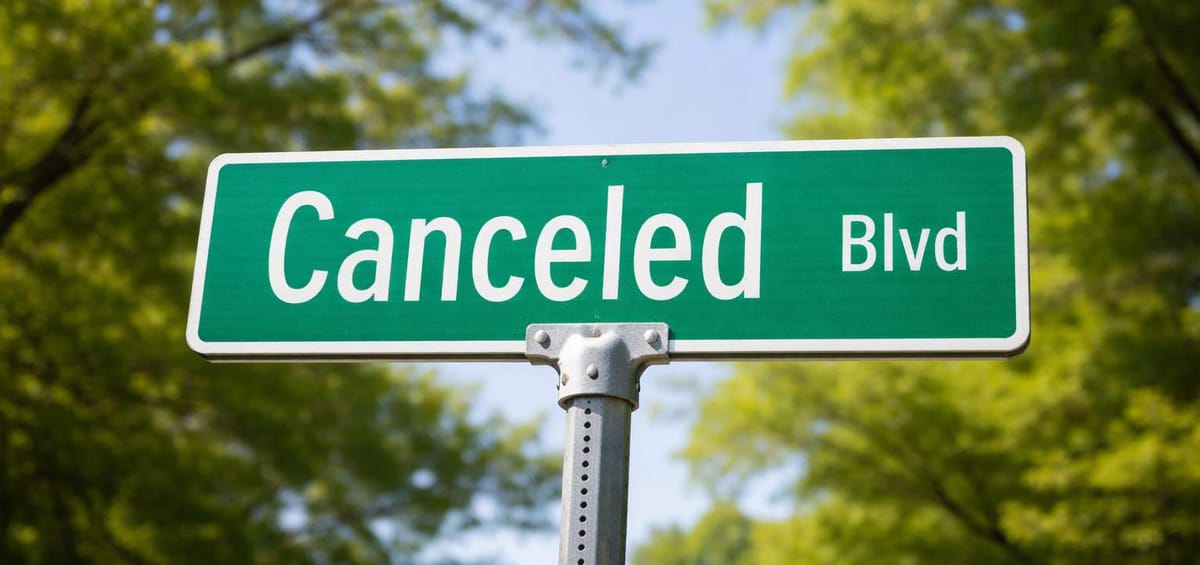
In light of recent developments, it is time to acknowledge a persistent and costly failure in our civic naming conventions. Streets, schools, and public buildings—those modest but ubiquitous carriers of communal esteem—have proven distressingly vulnerable to reputational decay. Individuals once deemed worthy of honor are, with increasing frequency, revealed to have been complicated, compromised, or in some cases outright monstrous. The result is a cycle of renaming that imposes administrative burden, public confusion, and the quiet erosion of institutional credibility.
This proposal seeks to address that instability at its root.
Instead of naming streets after heroes, we should name them after villains.
The advantages are immediately apparent. Villains possess what heroes lack: reputational stability. Their moral status is not subject to revision by newly unearthed documents or investigative reporting. There is no plausible future in which a sufficiently enterprising journalist uncovers a tranche of letters revealing that history’s most notorious figures were, in fact, misunderstood. Their brands are, to use the language of risk management, fully priced in.
A Villain-Based Naming Framework (VBNF) would therefore offer the following benefits:
- Reduced Renaming Frequency: With reputational volatility minimized, the need for costly and disruptive renaming efforts would decline dramatically.
- Clarity of Expectations: Citizens would navigate a landscape of names whose moral ambiguity has already been resolved.
- Administrative Efficiency: Municipal staff could redirect resources currently devoted to signage replacement and database updates toward more stable forms of civic maintenance.
To ensure fairness and proportionality, a standardized index—perhaps a Reputational Volatility Index (RVI)—could be developed to rank candidates by the likelihood of future reassessment. Only those individuals whose negative standing exceeds a certain threshold would qualify for commemoration.
A pilot program might begin with a mid-sized arterial—preferably one already subject to prior renaming—and expand based on community feedback.
It is believed that such a system would bring much-needed stability to a domain currently characterized by uncertainty, contention, and periodic embarrassment.
It is, of course, a ridiculous idea.
What is less ridiculous is the fact that it works. Not as policy, but as diagnosis.
The proposal only feels legible because it exaggerates a pattern that has become reliable enough to recognize. A figure is elevated. New information emerges. The elevation becomes untenable. A process begins to reverse it. The interval between these steps appears to be shrinking.
The system is not malfunctioning. It is doing exactly what it has been built to do: respond.
Which raises a question the system is less equipped to answer. How much evidence is enough to withdraw honor from the dead? Not to convict. Not to punish. Simply to stop endorsing. The distinction matters, and it is also where the ground becomes unstable.
Legal systems answer that question with elaborate machinery: rules of evidence, standards of proof, adversarial testing, time. The threshold is explicit, even when it is contested.
Civic symbolism has no such machinery. It operates on something closer to atmospheric pressure: a shifting accumulation of credibility, narrative, and discomfort. At some point, the pressure changes, and the symbol no longer holds.
The difficulty is that the moment of change now arrives long before the question of truth is settled—if it is ever settled.
A credible investigation appears. It is sourced, edited, published, and distributed. Institutions respond—not because they have adjudicated the claims, but because they cannot ignore the claims without signaling something else. Silence becomes a position. Delay becomes a risk.
So the process begins.
It begins under conditions where everyone involved knows two things simultaneously:
That the allegations may be true.
That the allegations may not be true.
And that the system has no stable way to hold those two possibilities without acting. This is not a legal failure. It is a cultural one.
Presumption of innocence survives intact in courtrooms. Outside them, it has been quietly redefined. Not rejected, exactly, but displaced. It no longer governs what we do. It governs only what we can prove.
Public honor operates upstream of proof. Which is another way of saying: it operates without it.
If that feels uncomfortable, it should. The modest proposal works because it removes this discomfort entirely. Villains require no threshold. Their disqualification is permanent and pre-established. The system becomes stable because the question never arises.
The fact that this feels, even briefly, like an improvement is the point at which the joke stops being a joke.
There is a temptation, at this stage, to pivot away from symbols entirely. To note, with some exasperation, that while these questions are being debated, the more material functions of the city continue to degrade at their own steady pace. Roads erode. Schools cut days. The problems that resist symbolic resolution remain.
This observation is not wrong. It is also not particularly useful.
The systems are not interchangeable. One produces visible decisions under uncertainty. The other absorbs resources indefinitely with no guarantee of resolution. That they coexist is not evidence of misallocation so much as a reminder that responsiveness is unevenly distributed.
Still, the contrast lingers.
If the modest proposal reveals the instability of person-based honor, it does so by stripping away a layer that civic naming quietly depends on: the assumption that the community being honored will recognize itself in the honor.
That assumption is not guaranteed.
The communities most directly connected to these symbols are not abstractions. They argued for them. Organized around them. Attached meaning to them. They may now disagree—among themselves—about what should happen next. Some will see reconsideration as necessary. Others as a betrayal. Many as secondary to concerns that do not appear on street signs at all.
Their views are not a footnote to the process. They are the process. And they do not resolve the evidentiary problem. They refract it.
Because the question is not simply what is true. It is what a community is willing to treat as true for the purposes of public meaning, in advance of proof, and in full knowledge that proof may never arrive.
There is no villain to blame for this. The instability is structural. It arises from a set of commitments that are individually coherent and collectively incompatible.
We want our symbols to reflect our values.
We want those symbols to be stable over time.
We want to respond quickly to credible claims of harm.
We want to uphold norms of fairness that resist premature judgment.
No system can satisfy all four.
So the system does what systems do. It optimizes locally. It begins the process. It convenes the meeting. It gathers the signatures. It moves the symbol.
And then it waits for the next input.
It is possible, at this point, to step back and describe all of this with some precision. To map the layers: symbolic responsiveness, evidentiary ambiguity, community contestation, material inertia. To note where the system performs well and where it does not. To identify the gap between the clarity with which the contradictions can be articulated and the absence of any mechanism for resolving them.
This essay has attempted to do exactly that. Which is to say: it has participated in the system it describes.
It has taken a symbolic problem and produced a symbolic response—a more refined articulation of the instability, offered in place of a solution. It has converted discomfort into language, which is one of the more efficient ways of making discomfort tolerable.
The modest proposal did something similar. It rendered the problem absurd in order to make it visible. This renders it coherent in order to make it manageable.
Neither changes the underlying conditions. If anything, they make those conditions easier to live with.
Which may be the most stable outcome the system is capable of producing.